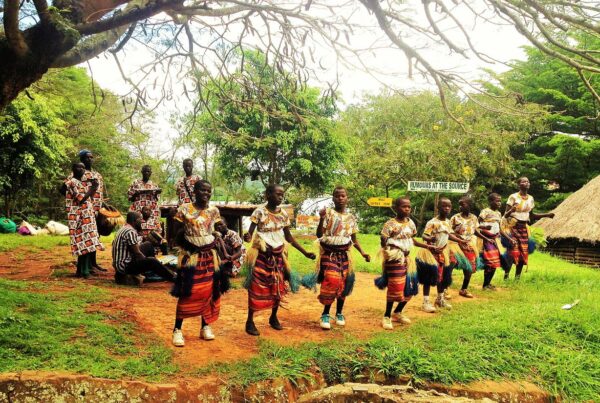
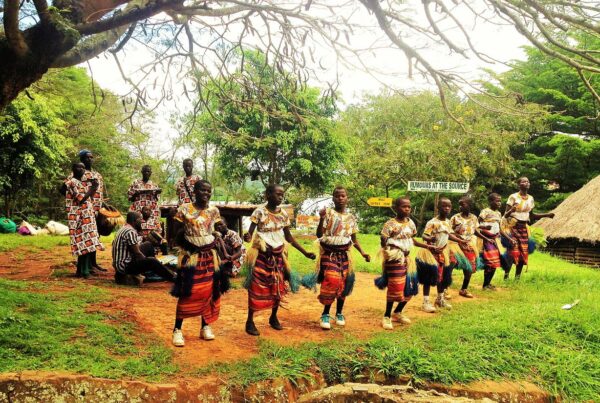
Intore dance is one of the most spectacular and internationally recognised performing arts of the Great Lakes region, originating in the Rwandan royal court but shared across the border into southwestern Uganda wherever Kinyarwanda-speaking communities have settled — and in Kisoro District, home of the Bafumbira and gateway to Mgahinga Gorilla National Park, the Intore tradition is performed by community groups for both ceremonial occasions and cultural tourism, featuring male dancers in white-feathered headdresses performing choreographed warrior sequences that simultaneously demonstrate physical prowess, historical martial memory, and aesthetic accomplishment in a form that UNESCO has described as one of the finest performative traditions in sub-Saharan Africa. Cultural experiences like Intore enrich Uganda safari visits near Mgahinga Gorilla National Park.
- Origin: Rwandan royal court dance tradition; performed for the Mwami (king) and on occasions of royal significance
- Meaning of “Intore”: approximately “the chosen ones” or “the elite warriors” — only the best were selected to perform
- Costume: male dancers wear grass skirts, white colobus monkey fur headdresses (or modern equivalents), and carry shields and spears
- Uganda context: performed in Kisoro District and by Kinyarwanda-speaking communities as a living cultural tradition
Intore dance is one of the most spectacular and internationally recognized performing arts of the Great Lakes region, originating in Rwanda but shared across the border into southwestern Uganda wherever Kinyarwanda-speaking communities have settled. The name intore means “the chosen ones” or “the best of the best” — reflecting the dance’s origins as a performance reserved for elite warriors selected to perform at the royal court. In 2027, intore remains a living cultural tradition that visitors can witness in both Rwanda and Uganda, particularly in Kisoro District near Mgahinga Gorilla National Park.
Origins of intore dance
Intore dates to the precolonial Rwandan kingdom, where it developed as a prestigious art form practiced by young warriors in the royal court of the Mwami (king). The warriors selected for intore training were chosen not only for fighting ability but for physical appearance, discipline, and the capacity to learn highly technical choreography. Being chosen as an intore dancer was an honor that elevated a young man’s social standing and signaled royal favor.
The performance tradition served multiple functions: it demonstrated the military prowess and discipline of the king’s warriors, entertained the court, impressed visiting dignitaries, and communicated the values of courage, precision, and loyalty that the Rwandan kingdom wished to project. The elaborate costumes and choreography were designed to be visually overwhelming — a statement of royal power through cultural excellence.
Three forms within intore performance
Traditional intore performance encompasses three distinct forms, each with its own movement style, costume, and cultural meaning.
Umushagiriro: the women’s dance
Umushagiriro is the intore form performed by women, characterized by graceful, swaying movements of the arms and shoulders combined with slow, deliberate footwork. The movements evoke the gentleness and flowing grace associated with royally trained femininity. Women performers wear flowing white dresses and elaborate beaded jewelry, and their arm movements are sometimes compared to the wings of the sacred crane (the Grey Crowned Crane, Uganda’s national bird). The emphasis is on elegance, control, and serene beauty rather than the dynamic energy of the male forms.
Intore warriors: the male combat dance
The male warrior form is the most visually dramatic aspect of intore. Performers wear elaborate wigs made from long black-and-white colobus monkey fur (historically) or synthetic fibers (in modern performances), which fly dramatically as they spin and leap. They carry small shields and spears or bamboo staffs. The choreography combines high leaps, powerful stamps, spinning turns, and aggressive gestures that simulate combat movements.
The combination of the flying wigs, the percussive foot-stamp patterns, and the call-and-response singing creates an overwhelming theatrical effect. When a group of male intore dancers performs simultaneously, the visual and auditory impact is genuinely extraordinary — one of the most powerful cultural performances anywhere in Africa.
Inzoga: the vestal form
A third form within the intore tradition involves slower, ritualized movements associated with ceremonial contexts rather than warrior display. This form is less commonly seen in tourist-oriented performances but appears in ceremonial contexts related to royal occasions and religious ceremonies.
Intore in Uganda: the Bafumbira and Kisoro connection
The Bafumbira people of Kisoro District in southwestern Uganda share the intore tradition with their Rwandan neighbors. The Virunga highlands straddling the Uganda-Rwanda border have been home to Kinyarwanda-speaking people for centuries, and intore dance developed in this shared cultural space before the colonial border divided it into two countries. Today, community cultural groups in Kisoro perform intore for visitors to Mgahinga Gorilla National Park and the surrounding area.
Cultural tourism programs based in Kisoro town offer intore performances as part of community cultural packages that typically also include traditional cooking, farm walks, imigongo art workshops, and visits to Batwa communities. These programs are among the most culturally rich community tourism experiences available in Uganda in 2027.
Intore in the context of gorilla trekking
Many visitors to Mgahinga combine their gorilla trek (permits are $800 in 2027) with an afternoon or evening intore performance in Kisoro. The contrast between the morning’s experience in the forest — quiet, physical, intensely focused on the gorillas — and the afternoon’s explosion of color, music, and movement at a cultural performance creates one of Uganda’s most complete travel days.
Golden monkey trekking in Mgahinga (a more affordable experience at $100 per permit) can also be paired with cultural activities, making it possible to spend two to three days in Kisoro with a rich mix of wildlife and human heritage encounters.
Intore across the Rwanda border
For visitors combining Uganda and Rwanda on the same trip — a growing trend in 2027 — intore offers a fascinating point of cultural connection between the two countries. The form seen in Kisoro and the form performed at Rwanda’s cultural venues in Musanze (Ruhengeri) and Kigali are variations on the same tradition, allowing travelers to trace a cultural thread across a national border and see how the same art form has evolved differently on each side over the past century.
Purchasing recordings of intore music, buying replica warrior costumes or wigs as souvenirs, or arranging for a group dance lesson with local performers are all ways to engage more deeply with this extraordinary living tradition before leaving the Virunga region.
What does the Intore dance represent and what are its historical roots?
Intore dance (from the Kinyarwanda word “intore,” meaning “the chosen ones” or “the elite”) originated as a performance art of the Rwandan royal court, practiced at the court of the Mwami (the Rwandan king) and performed by specially trained groups of warriors and court performers. Historical origin: the tradition is documented in oral history from the 15th-16th century Rwandan kingdom; the Intore were warriors selected for both their fighting ability and their capacity to embody the aesthetic and ethical ideals of Rwandan court culture; the dance was both a martial art and a spiritual practice. The warrior narrative: Intore choreography re-enacts scenes from warrior life — the departure to battle, the encounter with the enemy, the celebration of victory; the movements include high jumps, spear thrusts, shield clashes, and the characteristic rolling head movement of the white colobus headdress. Post-independence: after Rwandan independence in 1962, Intore was institutionalised by the Rwandan government as a national cultural expression; the Rwanda Cultural Centre and international touring groups have brought it to European and American audiences. In Uganda: the Bafumbira community of Kisoro District maintains the tradition independently of the Rwandan state programme; it is practiced as living community culture.
What do the costumes and props in Intore dance mean?
Intore costume is highly codified and each element carries specific meaning. The headdress: the most visually striking element is the white colobus monkey (Colobus guereza) fur headdress worn by male Intore dancers; the long white fur creates dramatic visual movement as the dancer performs the characteristic head-rolling movement; in contemporary performances synthetic equivalents replace colobus fur for conservation reasons. The white colobus significance: the colobus monkey is a forest species that in traditional Rwandan and Great Lakes culture is associated with beauty, grace, and status; the headdress signals that the wearer is among the chosen elite. The shield: Intore dancers carry the traditional Rwandan shield (urukondo) — made from cowhide stretched over a wooden frame with a distinctive elongated shape; the shield represents martial readiness and the cattle wealth of the warrior. The spear: the inzuki (spear) is carried in the right hand; the choreographic movements with the spear re-enact specific battle sequences. The grass skirt: worn over a base garment; the grass element represents the grassland landscape of the Rwandan high plains where the warrior tradition originated.
Where can visitors see Intore dance in Uganda and how is it presented?
Intore dance in Uganda is accessible to visitors through several channels in the Kisoro-Mgahinga area and in Kampala. Mgahinga cultural programs: the Uganda Wildlife Authority and partner lodges around Mgahinga can arrange community cultural performances that typically include Intore dance by Bafumbira groups; these are arranged through your lodge or tour operator and are performed at the community or lodge setting adjacent to the park. The Virunga Lodge context: several lodges near Mgahinga (including those on the Ugandan side of the Virunga border) incorporate community cultural performances as part of their guest programming; Intore is typically included when Kinyarwanda-speaking community performers are engaged. The Rwanda connection: many Uganda gorilla trek itineraries combine Mgahinga with a Rwanda Volcanoes National Park visit; in Rwanda, Intore is also presented at Kigali cultural venues and as part of cultural experiences adjacent to the park. Kampala: the Ndere Cultural Centre in Ntinda, Kampala presents a rotating programme of Ugandan ethnic dances every Sunday afternoon; while the programme focuses on Ugandan traditions, Kinyarwanda-associated performances are sometimes included given Uganda’s Bafumbira community.
How is Intore dance different from other East African dance traditions?
East Africa has multiple distinct dance traditions and Intore has a specific character that distinguishes it from its neighbours. Intore vs. Baganda court dance: Buganda (central Uganda) has its own court dance tradition centred on the engoma (drum); Buganda court dance emphasises percussion-driven group movement and the performance is communal; Intore is more individualistic and warrior-focused with specific solo performance sequences. Intore vs. Maasai jumping: the Maasai adumu (jumping dance) of Kenya and Tanzania emphasises vertical jumping ability and is a coming-of-age warrior display; Intore also involves jumping but within a more complex choreographed narrative structure. Intore vs. Batwa forest dance: the Batwa people of Bwindi and Mgahinga have their own performative traditions centred on forest life and hunting; these are less formal and more improvisational than Intore, reflecting the Batwa’s hunter-gatherer social structure vs. the hierarchical court culture that produced Intore. What makes Intore distinctive: the combination of martial narrative, specific costume requirements, court origin, and the dramatic visual element of the white headdress rolling in synchronised performance makes Intore one of the most immediately striking dances in the region for visitors.
What other performing arts traditions exist in southwestern Uganda near the gorilla parks?
Southwestern Uganda around Bwindi and Mgahinga has a rich performing arts context that goes beyond Intore. Batwa cultural performances: the Batwa people of Bwindi and Mgahinga present cultural experience programs that include forest songs, honey gathering demonstrations, and storytelling in their forest-dwelling tradition; these are available through the Bwindi Community Hospital trust program and through UWA-approved community tour operators. Bakiga traditional dance: the Bakiga people (highland cultivators of Kigezi, the region around Kabale and southern Bwindi) have their own dance tradition characterised by energetic acrobatic movement and competitive jumping; Bakiga dance is performed at community celebrations and through cultural programs. Amakondere royal trumpet music: the Ankole kingdom to the north of Kigezi has a royal trumpet ensemble tradition; the long wooden royal trumpets (amakondere) are heard at formal occasions; this tradition is relevant to visitors on the Ankole circuit near Lake Mburo National Park. The Ndere Centre in Kampala: for visitors starting or ending in Kampala, the Ndere Cultural Centre Sunday show brings together performing artists from across Uganda’s ethnic groups in a programmed 2-hour show that covers the full geographic range including southwestern traditions.
- Acholi Culture: The Music, Dance and Traditions of Northern Uganda
- Kiganda dance: the traditional performance of the Buganda Kingdom
- Ugandan music and dance: what to experience in communities near Bwindi
- What to Wear for Gorilla Trekking in Uganda and Rwanda
- Primate Trekking Guide in Uganda and Rwanda
- Uganda gorilla trekking explained: everything a first-timer needs
- Uganda Gorilla Trekking from Kigali: The Cross-Border Option Explained
- Gorilla Trekking Uganda vs Rwanda: Which Should You Choose
- Gorilla Trekking Permit Uganda vs Rwanda: Price Comparison 2026
- How Many People Are Allowed Per Gorilla Family Per Day: Uganda’s Strict Limit Explained