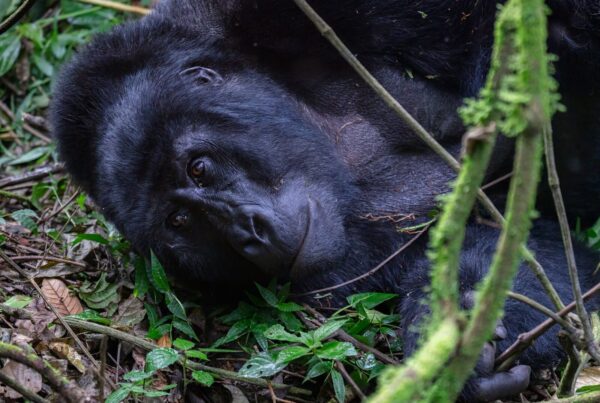
Most visitors to Uganda arrive focused on its wildlife — the gorillas, the chimpanzees, the birds, the Nile. The human history of the country they are visiting receives less attention than it deserves. Uganda is home to one of the oldest and most sophisticated kingdoms in sub-Saharan Africa — the Kingdom of Buganda, which has been a continuous political, cultural, and social institution for over 500 years, survived colonisation, survived Amin, survived civil war, and continues to function as a constitutional monarchy under Uganda’s modern political system. Understanding Buganda is essential context for understanding Uganda.
Origins and Early History
The Kingdom of Buganda is traditionally said to have been founded by Kintu, the first Kabaka (king), in approximately the fourteenth century. The kingdom developed around the northern shores of Lake Victoria in what is now central Uganda, expanding through conquest, alliance, and trade to become the dominant political power in the Great Lakes region by the eighteenth century. By the time the first European explorers arrived in the 1860s, Buganda was a sophisticated, centrally administered state with a professional army, an elaborate court culture, and a well-developed system of tribute and trade.
John Hanning Speke, who arrived at the Buganda court in 1862 while searching for the source of the Nile, was received by Kabaka Mutesa I and was struck by the sophistication of the kingdom’s administration and the elaborateness of its court protocol. His accounts of Buganda introduced the kingdom to European audiences and established it in the imagination of the colonial powers that would subsequently compete for influence in the region.
The Colonial Period
The British established a protectorate over Uganda in 1894, and the relationship between the colonial administration and the Buganda kingdom became the defining feature of Uganda’s colonial history. The 1900 Uganda Agreement formalized a system of indirect rule in which the Buganda kingdom retained significant autonomy within the British protectorate — a recognition of Buganda’s pre-existing governmental sophistication that other parts of the protectorate did not receive.
The agreement also transformed land ownership in Buganda, converting customary land tenure to freehold ownership in a system called mailo land. The Buganda chiefs who received mailo land allocations became, overnight, a landed aristocracy with a permanent interest in the colonial arrangement. This transformation of land tenure, and the political power it created, shaped Ugandan politics through independence and into the present day.
The Kabaka Crisis and Abolition
Uganda’s independence in 1962 was negotiated in the shadow of the Buganda question: whether the kingdom would accept federation within a unitary state or seek a separate political identity. The compromise reached at independence — with Kabaka Mutesa II serving as Uganda’s first president — unravelled quickly. Milton Obote abolished the kingdoms in 1966, sending the army under Idi Amin to attack the Kabaka’s palace. Mutesa II fled into exile and died in London in 1969. The kingdom was formally abolished and its institutions dismantled.
Restoration and Today
The Kingdom of Buganda was restored as a cultural institution in 1993 by President Yoweri Museveni, with Ronald Muwenda Mutebi II installed as the 36th Kabaka. The restored kingdom has no political power — it functions as a cultural and social institution under Uganda’s constitution — but it retains enormous symbolic and cultural significance for Buganda’s approximately ten million people. The Kabaka is one of the most respected figures in Uganda, and the kingdom’s institutions — the Lukiiko (parliament), the Nnabagereka (queen), and the Namasole (queen mother) — remain active in cultural preservation, education, and community welfare.
For visitors to Kampala, the Kasubi Tombs — the burial ground of Buganda’s kings, a UNESCO World Heritage Site — and the Kabaka’s Palace at Lubiri are important sites for understanding the kingdom’s history. The Buganda Cultural Centre in Kampala offers exhibitions on the kingdom’s art, music, and material culture. For gorilla trekking visitors passing through Kampala, even a half-day engagement with Buganda’s history adds a dimension to the Uganda experience that the wildlife alone cannot provide.
Frequently Asked Questions
Uganda is home to the mountain gorilla (Gorilla beringei beringei), one of two subspecies of eastern gorilla. They live exclusively in the Virunga volcanic highlands (Uganda/Rwanda/DRC) and Bwindi Impenetrable Forest (Uganda only). Mountain gorillas are the only gorilla subspecies that cannot survive in captivity — every individual you can trek is a wild animal.
The standard gorilla trekking permit gives you exactly 1 hour with the gorilla family. This time begins when you make first contact with the family — the ranger signals the start. The Gorilla Habituation Experience gives 4 hours with a semi-wild family. The walk to find the gorillas can take 30 minutes to 5 hours depending on where the family has moved.
Stay calm, crouch down slowly, avoid direct eye contact, and remain quiet. Do not run — running triggers a chase response. Rangers accompanying your group manage close approaches. Habituated gorillas are accustomed to humans and almost never make contact, but a charging silverback is managed by staying still and following ranger instructions immediately.
A maximum of 8 visitors per habituated gorilla family per day for standard trekking. The Gorilla Habituation Experience has a maximum of 4 visitors per family per day. These limits are set by UWA to minimise stress on the gorilla families and maintain the quality of the experience.
Uganda is home to the mountain gorilla (Gorilla beringei beringei), one of two subspecies of eastern gorilla. They live exclusively in the Virunga volcanic highlands (Uganda/Rwanda/DRC) and Bwindi Impenetrable Forest (Uganda only). Mountain gorillas are the only gorilla subspecies that cannot survive in captivity — every individual you can trek is a wild animal.