Updated
gorilla trekking Uganda conservation now is one of Africa’s most extraordinary wildlife experiences, connecting travellers with mountain gorillas in their natural forest habitat. It is a question worth sitting with honestly: if mountain gorillas were not there in ten years — if the combination of habitat pressure, climate change, disease, and political instability that has threatened them before reasserted itself — would you wish you had gone, or would you be indifferent because the encounter was never something you actually let yourself want? The mountain gorilla population is currently increasing thanks to conservation efforts and gorilla trekking revenue at Bwindi; here is why that status is fragile and why a Uganda safari matters more than it might appear.
- Total population: 1,063 (2018 census — the most recent full census); the only great ape species whose population is increasing
- IUCN status: Endangered; downlisted from Critically Endangered in 2018 after the population grew past 1,000
- Range: two isolated populations — Bwindi/Sarambwe (Uganda, DRC) and Virunga Massif (Uganda, Rwanda, DRC)
- Primary threats: habitat loss, disease transmission from humans, climate change effects on montane forest, political instability in DRC
It is a question worth sitting with honestly: if mountain gorillas were not there in ten years — if the combination of habitat pressure, climate change, disease, and political instability that has threatened them before reasserted itself — would you wish you had gone when you had the chance? Would you be the person who saw them while they were thriving, or the person who kept meaning to go? The gorillas are there now. The choice to be the first kind of person is available to you right now. It will not always be.
What If the Gorillas Were Not There in 10 Years: Would You Wish You Had Gone
The Conservation Reality
Mountain gorillas are one of conservation’s most celebrated success stories, and the success is genuine. The global population has grown from fewer than 650 individuals in the early 2000s to over 1,100 today — a remarkable recovery driven by sustained investment in ranger protection, veterinary care, habitat preservation, and community programs. The numbers are moving in the right direction. This is worth celebrating.
At the same time, mountain gorillas remain critically endangered. Their entire range covers a tiny area — the Virunga volcanic mountains shared by Uganda, Rwanda, and DRC, and Bwindi Impenetrable Forest in Uganda. They cannot survive outside this habitat. They are sensitive to respiratory diseases, to which humans can expose them. They are embedded in a geopolitical neighborhood that has seen significant instability. The conservation infrastructure that protects them depends on political will, funding, and the continued engagement of the international community.
The Honest Assessment
The honest assessment is this: mountain gorillas are doing well in 2027, and there is good reason for optimism. But “critically endangered” is a designation that means the margin for error is small. The difference between recovery and reversal is not as large as comfortable thinking would prefer. This is not a reason for despair — it is a reason to go while the going is good, to witness the success while it is succeeding, to be among the people who saw mountain gorillas thriving rather than the people who saw them only in old photographs.
What You Would Miss
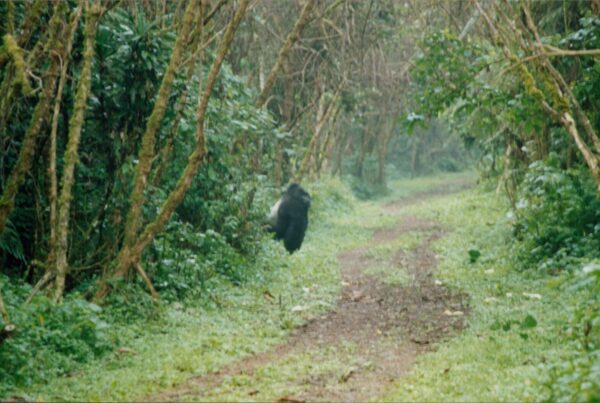
What would it actually mean to miss this? Not in an abstract sense, but concretely. You would miss the morning hike into Bwindi Impenetrable Forest — one of the oldest forests in Africa, 25,000 years of unbroken continuity — in the cool equatorial air before the day heats. You would miss the moment when the ranger holds up a hand and you stop, and through the undergrowth a shape resolves: enormous, dark, unhurried. A silverback, indifferent to your presence in the particular way of an apex creature that has no predators and no anxiety about the world.
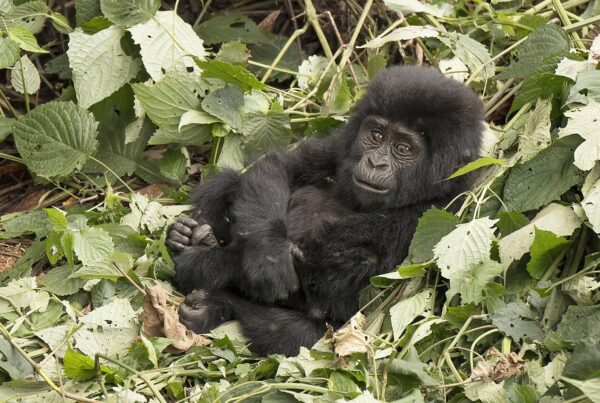
You would miss the hour. Eight trekkers, one family, sixty minutes of complete presence. A juvenile approaching your boot with uncanny curiosity. A mother watching you with eyes that hold something recognizable. The silverback rising to his full height — not in threat, just in motion — and the collective breath your group takes without coordinating it. You would miss the walk back through the forest after, when the world feels slightly different than it did before you went in.
The People Who Did Not Go
There are species that are gone now that travelers a generation ago could have seen — and some of them did not go because the window seemed permanent, because “someday” felt available, because there was always a reason to wait. They were not reckless or indifferent. They were just human, caught in the ordinary logic of deferral. Some of them live with the knowledge that the chance was real and was not taken. That knowledge is quiet and persistent.
Mountain gorillas are not in that category today. They are thriving. But they have been in that category before — the 1980s, when the situation was desperate enough that “saving the gorillas” was a rallying cry rather than a success story. The recovery is real. It is also not permanent by default. The world does not owe us the continuation of its wonders.
Your Permit Is Conservation in Action
The $800 permit that international tourists pay in 2027 to trek gorillas in Uganda is not just an access fee. It is the primary revenue source for a conservation system that employs hundreds of rangers, runs anti-poaching operations across the forest perimeter, maintains a veterinary program that monitors and treats individual gorillas, and funds community development projects that give the people living around the forest economic reasons to support conservation rather than resent it.
The gorillas are doing well, in part, because enough people decided the $800 was worth it and came. That ongoing flow of committed travelers is part of the conservation infrastructure itself. When you book your trek, you are not just witnessing the success — you are participating in it. Your presence sustains the system that makes the presence of gorillas possible.
The Question Deserves an Answer
The question — would you wish you had gone? — deserves an honest answer. And for most people who have been thinking about gorilla trekking in Uganda for any length of time, the honest answer is yes. Yes, if they were not there in ten years, you would wish you had gone. You would wish you had taken the window that existed. You would wish you had been the kind of person who does the things that matter when the window is open rather than waiting for a better window that may not come.
The window is open now. The gorillas are there. Bwindi is intact. The rangers are on patrol. The permits are available. The only thing required of you is a decision and a booking. Make the decision that means, ten years from now, whatever the situation is, you do not have to wish. You were there. You saw them. You were part of the story.
Do not be the person who wishes. Be the person who went.
How close to extinction were mountain gorillas and what changed?
Mountain gorillas came close to functional extinction in the 1980s. The 1981 count: a 1981 census counted approximately 254 mountain gorillas remaining in the Virunga Massif; the Bwindi population was not yet separately quantified but was also under severe pressure. The threats then: direct poaching (gorillas killed for trophies and infants captured for the zoo trade); habitat destruction as population growth cleared forest right up to park boundaries; warfare in the DRC and Rwanda with armed groups operating in the Virungas. What changed: intensive anti-poaching ranger operations; the habituation programme (making gorillas comfortable with humans for research and later tourism); gorilla tourism beginning at Bwindi in 1993 creating economic incentive for communities and governments to protect the forest; international NGO investment (Dian Fossey Gorilla Fund, Wildlife Conservation Society, WWF). The census progression: 254 in 1981; 620 in 2003; 786 in 2010; 880 in 2011; 1,004 in 2018; 1,063 in 2018 combining both populations. The improvement is real but the population is still small.
What are the current threats to mountain gorillas in 2027?
The threats are real even though the trend is currently positive. Disease: mountain gorillas share 97% of human DNA and are susceptible to virtually every human respiratory virus; respiratory disease is the leading cause of death in habituated gorilla groups; strict health protocols (7-metre distance, mask-wearing by ill rangers and visitors, no sick visitors on permits) are the primary defence. DRC instability: armed groups operating in Virunga NP, DRC have disrupted ranger operations and killed rangers; eastern DRC remains volatile and this directly affects gorilla safety in the Virunga portion of the range. Climate change: montane forest is shifting in altitude as temperatures warm; gorilla habitat is already at altitude; the upper limit of suitable forest is constrained; this is a longer-term threat but real. Habitat pressure: Uganda’s population growth means continued pressure on forest edges; community buffer zones and ecotourism revenue sharing are the main mitigations.
How does gorilla trekking tourism directly help conservation?
The link between tourism revenue and gorilla survival is direct and measurable. Permit revenues: Uganda Wildlife Authority uses gorilla permit income to fund ranger salaries, equipment, vehicle maintenance, patrol operations, and veterinary response; without permit income the ranger force protecting Bwindi would be dramatically under-resourced. Community revenue sharing: 20% of gorilla permit revenue goes to communities adjacent to Bwindi; this funds schools, water projects, and infrastructure; it creates economic stake in gorilla survival for families who otherwise might see the park as a competitor for agricultural land. The alternative: studies of gorilla populations in areas without tourism (some DRC zones) show consistently worse outcomes than Bwindi and the Rwanda Virungas where tourism is established; the correlation between tourism and survival is robust. Direct effect: USD 800 per permit, multiplied by the thousands of permits sold annually, represents the financial foundation of mountain gorilla conservation; choosing to go is a conservation act.
What would the world lose if mountain gorillas went extinct?
The question can be answered at several levels. Ecological: mountain gorillas are major seed dispersers in montane forest; their movement through the forest while feeding spreads seeds of dozens of plant species; their decline would affect forest regeneration in ways that are not fully modelled. Scientific: studying mountain gorillas continues to produce findings relevant to human evolution, cognition, disease, and social behaviour; their extinction would close a research window that cannot be replaced. Cultural: the mountain gorilla is a symbol of African biodiversity; its recovery from near-extinction is one of conservation’s genuine success stories; its extinction would represent a failure of conservation despite having the tools and knowledge to prevent it. The human answer: every person who has made eye contact with a mountain gorilla from five metres understands that the question “what would we lose” answers itself in that moment.
Is the mountain gorilla population still growing?
The last complete census showed growth and indicators remain positive. 2018 census result: 1,063 mountain gorillas confirmed across both populations (Bwindi/Sarambwe and Virunga Massif); this was an increase from 880 in the 2011 survey. Ongoing monitoring: continuous ranger-based monitoring at Bwindi tracks individual gorillas and family groups; births, deaths, and movements are recorded; the Bwindi population has continued to show net positive growth in the years following the census. New full census: a new range-wide census is conducted periodically; the next complete count is expected to show further population growth given current protection levels. Caveat: 1,063 individuals is still an extremely small number; a single disease event, a prolonged conflict, or a significant habitat loss could reverse the trend; the population is not secure — it is recovering under active management; that management requires continued funding and attention.
- Why Would My Soul Long for a 9-Day Uganda Gorilla Trekking and Wildlife Safari?
- Uganda Birding Safari — 22-Days: A Journey Into the Feathered Soul of Africa
- Gorilla Trekking FAQs: 50 Most Asked Questions Answered
- Where Exactly Is Bwindi Impenetrable Forest? Location, Geography, and How to Get There
- Are There Other Animals on the Gorilla Trek in Bwindi? Forest Wildlife Beyond the Gorillas
- Is There a Waiting List for Gorilla Permits in Uganda?
- Gorilla Conservation Success: How Mountain Gorillas Were Saved
- Gorilla Conservation History: 60 Years of Protecting Mountain Gorillas
- The Ranger Who Has Tracked Gorillas for 23 Years: His Story
- Mountain Gorilla Populations Have Grown by 25% in 10 Years: How