Updated
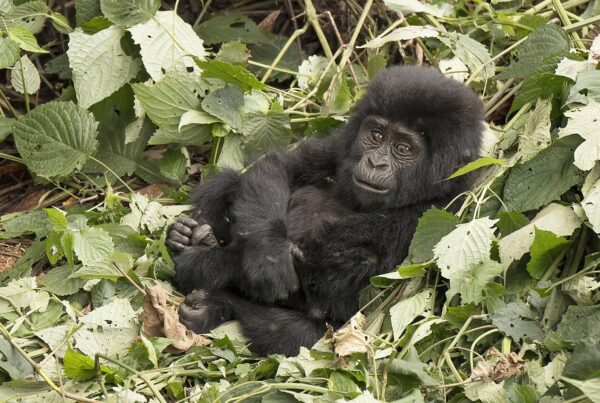
gorilla trekking Uganda window opportunity 2027 is one of Africa’s most extraordinary wildlife experiences, connecting travellers with mountain gorillas in their natural forest habitat. Mountain gorillas are not going extinct this year — the population of approximately 1,000 individuals distributed across Uganda, Rwanda, and the Democratic Republic of Congo is growing rather than declining, and the conservation trajectory is, for the first time in the species’ documented history, genuinely positive — but the window of access is not infinite: the gorillas exist in a narrow corridor of high-altitude forest under active conservation management in a region where political stability, funding, and habitat integrity are not guaranteed in perpetuity, and the people who have made the visit do not regret going when they could. See the honest conservation case, then book a gorilla trekking permit at Bwindi.
- Population (2018 census): 1,063 individuals — the most recent comprehensive count; the mountain gorilla is the only great ape with an increasing wild population
- IUCN status: Endangered (downlisted from Critically Endangered in 2018 based on the population increase); this is progress, not safety
- Range: two populations — Bwindi Impenetrable Forest (Uganda) and the Virunga volcanoes (Uganda’s Mgahinga NP, Rwanda’s Volcanoes NP, DRC’s Virunga NP); no mountain gorillas exist in zoos
- Trekking access: over 20 habituated families at Bwindi and 1 at Mgahinga; four sectors with daily permits available; USD 800 per person
Mountain gorillas are not going extinct this year. The population of approximately 1,000 individuals, distributed across Uganda, Rwanda, and the Democratic Republic of Congo, is growing rather than declining. The conservation trajectory, for the first time in the species’ documented history, is positive. This is genuinely good news, and it should be stated clearly: the mountain gorilla is not at immediate risk of extinction in the way it was thirty years ago.
But the window of accessible, affordable, managed access to mountain gorillas — the specific configuration of conservation success, tourism infrastructure, permit pricing, and stable enough political environments that makes gorilla trekking possible in 2027 — is a small and not guaranteed window. Understanding what makes it small is different from claiming imminent catastrophe. It is a reason for appropriate urgency about a genuinely extraordinary opportunity.
The Small Window When Mountain Gorillas Are Still Here: Do Not Miss It
Why the Window Is Small
The gorilla trekking window is defined by the intersection of several independent factors, each of which could change:
Permit pricing: The $800 Uganda permit is currently the most affordable way to see mountain gorillas. Rwanda is already at $1,500, nearly double. Uganda’s permit has increased from lower prices in recent years and may increase further. The specific $800 price point of 2027 is a window in the pricing history, not a permanent fixture.
Habituation availability: The number of gorilla families habituated for tourism visits is limited and expanding only slowly. Permit availability for peak dates is already constrained. As the programme grows and demand increases, the experience may become more competitive and potentially more expensive to access on preferred dates.
Regional stability: The DRC section of the gorilla range has faced periodic instability that affects cross-border conservation cooperation. Uganda has been stable for decades and continues to provide a reliable access point, but regional geopolitics can shift in ways that affect the conservation landscape.
Climate change: The highland forests where gorillas live are warming, with effects on vegetation, disease burden, and water availability that are beginning to register in the scientific literature. The forest that exists in 2027 is not the same as the forest of 2010, and the forest of 2040 will be different again.
What the Window Looks Like From Inside
Within the window — in 2027, with permits available at $800, with multiple habituated gorilla families open to visitors across Bwindi’s four sectors and Mgahinga — the experience is extraordinary and accessible. The wait times are manageable. The quality of the experience is high. The conservation system supporting it is professional and effective. This is what the window looks like from inside, and it is the window that most people who go through it describe as one of the best uses of their travel life.
The window will change. It will not close — the gorilla population is growing and the conservation system is strengthening. But the specific quality of affordable, accessible, intimate gorilla trekking available in 2027 will evolve into something different — probably more expensive, possibly more competitive, certainly different in the specific texture of the experience.
The Action This Calls For
The window calls for the action that any temporary opportunity calls for: appropriate urgency without panic. This is not a fire sale. The gorillas are not disappearing next year. But the specific conditions of 2027 are the conditions of 2027, and the traveller who goes in 2027 has a different experience from the traveller who goes in 2035 — not necessarily better or worse in all dimensions, but different, and the 2027 version is available now for $800 per permit.
Contact us to book your 2027 trek. The window is open. Use it.
Are mountain gorillas really recovering and is the threat over?
Recovery is real but the threat is not over. The population growth: from 254 individuals in 1981 to 1,063 in the 2018 census is a genuine, measured increase confirmed by multiple independent surveys; this is real progress driven by active conservation management and tourism revenue. The threats that remain: habitat loss from human encroachment at forest edges — especially adjacent to Bwindi; disease transmission from humans; political instability in DRC which periodically affects the Virunga portion of the range; poaching (rare now but historically devastating). The funding dependency: the ranger patrols and veterinary care that underpin the recovery are funded primarily by tourism; if tourism collapsed the funding would follow; the gorillas’ recovery is currently inseparable from the permit revenue system. The honest conclusion: the trajectory is positive but not secure; the window of access is real because the conditions that make access possible — stable parks, funded rangers, habituated families — are maintained by ongoing effort not natural permanence.
What would happen to mountain gorillas if tourism stopped?
This is not a hypothetical — the COVID-19 pandemic provided a real-world test. March-June 2020: Uganda closed its national parks to tourism; all gorilla trekking stopped; permit revenue dropped to zero. What happened to conservation: Uganda Wildlife Authority maintained ranger patrols using emergency government funds and international conservation organisation support; the Bwindi gorillas were monitored continuously throughout the closure; no major security incidents occurred. What this shows: the conservation infrastructure survived a short-term revenue collapse because of emergency funding; a prolonged collapse without alternative funding would eventually deplete ranger capacity and allow poaching pressure to rebuild. The longer term: the COVID-19 period showed both the dependency and the resilience of the system; it also demonstrated that gorilla conservation requires active daily management — the gorillas do not protect themselves without human effort.
How is my permit money actually protecting gorillas?
The permit revenue trail is traceable and specific. USD 800 distribution: USD 160 (20%) to community revenue sharing — paid to communities adjacent to Bwindi and Mgahinga; USD 640 to Uganda Wildlife Authority. UWA uses: ranger salaries and field equipment; patrol costs (fuel, vehicles, radios); gorilla health monitoring (vet salaries and medicine); habituation work for new families; park infrastructure maintenance. Community revenue sharing: the 20% community fund reduces incentive to poach by giving adjacent communities an economic stake in gorilla survival; it has funded schools, boreholes, and community buildings in parishes around Bwindi. The multiplier: one permit funds approximately 1-2 full ranger-patrol days in addition to the specific visit cost; cumulatively, the 150+ permits issued daily across all Bwindi sectors are the financial backbone of the entire conservation operation.
How do I book a gorilla permit in Uganda in 2027?
Booking is straightforward if done through the right channels. Permit price: USD 800 per person; the price is set by Uganda Wildlife Authority; it cannot be reduced by any operator. Booking channels: directly through UWA’s online booking system (ug-booking.com); or through an accredited Uganda tour operator who handles the permit as part of a full tour package. Lead time: June-September and December-February are peak months; book permits 3-4 months in advance for peak periods; other months can sometimes be booked 4-6 weeks ahead. What you need: passport number; the name on the permit must match the passport presented on the day of the trek. Full cost: see gorilla trekking cost breakdown including transport, accommodation, and park fees.
Can I combine gorilla trekking with other Uganda wildlife experiences?
Uganda’s best wildlife experiences combine naturally. The classic primate circuit: Bwindi gorilla trekking plus Kibale Forest chimpanzee trekking plus Queen Elizabeth NP (tree-climbing lions, Kazinga Channel) covers Uganda’s three signature experiences in 7-10 days; see the 7-day gorilla trekking itinerary. Birding: combine with Mabamba Bay shoebill and Uganda birding safari for a world-class birding addition. Extended: add Kidepo Valley NP for the most remote and uncrowded savannah experience in Uganda — accessible by charter flight from Kampala. Gorilla habituation: at Rushaga sector of Bwindi, the gorilla habituation experience (USD 1,800) offers 4 hours with a semi-habituated family as an alternative or addition to the standard 60-minute trek.
- The Small Window When Mountain Gorillas Are Still Here: Do Not Miss It
- Wildlife in Uganda – Where Nature Still Roars, Hums, and Soars Free
- Are Mountain Gorillas Only in Uganda? Where Else They Live and How Populations Compare
- Meet the conservationist protecting mountain gorillas in the heart of the impenetrable forest.
- OMG!! If It’s Safari, I’ve Been Missing Out: How This 5-Day Uganda Primate Safari Made Me Feel It All
- Uganda Birding Safari — 22-Days: A Journey Into the Feathered Soul of Africa
- Uganda Primate Safaris: Journey Into the Forests Where We First Belonged
- Murchison Falls Uganda Wildlife Safari — 4-Days: Where the Nile Breaks and the Wild Roars
- Wildlife Safaris: What to See, Expect, Prepare & Plan — Plus Where to Go in Africa
- Why Adult Male Mountain Gorillas Stay Etched in Your Mind After Gorilla Habituation