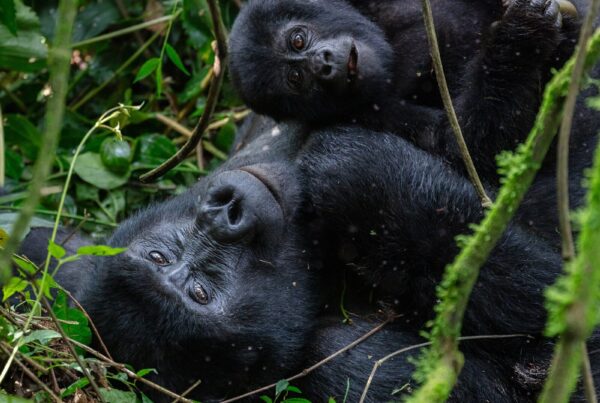
Most of what happens during a gorilla trekking encounter is communicative — gorillas are constantly sending signals about their emotional state, social position, level of comfort with your presence, and relationship to each other, and the visitor who can read these signals is having a fundamentally different experience than the visitor who is simply looking at large animals, in the same way that a person who can read a room full of humans is having a different social experience than someone who registers only physical appearance. This guide decodes the specific behaviours you will most likely observe during your 60-minute encounter: what the silverback’s chest-beating, stare, and mock charge are communicating (and why none of them mean what first-time visitors fear); what juvenile play behaviour tells you about gorilla social development; what the mother’s protective crouch over an infant signals; how gorilla vocalisations differ in meaning (belch vocalisations versus alarm barks versus pig-grunt warnings); and how your own body posture, eye contact, and movement choices communicate to the gorilla family whether you are a neutral presence or a potential threat. For which families have the most behaviorally expressive encounters, see the gorilla families guide.
Key Gorilla Behaviours to Know
- Chest-beating: dominance display or territory signal — not aggression toward visitors
- Silverback stare: assessment, not threat — crouch, avoid direct eye contact, remain still
- Mock charge: rare bluff display — follow ranger’s instructions, do not run
- Belch vocalisations (uh-uh-uh): contentment signal — a relaxed, feeding family makes this sound
- Pig-grunt warning: discomfort or mild alarm — ranger will adjust group position
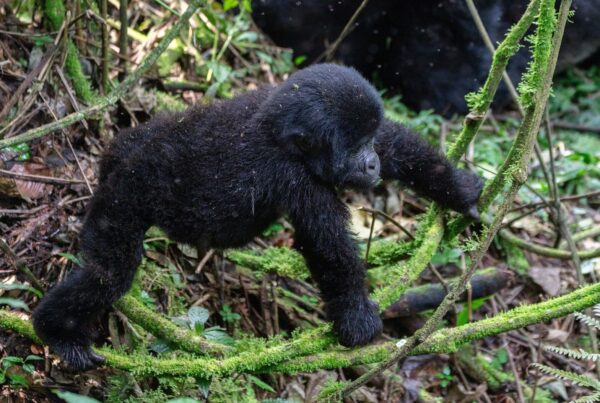
- Juvenile play: socially normal; juveniles approaching visitors happens — remain still, let the animal pass
When you finally stand before a habituated gorilla family, you will witness a continuous stream of behaviour that can seem mysterious if you do not know what to look for. Gorillas communicate through an elaborate vocabulary of body postures, facial expressions, vocalisations, and physical gestures that convey everything from contentment to alarm, from affection to dominance. Understanding these behavioural signals transforms the encounter from passive observation into active interpretation, allowing you to read the social dynamics unfolding before you with the same fluency you bring to human interactions.
This guide decodes the most common gorilla behaviours that trekkers observe during their hour in the forest. It explains what specific actions mean, why gorillas perform them, how to distinguish between playful and threatening displays, and how your own behaviour should adjust in response to what the gorillas are communicating. Armed with this knowledge, you will return from your trek not merely with photographs but with genuine comprehension of what you witnessed.
The Silverback’s Authority: Displays and Dominance
The dominant silverback is the centre of gorilla social life, and his behaviour sets the tone for the entire family. When relaxed, he sits or reclines with regal composure, observing his family with calm attention. His massive size and silver-saddled back make him unmistakable, and his stillness during rest periods can be as imposing as any active display.
Chest-beating is the most famous silverback behaviour, and trekkers sometimes misinterpret it as aggression. In reality, chest-beating serves multiple purposes. It may assert dominance within the group, reassuring females and juveniles of his protective presence. It may warn rival males who are approaching the group’s territory. It may simply be a spontaneous expression of energy and confidence. The sound carries for kilometres through the forest, a rhythmic announcement of silverback presence that other gorillas recognise instantly.
When a silverback stands abruptly from a resting position and stares directly at the human group, he is assessing whether you pose a threat. This is not aggression but vigilance. Remain calm, avoid direct eye contact, and allow your guide to manage the situation. The silverback is doing exactly what a good leader should do: monitoring his environment and protecting his family.
True silverback aggression is rare during habituated encounters but unmistakable when it occurs. Charging, accompanied by vocalisations and deliberate movement toward the perceived threat, indicates that the silverback feels genuinely threatened and is prepared to defend his group. Guides are trained to recognise the difference between bluff charges, which are common and harmless, and genuine charges, which require immediate withdrawal.
Mother-Infant Interactions: The Heart of Gorilla Society
The bond between a mother gorilla and her infant is among the most touching aspects of any trekking encounter. Mothers cradle their infants against their chests, groom them meticulously, and respond to their cries with immediate attention. This nurturing behaviour mirrors human maternal care so closely that many trekkers find themselves unexpectedly emotional while watching.
Infants cling to their mothers’ fur, first on the chest and later riding on the back as they grow heavier and more coordinated. They nurse for approximately three to four years, an extended infancy that reflects the complexity of gorilla social learning. During your encounter, you may see an infant nursing, a behaviour that indicates the mother’s continued investment in its survival and development.
Juveniles, older than infants but not yet sexually mature, spend much of their time playing. Wrestling, chasing, and tumbling through the undergrowth, they practice the physical skills they will need as adults while learning social rules through play. A juvenile who plays too roughly may be corrected by its mother or by an older sibling, teaching boundaries that maintain group harmony.
Mothers are also fiercely protective. If an infant approaches the human group out of curiosity, the mother will usually retrieve it quickly, pulling it back by the arm or calling it with a soft vocalisation. This is not fear but responsible parenting. Allow the mother to manage her infant without interpreting her actions as hostility toward your presence.
Vocalisations: The Soundtrack of the Encounter
Gorillas produce a wide range of vocalisations that trekkers hear throughout the encounter, even if they do not always understand what they mean. The belch vocalisation, a soft, contented sound, is the most common and indicates relaxation and satisfaction. Gorillas belch while feeding, resting, and grooming, and the chorus of belches from a contented family creates a soothing background soundtrack.
Pant-hoots are louder, more excited calls associated with social arousal, play, or mild alarm. Chimpanzees are more famous for pant-hooting, but gorillas use similar vocalisations in comparable contexts. A sudden burst of pant-hoots from the group may indicate that something has caught their attention, perhaps another gorilla family in the distance or an interesting food discovery.
Sharp barks or hoots signal alarm or mild threat. If you hear these vocalisations, watch your guide for instructions. The gorillas may have detected something in the forest that you cannot see, or they may be responding to the behaviour of a trekker who has inadvertently disturbed them.
Screams are rare and indicate genuine distress, usually from a juvenile who has been disciplined too harshly or who has encountered something frightening. Mothers respond immediately to infant screams, and other group members may also investigate, demonstrating the cooperative care that characterises gorilla social structure.
Feeding Behaviour and Food Preferences
Gorillas spend much of their waking hours feeding, and observing their dietary choices reveals their ecological role as forest gardeners. Mountain gorillas are primarily herbivores, consuming leaves, stems, bamboo shoots, fruit, bark, and roots. Their feeding behaviour is methodical and unhurried, selecting the most nutritious plant parts with evident discrimination.
During your encounter, you may see gorillas stripping leaves from vines, breaking bamboo stems to access the tender inner pith, or carefully peeling bark from specific trees. Each food item is handled with a technique refined through years of practice, and young gorillas learn these techniques by watching their mothers and older siblings.
The silverback typically feeds in the most advantageous position, often near the centre of the group where he can monitor everyone while eating. Females and juveniles feed around him, maintaining proximity that provides protection while allowing access to food resources. This spatial arrangement reflects the social hierarchy without requiring constant active enforcement.
Grooming and Social Bonding
Grooming is one of the most common and socially significant behaviours you will observe during your encounter. Gorillas groom each other meticulously, picking through fur to remove parasites, dirt, and debris. This behaviour serves hygienic purposes but its social function is equally important. Grooming reinforces bonds between individuals, reduces tension, and maintains the social fabric of the group.
Adult females groom each other, establishing alliances that help them navigate group dynamics. Mothers groom their infants, combining hygiene with affectionate touch. Juveniles groom each other during rest periods, practicing social skills that will serve them throughout their lives. Even the silverback may be groomed by females, a service that acknowledges his status while providing mutual benefit.
The pace of grooming is leisurely and hypnotic to watch. Both participants appear deeply relaxed, and the gentle rhythm of fingers moving through fur creates an atmosphere of tranquillity that permeates the entire group. When you observe grooming, you are witnessing the maintenance of gorilla social relationships in real time.
Play and Juvenile Energy
Juvenile gorillas inject energy and comedy into every encounter. Their play is boisterous, uninhibited, and endlessly entertaining. They somersault down slopes, swing from vines, wrestle with siblings, and chase each other through the undergrowth with abandon that contrasts sharply with the dignified composure of the adults.
Play serves critical developmental functions. It builds physical strength and coordination, practices social skills such as turn-taking and boundary recognition, and allows juveniles to experiment with behaviours they will need as adults. A juvenile who playfully challenges a sibling is rehearsing the dominance displays it may use in earnest later in life.
Silverbacks generally tolerate juvenile play with patient indulgence, though they may intervene if play becomes too rough or if juveniles venture too far from the group. Mothers monitor their offspring’s play more closely, retrieving infants who wander too far and disciplining juveniles whose behaviour threatens to disturb the group’s equilibrium.
How to Respond to Different Behaviours
Understanding gorilla behaviour allows you to respond appropriately and contribute to a safe, respectful encounter. When gorillas are relaxed and feeding, maintain quiet observation. When a silverback displays, remain calm and follow your guide’s instructions. When infants approach, do not reach toward them; allow their mothers to manage the interaction. When juveniles play, enjoy the spectacle without making sudden movements or loud noises that might startle them.
Your guide will interpret gorilla behaviour continuously and adjust your group’s position accordingly. Trust their judgment, which is based on years of experience with specific families. What may look alarming to an untrained observer is often routine social behaviour that guides manage with practiced ease.
Final Thoughts
Gorilla behaviour is not random or incomprehensible. It follows patterns that primatologists have documented over decades of research, patterns that reflect the species’ social complexity, emotional depth, and evolutionary heritage. When you understand what you are seeing, the encounter becomes a conversation rather than a monologue, a dialogue across the species boundary in which both parties communicate, however imperfectly, their presence and intentions.
The silverback who holds your gaze is not merely a beautiful animal. He is a leader making decisions, a father protecting his offspring, a male asserting his place in a competitive world. The mother who cradles her infant is not merely nurturing. She is teaching, bonding, and investing in the next generation with the same commitment that human mothers bring to their children. When you learn to read these behaviours, you see the gorillas not as exhibits but as individuals, and that recognition transforms tourism into connection.
Frequently asked questions about gorilla behaviour during trekking
What does it mean when a silverback charges at you during a gorilla trek?
What visitors describe as a “silverback charge” is almost always a mock charge — a bluff display in which the silverback runs toward a perceived threat, stops short, and retreats. The mock charge is a dominance communication tool rather than a genuine attack: the silverback is asserting his authority over his territory and family by demonstrating that he is capable of displacing whatever triggered his response. Mock charges at visitor groups are uncommon and are most likely to occur when a visitor has moved too close, made sustained direct eye contact with the silverback, or made a sudden loud movement. The ranger’s instructions during a mock charge are: crouch low, avert your gaze from the silverback, remain completely still, do not run (running triggers a pursuit response), and do not make noise. Rangers at Bwindi manage the situation verbally and through their own body positioning — follow their instructions precisely and the event is typically over in seconds.
What does gorilla chest-beating signify?
Chest-beating in gorillas — the rhythmic cupped-hand beating on the chest that produces the distinctive hollow sound — serves multiple communication functions depending on context. It is most commonly a dominance assertion by the silverback: affirming his status within the family group, responding to a perceived external threat (another gorilla group’s calls, an unfamiliar sound in the forest, or a perceived human incursion), or simply an energetic self-expression during periods of high arousal. The sound carries significant distances through the forest, communicating silverback presence to other males who might consider encroaching on the family’s range. Juvenile gorillas also chest-beat during play sequences — in juveniles, it functions as play signalling rather than dominance communication, and the smaller physical size and playful context distinguish juvenile from silverback chest-beating. When you hear chest-beating during a gorilla encounter, remain calm and watch rather than react — the silverback is communicating to his social world, not responding to you specifically.
What does it mean if a juvenile gorilla approaches very close to you?
Juvenile gorillas in habituated groups are naturally curious about human visitors and occasionally approach closer than the 7-metre rule — sometimes very close, sometimes making physical contact. This happens because juveniles have grown up in a habituated group and regard the regular presence of human visitors as normal rather than threatening. When a juvenile approaches, remain completely still and do not attempt to touch, push away, or interact with the animal. The ranger will verbally redirect the juvenile in most cases, and mother gorillas typically retrieve approaching juveniles relatively quickly. The disease transmission protocols — particularly the 7-metre rule — exist primarily to protect gorillas from human pathogens, meaning that a juvenile approaching you creates a transmission risk in the same direction as a human approaching a gorilla. Remain still, do not reach toward the animal, and let the ranger manage the situation.
How do gorillas communicate contentment versus discomfort?
A contentedly feeding gorilla family makes a distinctive series of low, rumbling vocalisations — often described as belch vocalisations or “uh-uh-uh” sounds — that indicate relaxed, satisfied feeding activity. When you hear this sound throughout the encounter, the family is at ease and the visit is proceeding well. Pig-grunts — a sharper, more percussive vocalisation — signal mild alarm, discomfort, or displeasure, and are the sound most likely to prompt ranger action to adjust visitor group positioning. Screams and alarm barks indicate genuine distress or threat response and are rare during well-managed habituated visits. Body posture is equally informative: a gorilla sitting with relaxed shoulders, engaged in focused feeding or grooming, is at ease. A gorilla standing at the group’s perimeter, watching the visitor group with focused attention and an upright posture, is assessing a potential concern. Your ranger is reading these signals continuously and adjusting group position accordingly.
Why do gorillas sometimes ignore visitors completely during the encounter?
Gorillas in well-habituated groups that have received daily visitor contact for years have thoroughly incorporated the human visitor presence into their normal environmental experience. A group that is focusedly engaged in feeding activity, grooming, or resting may register the visitor group with a brief glance and then return to the activity they were doing — because the visitors have become a neutral environmental feature rather than an interesting or threatening event. This is actually the hallmark of successful habituation: the gorillas are not performing for you, not alarmed by you, not curious enough about you to interrupt their normal behaviour. The encounter where gorillas appear completely uninterested in the visitor group is often the most revealing of genuine wild gorilla behaviour, because you are watching what they do naturally rather than watching their response to your presence. First-time trekkers sometimes feel that ignored encounters are somehow less successful — in reality, they are observing the most natural gorilla behaviour that the habituation programme can produce.
Read the encounter as it happens
- Uganda Gorilla Families — each family has distinct personalities and social dynamics
- Gorilla Permit Guide — book your permit for the 60-minute encounter this guide prepares you to read
- Bwindi Sector Guide — sector and family assignment context
- Rwanda Gorilla Families — Virunga sector families for comparison
- Safari Itineraries — multiple gorilla trek days to observe behaviour across different families
- Gorilla Behaviour in the Wild: Understanding the Gentle Giants of Africa
- Do Gorillas Attack Humans in Uganda? Understanding Gorilla Behaviour and Safety
- Understanding mountain gorilla social behaviour: silverbacks, females, and family life
- Understanding your gorilla trek certificate: what it says and what it means
- This Is the Place Avicii Meant When Singing ‘The Nights’
- Travel Advisories for Uganda: What Governments Say and What They Mean
- Understanding the Cost of Gorilla Trekking: Complete Budget Breakdown
- Can You See Gorillas Every Day in Uganda? Understanding Trekking Schedules and Success Rates
- How Gorilla Trekking Affects Gorilla Behaviour: What the Research Shows
- Gorilla Grooming Behaviour: Social Bonds in the Forest