Updated
The Uganda Wildlife Authority allocates exactly sixty minutes of contact time with each habituated gorilla family per visitor group per day. Not fifty-five minutes. Not an hour and fifteen. Sixty minutes, timed from the moment the group reaches the family, after which the ranger signals that it is time to move away and the trek back begins. This fixed duration is conservation policy, not visitor experience management — it exists to limit stress and disease exposure for the gorillas. But it also creates a specific experiential structure: a known, bounded time in which the encounter happens.
In sixty minutes — the same duration as a standard therapy session, a university lecture, a short film — something happens that most visitors cannot fully process in the forest and continue processing for days and weeks afterward. What the sixty minutes contains is not sixty minutes of spectacle. It is sixty minutes of presence, during which the ordinary frameworks through which most people relate to the natural world are quietly but decisively challenged.
The First Ten Minutes: Calibration
The first ten minutes after finding the gorilla family are typically spent in a mixture of awe and logistics. The ranger manages the group’s position — maintaining the required eight-metre distance, keeping the group quiet, ensuring nobody is between the gorillas and their preferred movement direction. Cameras come out. People try to process the visual information of a scene that has no precedent in their experience. The instinct to photograph competes with the instinct to simply look. Most people do both, and neither fully satisfies.
Minutes Ten to Thirty: Habituation to the Extraordinary
By the fifteen-minute mark, something shifts. The initial disorientation of encountering something unprecedented begins to give way to a different quality of attention — steadier, less reactive, more willing to let the scene come to you rather than reaching after it. The cameras lower more often. The gorillas continue what they were doing before you arrived: feeding, moving, grooming, resting, playing. The encounter settles into its ordinary extraordinary rhythm.
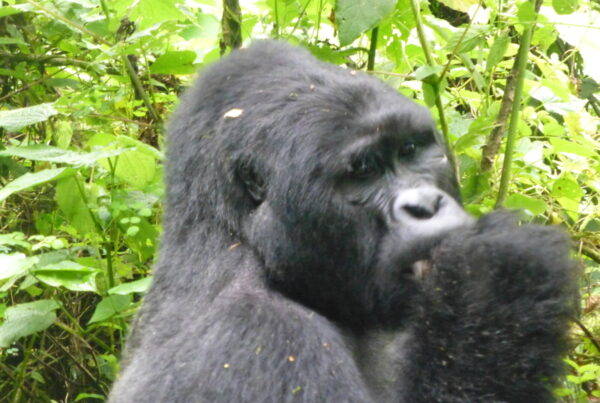
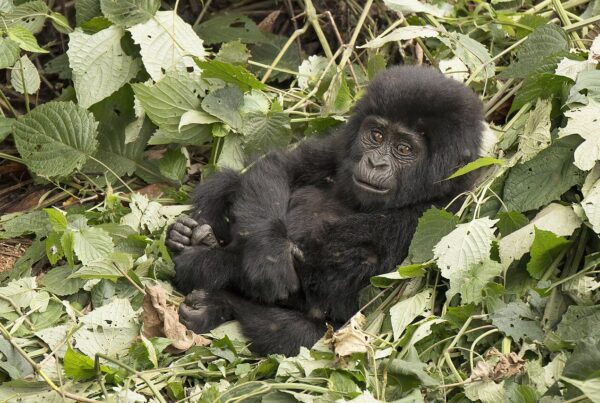
This phase — the middle of the hour — produces the most significant memories for most visitors. Not the dramatic moments of initial sighting or silverback posturing, but the quiet moments of ordinary gorilla life observed at close range: a mother examining her infant’s hand, two juveniles play-wrestling with the specific abandon of young animals everywhere, the silverback’s vast bulk settling into rest with an exhalation that you feel as much as hear.
The Last Ten Minutes: Everything You Missed
When the ranger announces that you have ten minutes remaining, something sharpens. The awareness that this specific encounter — this specific morning with this specific family — is ending creates an intensification of attention that is often the most productive period of the hour. People who have been photographing throughout put their cameras down and simply watch. The gorillas, unaware of the countdown, continue with their morning. The contrast between the animals’ complete indifference to the ending and the visitors’ acute awareness of it produces a specific quality of bittersweetness that many people describe as among the most affecting moments of the encounter.
What the Hour Leaves Behind
The sixty minutes end. The walk back begins. What the hour leaves behind in the person who experienced it is not a specific thought or a specific changed belief. It is a shift in the default assumption about what the natural world contains — a shift from abstract knowledge of biodiversity and evolution to embodied experience of a specific other form of intelligence in a specific wild place. The shift is small and permanent. The worldview that contains it is different from the worldview that did not. That is what $800 and sixty minutes in Bwindi provide. Contact us to book it for 2027.
The sixty-minute encounter limit is itself a conservation measure that became fixed in Uganda’s gorilla trekking regulations after research demonstrated the stress indicators that longer human presence produced in habituated families. The limit imposes a discipline on the visit that intensifies the experience: knowing that the sixty minutes will end creates a quality of attention that longer encounters do not generate. Visitors who have trekked gorillas in multiple countries consistently report that the one-hour encounter, managed with proper group behaviour and distance protocols, produces more meaningful observation than unconstrained time would — because the limit forces active, present engagement with the encounter rather than passive waiting for something to happen.
The one-hour encounter’s brevity also ensures that the memory is not diluted by satiation — the desire to see more, to stay longer, to witness one more behaviour is part of what makes the experience persist in recollection as something unfinished and therefore perpetually present.