Updated
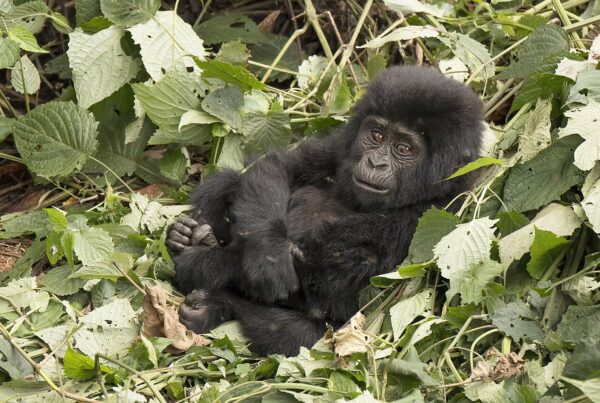
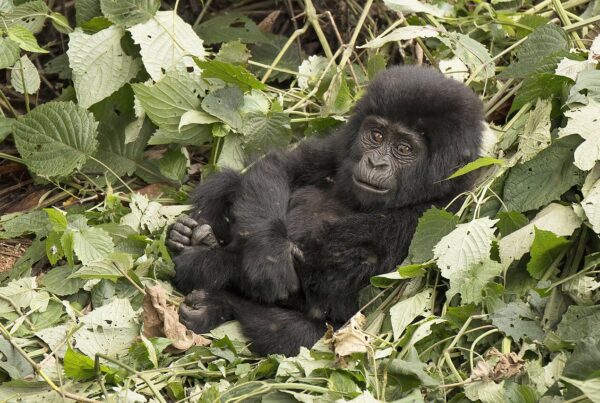
Quick Facts: Ethics of Gorilla Trekking Population trend: mountain gorillas are the only great ape with an increasing wild population — tourism is part of why Main ethical concern: disease transmission from humans to gorillas — managed by 7m distance rule, mask protocols, health screening Habituation stress: well-habituated families show no elevated stress markers during tourist visits — documented in research No tourism alternative: mountain gorillas cannot survive in captivity — their forest habitat must be maintained through conservation funding Community benefit: 20% of Uganda park entry fees go to surrounding communities — tourism makes conservation viable for local people Is gorilla trekking ethical?. Gorilla trekking is ethical when it is well-managed — and the evidence from Uganda’s conservation outcomes over the past three decades supports this conclusion more clearly than almost any other wildlife tourism programme in the world. The mountain gorilla population has grown from an estimated 254 individuals in the early 1980s to over 1,000 today, and gorilla tourism revenue is the primary mechanism funding the protection that drove that recovery. The ethical questions that matter are not whether gorilla trekking should exist at all, but whether the specific operator, park, and protocols you choose are managing the experience responsibly. See the gorilla families overview for the habituated groups involved, and the Bwindi guide for the management framework.
- Population trend: mountain gorillas are the only great ape with an increasing wild population — tourism is part of why
- Main ethical concern: disease transmission from humans to gorillas — managed by 7m distance rule, mask protocols, health screening
- Habituation stress: well-habituated families show no elevated stress markers during tourist visits — documented in research
- No tourism alternative: mountain gorillas cannot survive in captivity — their forest habitat must be maintained through conservation funding
- Community benefit: 20% of Uganda park entry fees go to surrounding communities — tourism makes conservation viable for local people
Is gorilla trekking ethical? It is a question every thoughtful traveller should ask before booking, and it deserves a full, honest answer rather than a defensive one. After more than a decade of organising gorilla treks in Uganda, here is our complete assessment — the arguments on both sides, the evidence, and where we land.
Is Gorilla Trekking Ethical? Here Is Our Complete Honest Answer
The Case Against Gorilla Trekking
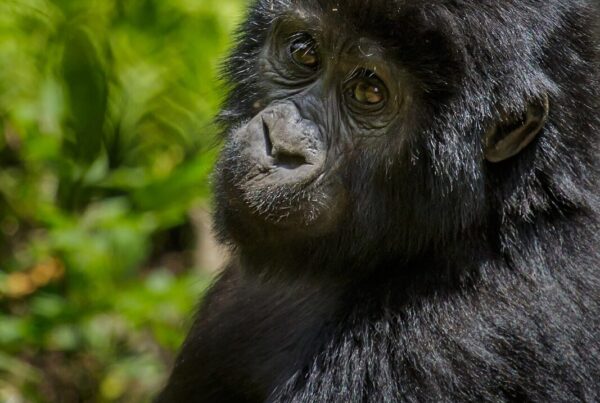
The concerns raised by gorilla trekking critics are worth taking seriously. The primary objection is disease transmission: mountain gorillas share approximately 98% of their DNA with humans and are vulnerable to human respiratory infections. A cold virus that causes minor inconvenience in a human can be fatal to a gorilla with no acquired immunity. Gorillas do not have access to medical treatment in the wild, and a respiratory outbreak in a habituated family can be devastating. This is a real risk, not a theoretical one. Secondly, the habituation process itself — acclimating wild gorillas to human presence — changes their natural behaviour and increases their exposure to humans and human diseases indefinitely. A habituated gorilla is more accessible to humans, including potential poachers, than a wild one.
A third concern is the stress of human observation. Even habituated gorillas sometimes show signs of stress in response to visitors — particularly when group sizes exceed recommended limits or when visitor behaviour is inappropriate. The one-hour rule exists partly to limit this stress, but one hour per day with multiple groups adds up across a gorilla family’s life.
The Case for Gorilla Trekking
The conservation evidence for gorilla trekking tourism is compelling. The mountain gorilla population has grown from fewer than 250 individuals in the 1980s to over 1,000 today. This recovery happened during the same period that gorilla tourism developed and expanded. The causal link is not coincidental: permit revenue funds ranger salaries, anti-poaching patrols, veterinary care for sick and injured gorillas, and community revenue-sharing programs that give local populations a financial stake in keeping gorillas alive. Without that revenue, the economic logic shifts: forest becomes farmland, gorillas become bushmeat. The gorillas alive today exist in significant part because of the tourism model that funds their protection.
The alternative — closing gorilla trekking to visitors — would require replacing 15 to 20 million USD per year of annual permit revenue with donor funding. That funding has never materialised at scale. Conservation organisations that have modelled this scenario consistently conclude that removing gorilla tourism would accelerate the very threats it is meant to prevent.
The Disease Mitigation Protocols
Uganda Wildlife Authority has implemented strict protocols to manage disease transmission risk. Maximum group size is eight tourists per gorilla family per day. Minimum distance of seven metres must be maintained. Sick visitors are turned away at the park gate — this rule is enforced. Masks are required in some conditions and recommended universally. Veterinary teams from the Mountain Gorilla Veterinary Project monitor habituated families and can intervene when respiratory illness is detected in a gorilla group. Habituation is gradual and conducted by trained researchers over months. These protocols do not eliminate disease risk entirely — no protocol does — but they reduce it significantly and represent world-standard practice in managed wildlife tourism.
Community Revenue Sharing
Twenty percent of all gorilla trekking permit revenue goes directly to community development in the parishes surrounding Bwindi. This funds schools, health clinics, water projects, and community development programmes. Farmers who lose crops to gorillas raiding fields receive compensation. Locals are employed as rangers, trackers, porters, lodge staff, and guides. This economic integration is not incidental — it is the mechanism by which communities choose conservation over conversion. Gorillas are economically valuable alive and in the forest. Without tourism, they are not. The ethical case for gorilla trekking is inseparable from the community revenue model that supports it.
How to Trek Ethically
Book through responsible operators who enforce the rules. Follow every instruction from rangers during the trek. Maintain the seven-metre distance. Do not visit if you are sick. Wear a mask if you have any respiratory symptoms. Do not eat, drink, or smoke near the gorillas. Speak softly. Move slowly. These behaviours, followed consistently, make gorilla trekking a responsible form of conservation tourism rather than a harmful one. Ethical gorilla trekking is possible. Irresponsible gorilla trekking is not. The difference is in the behaviour of the visitor and the standards of the operator.
Our Verdict
Gorilla trekking is ethical when conducted responsibly and through operators who uphold Uganda Wildlife Authority standards. The conservation evidence is clear: regulated gorilla tourism has funded the most successful large primate recovery in conservation history. The disease protocols are real and enforced. The community benefits are documented. The alternative — no tourism — is not conservation utopia but economic collapse of the conservation model that has kept these animals alive. We stand behind gorilla trekking as an ethical activity and we hold ourselves to the standards that make it so.
Does gorilla trekking harm the gorillas?
Well-managed gorilla trekking does not harm gorillas — and the evidence from Uganda’s habituated gorilla families over decades of tourism supports this. Research monitoring habituated families has not found elevated stress hormones or behavioural disruption in families used to tourist visits. The genuine risk is disease transmission: gorillas share approximately 98.3% of human DNA and are susceptible to human respiratory illnesses that can be lethal for them. Uganda Wildlife Authority manages this risk through the 7-metre minimum distance rule, mandatory masks when groups approach closer, and the policy of turning away visitors with active respiratory illness.
Is gorilla habituation for tourism cruel?
Gorilla habituation is a two-year process in which researchers gradually acclimatise a wild gorilla family to human presence, spending increasing amounts of time near the family each day until the gorillas tolerate observers at close range without stress. It is not conditioning through rewards — gorillas are not fed or manipulated. The process relies on consistent, non-threatening presence. Well-habituated families do not avoid human observers and show no signs of chronic stress. Researchers argue that habituation for tourism, when done correctly, is the most defensible form of human-gorilla contact because it creates animals that can be monitored, protected medically, and whose habitat can be economically justified.
What happens to gorilla conservation if tourism stops?
The COVID-19 pandemic provided a direct answer: when tourism stopped in 2020, Uganda Wildlife Authority faced immediate funding shortfalls that threatened ranger salaries and anti-poaching operations. Conservation organisations diverted emergency funds to maintain protection during the closure. The gorilla population did not collapse — the conservation infrastructure held — but the fragility of a model dependent on a single revenue source was exposed. Without tourism revenue, gorilla conservation would require a level of international donor funding that has never been reliably sustained for any wildlife programme over the long term.
How do I choose an ethical gorilla trekking operator?
Look for operators licensed by the Uganda Tourism Board (UTB) and affiliated with the Association of Uganda Tour Operators (AUTO). Ask specifically how the operator selects lodges — do they use community-owned accommodation at Buhoma, do they hire local guides and porters, do they partner with community programmes? Check that their health screening protocols (turning away sick clients from gorilla treks) are stated explicitly. The cheapest operators often cut corners on community benefit and safety logistics — the cost difference between a budget and a mid-range operator rarely justifies the compromise on experience quality and ethical standards.
Is it ethical to take photos of gorillas during trekking?
Photography is ethical within the rules: no flash, maintain the 7-metre distance, do not pursue the gorillas for a better angle. The ethical concern with photography is not the camera itself but the behaviour it can prompt — approaching too closely for a frame, using flash to compensate for low light, or lingering beyond the one-hour limit. Photography that respects these rules documents the encounter without adding stress to the animals. Sharing respectful gorilla photographs on social media is actively valuable for conservation awareness — it is one of the most effective recruitment tools for new visitors who fund the conservation model.
- Can You See Gorillas Without a Permit? The Honest Answer for 2026
- What Do Gorillas Smell Like Up Close? The Honest Answer
- The Gorilla Trekking Uganda FAQ: 40 Real Questions Answered Honestly
- Nairobi to Bwindi: Can You Drive in One Day? Honest Answer 2027
- Craft shopping Uganda: what to buy and where to buy ethically
- Wildlife in Uganda – Where Nature Still Roars, Hums, and Soars Free
- Uganda Birding Safari — 22-Days: A Journey Into the Feathered Soul of Africa
- Uganda Primate Safaris: Journey Into the Forests Where We First Belonged
- Murchison Falls Uganda Wildlife Safari — 4-Days: Where the Nile Breaks and the Wild Roars
- Wildlife Safaris: What to See, Expect, Prepare & Plan — Plus Where to Go in Africa