Updated
The Acholi are a Luo-speaking people of northern Uganda, centred on Gulu, Kitgum and Pader and extending into South Sudan. Their culture is known for the bwola royal dance and the larakaraka courtship dance, the lukeme thumb piano, rich oral poetry, dishes such as malakwang greens and millet bread, and the mato oput reconciliation ritual. The region suffered greatly during the Lord’s Resistance Army war from the late 1980s to 2006, and has been rebuilding since.
Society and history
Acholi society was traditionally organised into chiefdoms led by chiefs called rwodi, with clans bound by kinship and ritual. Under colonial rule, many Acholi men were recruited into the army and police. The LRA insurgency, led by Joseph Kony, brought killings and abductions, especially of children, and by the mid-2000s most of the rural population lived in crowded displacement camps. Since the fighting ended, people have returned to their land, towns like Gulu have grown, and survivors’ stories remain an important part of public memory.
Music and dance
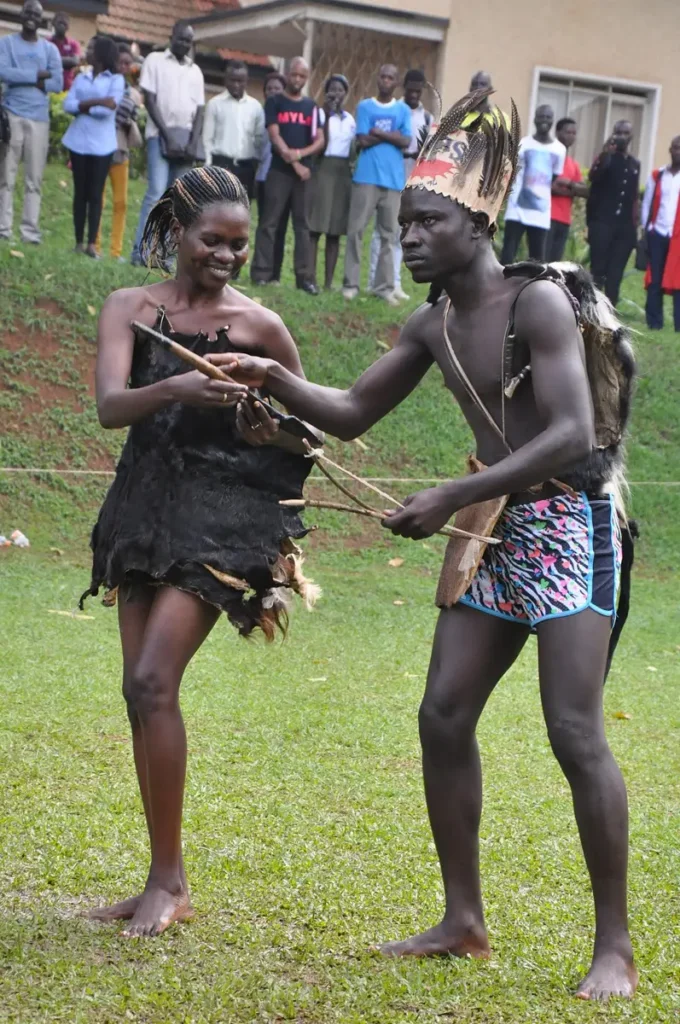
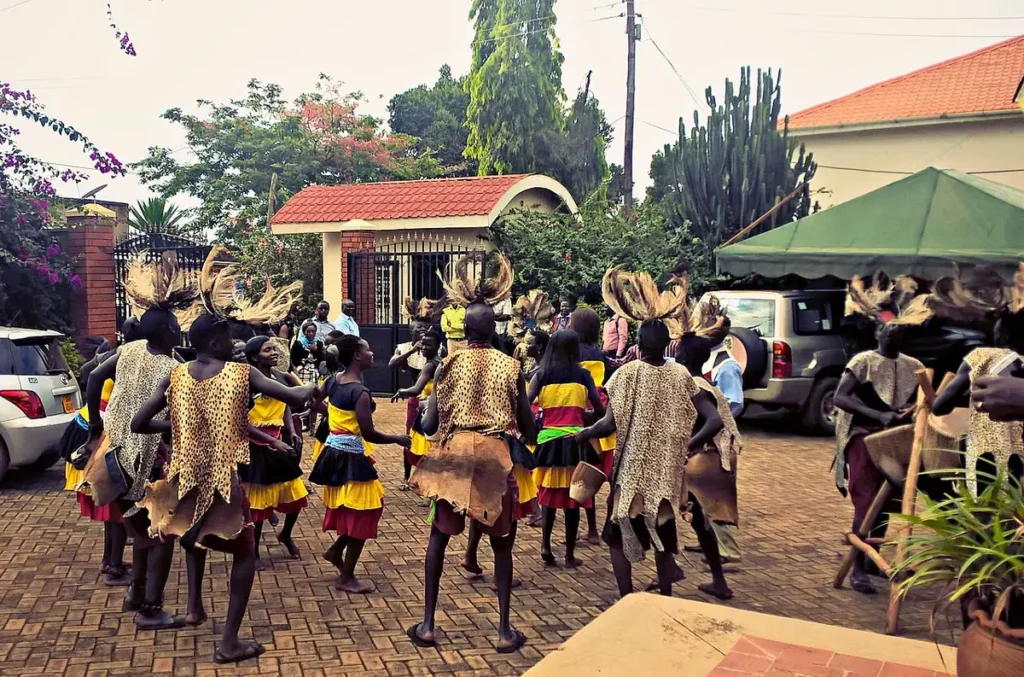
Bwola, once performed for chiefs, involves large circles of men beating small drums while women dance in the centre. Larakaraka is a lively courtship dance performed by young people, and dingi dingi is a girls’ dance that grew popular in the camps. The lukeme, a thumb piano, and the adungu harp accompany songs and storytelling. Acholi dances are performed at the Ndere Centre in Kampala and at cultural events in the north. See our guides to Ugandan music and the Ndere Centre.
Literature, food and reconciliation
The poet Okot p’Bitek, from Gulu, drew on Acholi oral tradition in “Song of Lawino” (1966), one of East Africa’s most celebrated works. Acholi food includes malakwang, a sour leafy vegetable often cooked with groundnut paste, millet bread, sesame paste and smoked fish. Mato oput, literally “drinking the bitter root”, is a traditional ritual to reconcile clans after a killing, and was discussed widely as a path to healing after the war. See our guide to groundnut sauces.
Visiting the north
Gulu is the main town, reached by road from Kampala in about 5–6 hours, and the route via Kitgum leads on to Kidepo Valley National Park. Most gorilla trips stay in the south-west, so visiting the north works best as an extension. The gorilla permit costs US$800, or US$600 in April, May and November. See our guide to Kidepo Valley.
Frequently asked questions
A Luo-speaking people of northern Uganda and South Sudan.
A royal Acholi dance with men drumming in a circle and women dancing inside.
A traditional Acholi reconciliation ritual after a killing.
The LRA conflict ended in the north around 2006; check current travel advice before going.