

Updated
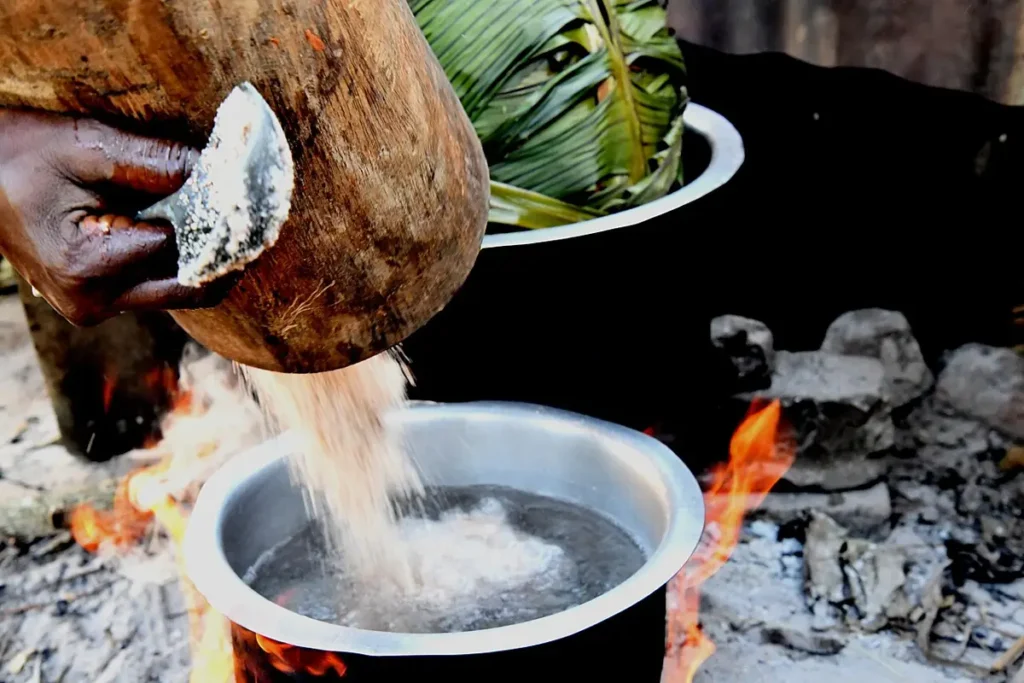
A Ugandan cooking class usually lasts two to four hours and teaches the country’s core dishes: matoke steamed in banana leaves, groundnut sauce, beans, greens, chapati and often a rolex. The best classes start with a market visit to buy ingredients and are held in a family home or community kitchen, often cooking over charcoal or firewood. Classes are offered in Kampala and by community groups and lodges near the national parks, including around Bwindi.
What you will cook
Matoke is the centrepiece: green cooking bananas are peeled, with oiled hands to avoid the sticky sap, wrapped in banana leaves and steamed for about an hour, then mashed inside the leaves. Groundnut sauce is made from fresh groundnut paste stirred into water and simmered with onion and tomato until thick. Other common dishes are beans, dodo or nakati greens, chapati rolled and cooked on a flat pan, and a rolex, an omelette rolled in chapati. See our guides to matoke and groundnut stew.
How classes work
Many classes begin at a local market, where your host shows you how to choose matoke, tomatoes and greens and explains what each ingredient is used for. Cooking then takes place in a home or outdoor kitchen, with everyone peeling, chopping, stirring and wrapping. The class ends with a shared meal, often eaten with the host family. Prices vary with the setting and group size; ask your operator for current rates and what is included. See our guide to Ugandan food markets.
Cooking near the gorillas
Around Bwindi, some community groups and lodges offer short cooking sessions as part of village walks, a good activity for the afternoon after your trek or a rest day. Ingredients are often from the family’s own garden. Ask your lodge or operator to arrange it, and mention any allergies, especially to peanuts. The gorilla permit costs US$800, or US$600 in April, May and November. See our guide to communities near Bwindi.
Frequently asked questions
Usually matoke, groundnut sauce, beans, greens, chapati and a rolex.
About two to four hours, longer with a market visit.
Yes, through some community groups and lodges; ask in advance.
Yes, most core dishes are vegetarian.










