

Updated
The Karamojong are agro-pastoralist people of Karamoja, the semi-arid north-east of Uganda bordering Kenya and South Sudan. Their lives traditionally centre on cattle, which provide milk, blood, meat, wealth and social status, alongside crops such as sorghum grown near fortified homesteads called manyattas. Related groups include the Jie and the Dodoth. Karamoja is Uganda’s most remote region, home to Kidepo Valley National Park, and visitors can arrange respectful homestead visits with community guides.
Cattle and the manyatta
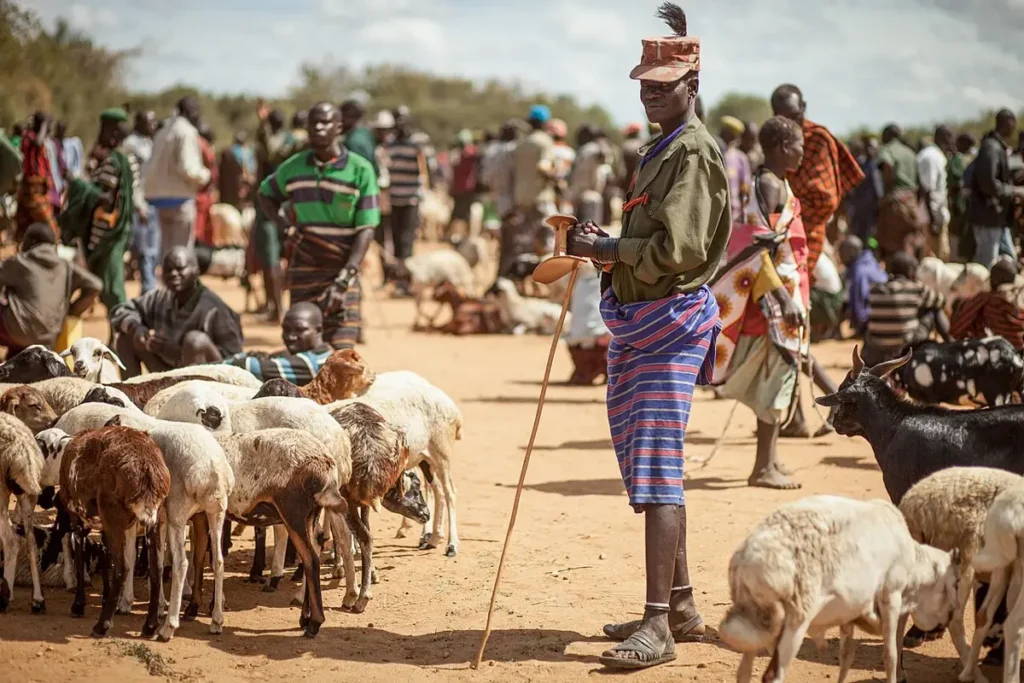
Cattle are at the heart of Karamojong culture: they are given as bride wealth, named and praised in songs, and moved over long distances to find water and grazing in the dry season, when young men take herds to distant camps called kraals. Families live in manyattas, clusters of huts surrounded by thorn or wooden fences for protection, while women farm sorghum, maize and beans when the rains allow. Elders hold strong authority, and age-sets organise men’s roles in society.
Dress, beadwork and dance
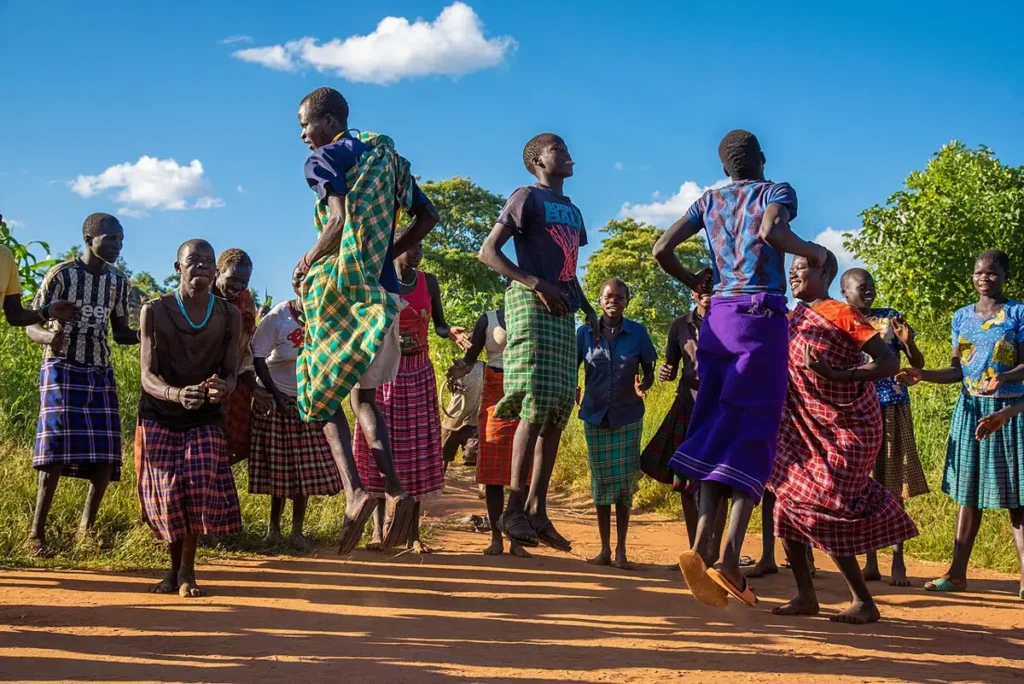
Many Karamojong still wear traditional dress: shukas, colourful checked blankets worn by men, and many strands of glass beads worn by women around the neck. Dances involve high jumping, rhythmic chanting and stamping, performed at ceremonies and for visitors. See our guide to Ugandan beadwork.
Challenges
Karamoja has long faced drought, food insecurity and poverty, and cattle raiding between communities, worsened by the spread of guns from the 1970s onwards, made the region insecure for decades. Government disarmament campaigns in the 2000s and 2010s reduced violence, though raids have flared again at times. Development, schooling and mining are changing traditional ways of life. Check current security advice before travelling in the region.
Visiting Karamoja
Most visitors reach Karamoja on a trip to Kidepo Valley, usually by air. Lodges and community groups near the park arrange homestead visits with local guides; ask before photographing people and pay fairly for visits and crafts. The Ik people of the Morungole Mountains, a separate group with their own language, can also be visited on guided hikes. Gorilla trekking is in the far south-west, where the permit costs US$800, or US$600 in April, May and November. See our guides to Kidepo Valley, an 11-day safari with Kidepo and cultural sites in Uganda.
Frequently asked questions
Agro-pastoralist people of north-eastern Uganda whose culture centres on cattle.
A fenced cluster of huts where a Karamojong family group lives.
Yes, through community guides and lodges near Kidepo.
Security has improved since disarmament, but check current advice before travelling.










