There are trips you plan and there are trips that plan you — gorilla trekking in Uganda belongs to the second category, from the moment you read about it to the morning you lace up your boots at Bwindi Impenetrable Forest, because mountain gorilla trekking is one of the very few travel experiences that requires no marketing, no manufactured excitement, and no post-trip rationalisation: the encounter delivers exactly what it sounds like and then continues to deliver in memory for years afterward. Book the gorilla permit, plan a 7-day safari, and read what to expect on the trek.
- Location: Bwindi Impenetrable Forest NP (4 sectors: Buhoma, Ruhija, Rushaga, Nkuringo) and Mgahinga Gorilla NP; southwestern Uganda
- Permit: USD 800 per person; 60 minutes with a habituated mountain gorilla family; limited to 8 people per family per day; see full cost breakdown
- Why Uganda not Rwanda: identical mountain gorilla encounter; USD 800 vs Rwanda’s USD 1,500; Bwindi’s denser, more atmospheric forest; see accredited Uganda operators
- What it combines with: Kibale chimp trekking, QENP safari, Mabamba shoebill birding — Uganda’s most species-rich wildlife circuit in East Africa
There are trips you plan, and there are trips that plan you. Gorilla trekking in Uganda belongs to the second category. From the moment you read about it to the morning you lace up your boots at Bwindi Impenetrable Forest, something else takes over — a pull that does not need explaining, a certainty that does not need justification. This is the only trip on Earth that speaks entirely for itself.
The Trip That Needs No Sales Pitch
Most travel requires persuasion. You scroll through photos, read reviews, watch videos, and try to convince yourself it will be worth it. Gorilla trekking in Uganda does not work that way. The moment someone tells you they stood face to face with a mountain gorilla in the wild, something in you already knows. You do not need convincing. You need a booking form.
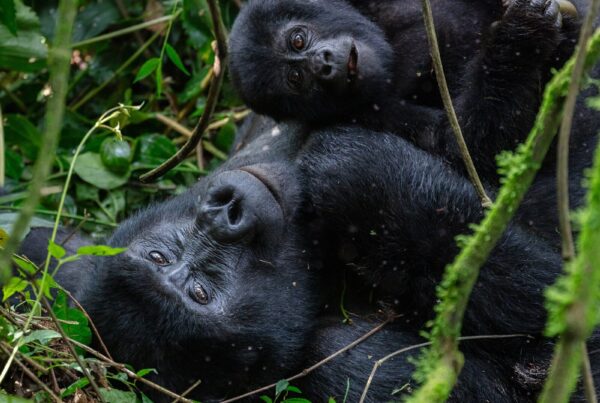
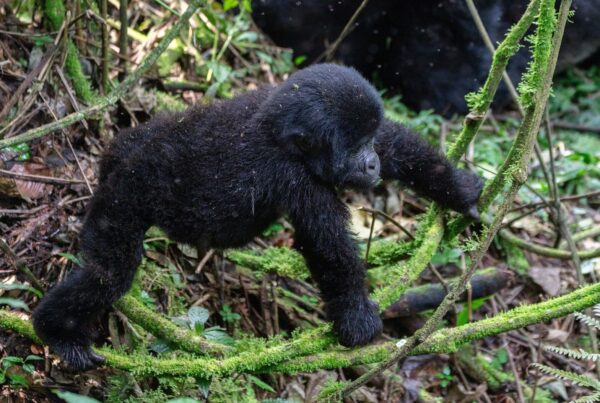
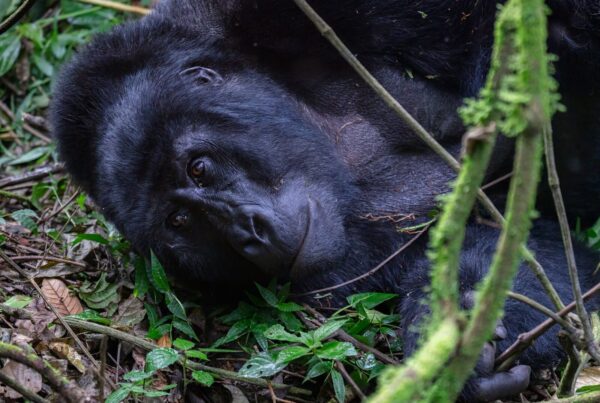
Mountain gorillas share approximately 98.3 percent of their DNA with humans. Their hands look like yours. Their eyes carry the weight of thought. Their family structures mirror our own — protective fathers, devoted mothers, curious juveniles who tumble over each other with the abandon of children on a playground. When you encounter them in Bwindi, you are not watching wildlife. You are meeting relatives. And no photograph, no documentary, no secondhand account prepares you for that.
What Sets This Experience Apart from Every Other Trip
The world is full of remarkable travel experiences. Safaris on the Serengeti. Temples in Angkor Wat. Glaciers in Patagonia. Each is extraordinary in its own right. But gorilla trekking in Uganda has something none of those places can offer: intimacy with a critically endangered primate, on foot, in a primordial forest, with no glass between you and the animal.
Most wildlife experiences keep you at a distance — in a vehicle, behind a railing, separated by scale or geography. Gorilla trekking puts you in the middle of it. You earn the encounter through the hike. You hear the forest before you see it. You smell the vegetation, feel the humidity, push through dense undergrowth, and then — without warning — you hear the sound of something large moving nearby. And then you see them.
The One Hour Rule
Your permitted time with the gorilla family is one hour. Sixty minutes. It sounds brief until you are inside it, and then time stops mattering entirely. You stop thinking about the past or the future. You are completely, totally present. Every minute stretches. Every interaction — a gorilla glancing your way, a silverback shifting position, a juvenile reaching toward a trekker’s boot — registers with a clarity that ordinary life rarely delivers.
Most people report that the hour feels both instantaneous and eternal. It is the paradox of fully lived experience. And when it ends, and you walk back through the forest toward camp, something in you has changed. You cannot name it immediately. But it is there.
Uganda: The Country Behind the Experience
The gorillas are the reason you come. Uganda is the reason you stay. This small landlocked country in East Africa holds more biodiversity per square kilometer than almost anywhere on the planet. It has 1,066 species of birds — more than the entire continent of North America. It has chimpanzees in Kibale Forest, tree-climbing lions in Queen Elizabeth National Park, hippos in the Nile, and a people so warm and generous that visitors consistently rank Uganda among the friendliest countries they have ever visited.
The road to Bwindi from Kampala passes through tea plantations that cascade down hillsides in impossible shades of green, market towns where women carry impossible loads with effortless grace, and highland villages where children wave at every passing vehicle. By the time you arrive at the forest edge, you have already experienced something. The gorillas are the crescendo of a journey that began the moment you landed.
Bwindi Impenetrable Forest
Bwindi is a UNESCO World Heritage Site that has existed, largely unchanged, for 25,000 years. It survived the last ice age. It predates human civilization as we know it. Walking inside it, you feel that age. The trees are enormous. The undergrowth is dense and layered. Mosses carpet every surface. The air itself feels ancient — cool and mineral and alive with birdsong.
Roughly half of the world’s remaining mountain gorillas — approximately 460 individuals — live here. The other half live in the Virunga massif shared by Rwanda, DRC, and Uganda. Bwindi is their stronghold. Standing at the trailhead before a trek, knowing that somewhere in that forest these extraordinary animals are going about their morning routines, is a feeling that settles something in you before the hike even begins.
The Permit That Makes It Possible
The Uganda Wildlife Authority (UWA) issues gorilla permits at $800 per person for international tourists. This is the cost of one hour with one gorilla family, in one of the last places on Earth where such a thing is possible. The permit is not just an access ticket. It is the primary funding mechanism for mountain gorilla conservation. Ranger salaries, anti-poaching patrols, veterinary care, community development programs — all of it is sustained, in significant part, by permit revenue.
When you buy a permit, you become part of the reason mountain gorillas are still here. Their population has grown from fewer than 650 individuals in the early 2000s to over 1,000 today — the only great ape whose numbers are increasing. That is a conservation success story, and your $800 is part of it.
Booking in 2027
Permits for peak season — June, July, August, and December — sell out months in advance. If you are serious about trekking in 2027, the time to act is now. Availability is limited by design: a maximum of eight trekkers per gorilla family per day, across roughly 20 habituated families at Bwindi and Mgahinga. The scarcity is deliberate and necessary. It is also part of what makes the experience so rare.
Booking now means choosing your dates, your forest sector — Buhoma, Ruhija, Rushaga, or Nkuringo — and your lodge, and then handing the planning over to people who have arranged these treks hundreds of times. On the morning of your trek, you show up. Everything else has been handled.
Why This Trip Speaks for Itself
No review captures it. No itinerary conveys it. No travel blogger’s prose gets close enough. The reason gorilla trekking Uganda speaks for itself is because it operates on a frequency that words cannot fully reach. It is the frequency of genuine encounter — with wildness, with another species, with something in yourself that ordinary travel never touches.
People who have done it do not talk about it the way they talk about other trips. They do not compare it. They do not rank it. They simply say: you have to go. And they mean it the way people mean things they cannot explain — with the certainty that comes from having been somewhere real.
This is the only trip that speaks for itself. It does not need a pitch. It needs a booking.
Why does gorilla trekking require no marketing to convince people?
Most travel experiences require the marketing narrative to carry weight that the experience cannot always support independently. The gorilla encounter is different: the premise — walking through ancient montane forest to spend 60 minutes with a family of mountain gorillas in their own territory at Bwindi — is the entire description of the experience and the experience is precisely that. What the accounts say: first-person accounts of gorilla trekking at Bwindi are almost universally positive in a specific way — not the generic positivity of holiday reviews but the specific language of people describing something that exceeded their expectations in ways they had not anticipated. The phrase “worth every penny” appears in gorilla trekking reviews at a rate rarely matched by other USD 800+ experiences. The repeat rate: a significant proportion of Bwindi gorilla trekkers return within 5 years; the revealed preference of these people is the most credible evidence that the experience delivers.
What is the Bwindi Impenetrable Forest actually like?
Bwindi is one of the oldest forests in Africa. Age and survival: Bwindi has been continuously forested for at least 25,000 years; it survived the African arid period that eliminated most other equatorial forests; this long continuity explains its exceptional species richness — 120+ species of mammals, 350+ bird species, 220+ tree species. The terrain: montane forest at 1,160-2,607m above sea level; dense understorey; steep valleys; rivers; interlocking canopy that reduces light at ground level to a green filtered quality that photographers find extraordinary; the “impenetrable” name is not marketing — the forest is genuinely difficult to move through away from established trails. The gorilla families: over 20 habituated gorilla families distributed across four sectors; each family is monitored daily by UWA rangers who track its position from the previous day’s nest sites; the trackers find the gorillas before the trekking group arrives.
What are the specific moments in a gorilla trek that people remember most?
The accounts are specific rather than generic. The arrival: the moment when the ranger signals to stop and you see the first gorilla through the vegetation — first accounts consistently describe a physical shock response, not just surprise; the animal is larger than expected even by people who have researched the size. The silverback: the dominant male at Bwindi families weighs 150-200kg+; when he moves past the group or sits nearby, the sense of physical proximity to an animal of that scale is unlike anything in most people’s experience. The juveniles: young gorillas (2-6 years) play with each other and sometimes investigate the human group; this is described by many trekkers as the most disarming moment — the playfulness and curiosity that is recognisably primate without being human. The eye contact: prolonged direct eye contact with an adult gorilla — frequently described as the moment of the entire trip; the recognition of an awareness that is close enough to human to be profoundly affecting.
How do I choose which Bwindi sector to trek in?
The four sectors differ in logistics and atmosphere. Buhoma: the original and best-known sector; northwestern Bwindi; most accessible from Kampala via Fort Portal or Mbarara; highest infrastructure density; recommended for first-timers wanting maximum logistical ease; treks average 2-4 hours. Ruhija: eastern Bwindi; highest altitude sector (1,760-2,607m); cooler; excellent birding; less visited than Buhoma; good for serious birders combining gorilla and bird lists. Rushaga: southern Bwindi; most gorilla families of any sector; the gorilla habituation experience (USD 1,500 for 4 hours) is based here; accessible from Rwanda; less infrastructure than Buhoma but growing. Nkuringo: southwestern Bwindi; rim trail views over the Congo forest; most remote feeling; limited infrastructure; best for those wanting the most wilderness atmosphere. Full comparison: Bwindi sector guide.
What are the practical mistakes to avoid when booking gorilla trekking?
Several avoidable mistakes affect both the booking and the experience. Booking too late: June-September and December-February permits sell out months in advance; if you want a specific date in peak season at Bwindi, book 3-4 months ahead; waiting is the most common reason people miss their preferred dates. Using an unaccredited operator: only Uganda Tourism Board accredited operators can legally book gorilla permits; check accreditation before paying. Wrong footwear: Bwindi trails are muddy and steep; trail runners and city boots are inadequate; waterproof ankle boots with grip are the requirement. Not hiring a porter: porters cost USD 15-20 and carry your bag, stabilise you on steep sections, and are direct income for local community members; decline rates among trekkers who skipped a porter are measurably higher. More mistakes: 5 common gorilla trekking mistakes and 30 things to know.
- Lake Victoria Fishing Trip
- The Only Spanish-Speaking Country in Africa
- What Makes Uganda Gorilla Trekking Different from Any Other Wildlife Trip
- Uganda Gorilla Trekking from London: The Full Trip Plan from Heathrow
- Uganda Gorilla Trekking Near Lake Bunyonyi: Lodges and Day Trips
- 3-Day Bwindi Gorilla Trekking Itinerary: Fly-In Express Trip
- Gorilla Trekking Anniversary Trip: Milestone Celebration Ideas in Uganda
- Gorilla Trekking Gift Experiences: How to Give the Trip of a Lifetime
- Uganda Safari Documentaries: What to Watch Before Your Trip
- Flying to Bwindi: Charter Flights and Airstrips Guide