Updated
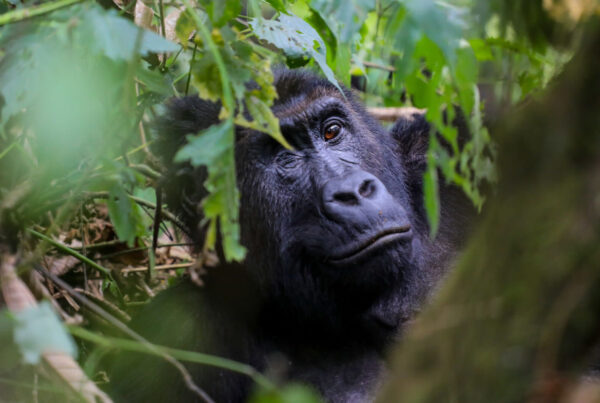
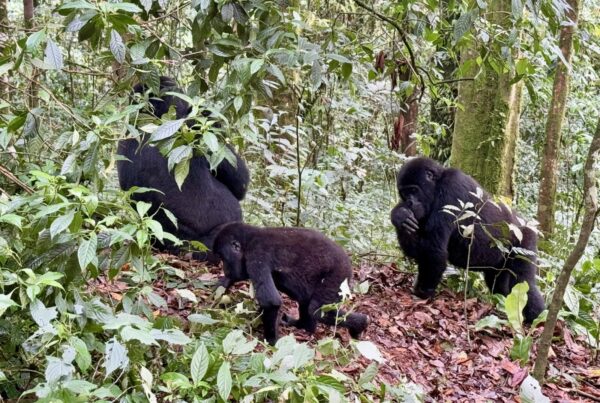
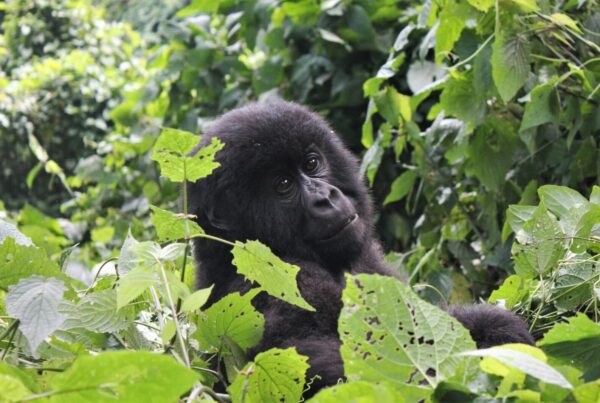
Rushaga, in the south of Bwindi Impenetrable National Park, has more habituated gorilla families than any other sector, so it usually has the best permit availability, and it is the home of the four-hour Gorilla Habituation Experience. Families visited from Rushaga have included Nshongi, Mishaya, Kahungye, Busingye, Bweza and Rwigi. The sector lies at about 2,000 m, roughly 2–2.5 hours from Kabale and 3.5–4.5 hours by road from Kigali, which makes it a natural choice for trips combined with Rwanda or Lake Bunyonyi.
This guide covers the families, trek difficulty, how to get there, where to stay and how to book.
The gorilla families
Nshongi was the first family habituated in Rushaga and opened to visitors in 2009. It was once one of Bwindi’s largest groups and has since split, giving rise to families such as Mishaya and Busingye. Kahungye, Bweza and Rwigi are among the other families that trekkers are assigned to here. Family sizes and even the list of groups change over time as gorillas move between groups, silverbacks die and groups split, so treat any published list as a guide rather than a guarantee.
You cannot book a specific family. Rangers assign groups at the morning briefing, taking fitness and age into account where they can. Each family receives one group of up to eight visitors a day. See our guide to Bwindi’s gorilla families.
The Gorilla Habituation Experience
Rushaga is the base for the Gorilla Habituation Experience, in which up to four visitors spend about four hours with a family that researchers and trackers are still getting used to people. You see the trackers at work, the gorillas are less predictable and the terrain can be tougher, but the extra time allows far more natural behaviour. It costs US$1,500 per person, rising to US$1,800 in 2027, and places are very limited, so book this first. Read our guide to whether the habituation experience is worth it.
How hard are the treks?
Rushaga’s terrain is steep, wet and varied. Some families range close to the forest edge and can be reached within an hour or two, while others are deep in the hills and need a long, tiring day. On average, treks here are moderate to hard: usually harder than the easiest Buhoma treks but less consistently steep than Nkuringo. The morning briefing starts around 7:30 am. Tell the ranger about any fitness concerns, hire a porter for about US$15–20 and use a walking stick.
Getting there
From Kabale, the road climbs past Lake Bunyonyi and through the Echuya forest to Rubuguri and Rushaga, about 2–2.5 hours. From Kisoro, with its airstrip for scheduled flights from Entebbe, it is about 1–1.5 hours. From Kigali, allow 3.5–4.5 hours via the Katuna border and Kabale or the Cyanika border and Kisoro. From Kampala, the drive takes about 8–9 hours. Roads in the last section are unpaved and slow after rain. See our guide to Kigali to Bwindi by road.
Where to stay
Lodges around Rushaga and Rubuguri cover every budget, from community campsites and simple guesthouses to comfortable mid-range lodges and high-end options such as Gorilla Safari Lodge, close to the trailhead. Lodges on Lake Mutanda or Lake Bunyonyi are also popular, but leave enough time for the early drive to the briefing. Nkuringo is close geographically but a long way by road, so check that your lodge is really on the Rushaga side. Our guide to the best gorilla trekking lodges lists options by sector.
Booking a Rushaga permit
A standard permit costs US$800 (US$600 in April, May and November) and is the same price in every sector. Because Rushaga has the most families, it is often the sector with availability when others are full, and it is the easiest place to book several permits on the same date for a group. Book the permit first, specifying Rushaga, then a lodge nearby. Our guide to booking a gorilla permit step by step explains the process.
Frequently asked questions
Families have included Nshongi, Mishaya, Kahungye, Busingye, Bweza and Rwigi, though groups change over time as gorillas split and move.
In the Rushaga sector, in southern Bwindi, for up to four visitors per family per day.
About 3.5–4.5 hours by road, via the Katuna or Cyanika border crossing.
Treks are usually moderate to hard and vary by family and day. A porter and walking stick help a lot.