Updated
gorilla trekking Uganda unforgettable memory is one of Africa’s most extraordinary wildlife experiences, connecting travellers with mountain gorillas in their natural forest habitat. There are places you visit that you remember fondly — a beach in Greece, a city in Japan, a road trip through the American West — and gradually the specific details soften into a general warm memory of a good time; then there is gorilla trekking in Bwindi Impenetrable Forest, which many people describe ten years and twenty years later in the same specific terms they used on the day they returned — the silverback’s name, the quality of light, the exact moment of eye contact — because it deposited something that does not fade in the same way that ordinary travel memories do. Plan your visit: cost breakdown, accredited operators, 7-day Uganda itinerary.
- Memory science: experiences with high novelty, attention demand, emotional response, and physical engagement form more durable and positively recalled memories; gorilla trekking has all four in combination
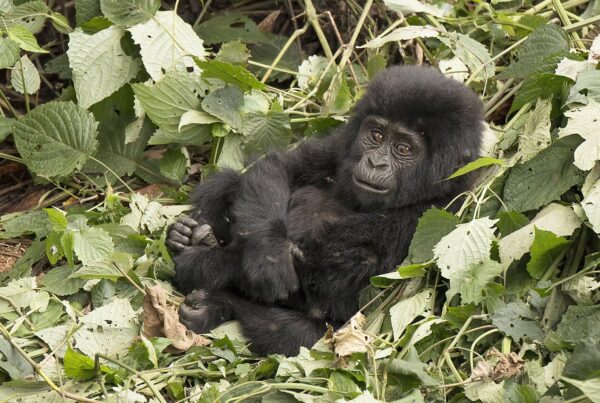
- The encounter: 60 minutes with a habituated mountain gorilla family in Bwindi; no barrier; natural forest; the gorillas continue normal behaviour in your presence
- Access: USD 800 permit; book via Uganda Wildlife Authority or through an accredited Uganda operator
- What you remember: the accounts are specific — not “it was amazing” but a named gorilla, a particular moment, a specific detail; this is the marker of an episodic memory, not a general impression
There are places you visit that you remember fondly — a beach in Greece, a city in Japan, a road trip through the American West. You show people the photographs, you recommend the destination to friends, and gradually the specific details soften into a general warm memory of a good time. Then there are the places that stay sharp. The ones where the memory does not fade into pleasantness but remains specific and immediate, where you can call up the exact texture of a moment — the light, the sound, the feeling in your chest — ten years after it happened. For an extraordinary number of travellers, Bwindi Impenetrable Forest in Uganda is that place.
The question worth asking is why. What happens in the gorilla encounter that produces a memory of this durability and specificity? And what does understanding that tell you about whether you should go?
The One Travel Experience That Still Affects Me Ten Years Later
How Durable Memories Form
Memory researchers have established that the memories that remain vivid over years and decades share certain characteristics. They involve strong emotional responses — particularly a combination of awe, surprise, and what psychologists call “self-transcendence,” the sense of being connected to something larger than your individual self. They involve genuine novelty — experiences so different from your ordinary daily life that your brain cannot easily process them through existing frameworks and must build new ones. And they involve meaning — the sense that what you are experiencing matters, that it is connected to things you care about at a level deeper than entertainment.
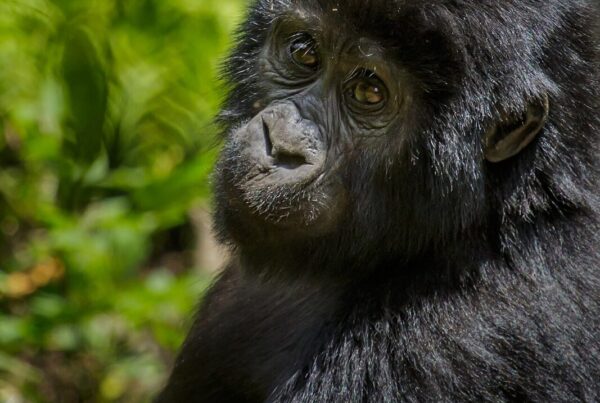
The gorilla encounter in Bwindi provides all three with unusual force. The awe is immediate and physical — the size, the presence, the extraordinary face of a mountain gorilla at close range produces a response in the body that is related to but distinct from anything most people have felt before. The novelty is absolute: nothing in ordinary life prepares you for it. And the meaning — the encounter with another great ape, the awareness that you are meeting a relative in the original sense of the word, the knowledge that this animal exists because of a conservation system that people like you have supported — is dense and immediate in ways that most tourist experiences cannot match.
What People Remember Specifically
Talk to people who did gorilla trekking five or ten years ago and the specificity of their memories is remarkable. They remember individual animals — the silverback who turned and looked directly at them, the juvenile who came close out of curiosity, the mother who groomed her infant ten metres away without acknowledging the human observers. They remember sounds — the deep chest-rumble of the silverback settling, the crack of branches as the family moved through undergrowth, the particular quality of silence in a tropical forest when no machinery or human voice interrupts it. They remember physical sensations — the steepness of the trail, the humidity of the forest air, the moment of stillness when they first saw the family through the trees.
These are not the memories of people who saw something spectacular and moved on. These are the memories of people who experienced something that changed a framework — who encountered something so different from their ordinary categories that their minds are still processing it years later. The gorilla encounter does not conclude when you leave the forest. It continues in memory, surfacing in unexpected moments with a vividness that most experiences cannot sustain.
The Conservation Dimension of the Memory
One of the things that gorilla trekking veterans consistently mention when they talk about why the experience stays with them is the conservation dimension — the awareness that the gorillas they saw exist because of a specific human effort to protect them, and that the effort is ongoing and uncertain. Mountain gorillas were heading toward extinction in the 1980s. They are not heading toward extinction now, but the recovery is not irreversible. The $800 permit paid in 2027 is part of the system that makes the recovery continue.
Knowing this as you stand with the gorilla family — understanding that you are looking at animals that should not exist, that exist because of choices made over thirty years by rangers, researchers, community members, and visitors like you — adds a layer of emotional weight to the encounter that purely recreational wildlife experiences cannot produce. The memory is not just of an extraordinary animal. It is of a moment in a larger story about what human beings can choose to protect.
Why Ten Years Later Still Matters
We live in an age of abundant experience. More people travel to more places and do more extraordinary things than at any previous point in human history. The result is a kind of experiential inflation — many things that should feel special feel ordinary because they have become normal. The experiences that cut through this inflation and remain genuinely special are increasingly rare and valuable.
Gorilla trekking in Uganda is one of them. The people who went ten years ago still talk about it because what happened to them in that hour is not something that can be replicated by more travel, more experiences, or better photographs. It was specific and unrepeatable. The gorilla they met — the specific animal, in the specific moment, in the specific light of a specific morning in Bwindi — will never be experienced by anyone else in exactly that way. This irreplicability is part of what makes the memory durable.
Book now. The memory you are about to make will still be clear in ten years. Contact us for 2027 permit availability at $800 per person.
Why does the gorilla experience form such a durable memory?
The neuroscience of memory formation has a direct application here. Novelty encoding: the hippocampus encodes novel experiences more strongly than routine ones; for most visitors, the gorilla encounter at Bwindi contains more novelty than any day of ordinary life — the forest itself, the tracking, the animal proximity. Emotional encoding: strong emotional responses — awe, surprise, recognition — trigger amygdala activation that strengthens memory encoding; the gorilla encounter consistently produces these responses. Attention: divided attention produces weaker memories; the gorilla encounter demands full attention from everyone in the group for 60 minutes — you cannot be on your phone, looking elsewhere, or distracted; this focused attention is a direct input to strong encoding. Physical engagement: the trek itself — the physical effort, the sweat, the mud, the steepness — primes the body and mind in a way that a sedentary viewing experience does not; the body’s involvement in reaching the gorillas makes the arrival more meaningful.
What do people say about gorilla trekking when they describe it long after the trip?
The pattern in long-term accounts is distinctive. The specific detail: people describing their Bwindi gorilla encounter years later typically know the silverback’s name (Bwindi families are named — Mubare, Habinyanja, Rushegura, etc.), remember which juvenile approached closest, recall the quality of the vegetation at the moment of arrival; these specifics are the signature of a strong episodic memory. The comparison point: the same people who describe gorilla trekking in these specific terms often describe other trips in general terms (“the beach was lovely,” “the city was interesting”) — the contrast is made by the speakers themselves. The influence: a proportion of people describe gorilla trekking as having influenced subsequent choices — how they spend money on travel, what they tell other people to do, their interest in conservation and primate behaviour; experiences that have downstream effects on behaviour and values are a specific category of durable impact.
What is the gorilla family structure at Bwindi and how does the ranger explain it?
Each habituated family at Bwindi has a documented structure known to the rangers in detail. Family structure: one dominant silverback; sometimes additional subordinate silverbacks (large multi-male families like Mubare); multiple adult females; subadult males (blackbacks); juveniles (2-8 years); infants (0-3 years). The ranger briefing: before the 60-minute encounter, the ranger typically tells the group which family they are with, the silverback’s name, approximate family size, and what the family was doing when the trackers last saw them; this context makes the encounter more meaningful because you know who you are looking at. The silverback’s role: the silverback is the protector, decision-maker, and social anchor of the family; when he moves, the family follows; when he rests, the atmosphere relaxes; his behaviour during your 60 minutes determines much of the character of the encounter. See sector guide for family details.
Is gorilla trekking appropriate for photographers and what equipment works best?
Gorilla photography requires specific preparation. Light conditions: the forest at Bwindi is dense and dark; gorilla coats are black; you will need a camera that performs well at high ISO (800-3200); your phone camera may struggle in the forest interior; a mirrorless or DSLR with fast lens (f2.8 or wider) is significantly better. No flash: flash photography is prohibited; it disturbs the gorillas; all exposure is available light only. Focal length: 70-200mm covers most encounters; a wider lens (24-70mm) for environmental portraits when gorillas are close; very long telephoto (300mm+) is less useful in dense forest. Weight: keep the camera pack as light as possible; the trek is physically demanding; carrying heavy gear reduces enjoyment; a porter can carry the main bag. What produces the best photographs: the light breaks in gaps in the canopy around forest edges; the best gorilla photographs from Bwindi are usually taken at the moment the gorillas enter a clearing.
What is the best way to prepare for a gorilla trek to maximise the experience?
Preparation directly improves the experience. Physical: walk for 45-60 minutes on hilly terrain at least 3x per week in the month before your trek; the descent is often harder than the ascent; include downhill walking in your preparation. Research: read about the specific gorilla family assigned to your trek group before you go (ask your operator); knowing the family history deepens the encounter. Read: 30 things to know covers everything from rules to packing to what to expect. Packing: waterproof ankle boots (critical); long sleeves and trousers (for nettles); gardening gloves (UWA will provide them at the gate but bring your own); rain poncho or lightweight jacket; small snacks and water for the trek. Mindset: leave the itinerary open for the morning of the trek — the pace of the forest is not the pace of a schedule; the best encounters happen when you are fully present rather than thinking about the next activity. See operators.
- Travelers from Campania Say They Can’t Stop Thinking About Their Gorilla Trekking Experience in Uganda
- Adventure Travel Experiences for 18–30’s Travellers in Africa
- Uganda Gorilla Trekking: The Experience 3,000 Travellers Rated 5 Stars
- The Traveller Who Booked With Us After a Bad Experience With Another Operator
- The 10 Experiences Travel Experts Say Everyone Must Do Before They Die
- What Travel Writers Have Said About Gorilla Trekking for 30 Years
- The First-Time Africa Traveller’s Guide to Choosing the Right Experience
- The Traveller Who Waited 10 Years to Book Gorilla Trekking: Do Not Be Them
- The Wildlife Encounter That Has Survived 30 Years of Visitors and Still Feels New
- The Wildlife Encounter That Has Survived 30 Years of Visitors and Still Feels New