Updated
Uganda tourism revenue 2025 — what the record means for gorilla trekking visitors
Uganda’s tourism revenue in 2025 hit a new record, according to Uganda Tourism Board data released earlier this year, with total international tourism receipts exceeding $1.8 billion — a milestone that reflects both the country’s growing international profile and the increasing value-per-visitor generated by the premium wildlife experiences that anchor Uganda’s tourism offering. For prospective gorilla trekking visitors, the record has several practical implications that are worth understanding before you book.
What drove the record
The tourism revenue record was driven by a combination of increased visitor numbers and increased average spend per visitor. The total number of international visitors to Uganda grew by approximately 18 percent in 2025 compared to 2024, continuing the recovery from the COVID-19 pandemic that had suppressed visitor numbers in 2020 and 2021. But the growth in average spend was even more significant: the increasing proportion of visitors seeking premium experiences — particularly gorilla trekking, luxury lodge accommodation, and bespoke multi-activity itineraries — has driven average expenditure per visitor upwards faster than visitor numbers have grown.
Gorilla trekking permits as a revenue driver
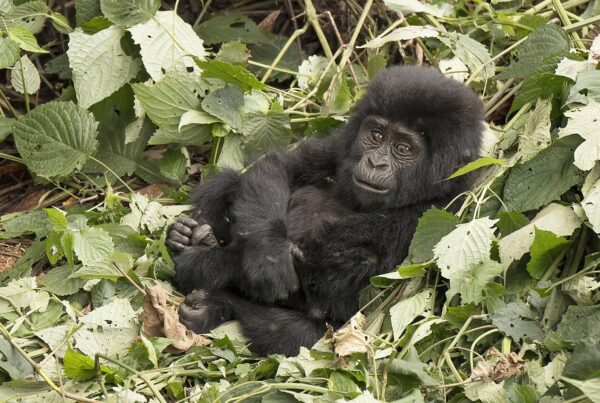
Gorilla trekking permits represent a disproportionately large share of Uganda’s total tourism revenue relative to the number of visitors they serve. With 12 habituated families in Bwindi and three in Mgahinga, a maximum of approximately 120 trekking permits are available per day across all sectors — a tiny fraction of Uganda’s total daily visitor count. But at $800 per permit, with a virtually year-round occupancy rate approaching 80 percent in recent years, the annual permit revenue from gorilla trekking alone exceeds $25 million. This revenue flows directly into Uganda Wildlife Authority’s conservation budget, making gorilla trekking one of the most financially efficient conservation mechanisms in the world.
What the revenue funds
The practical consequence of Uganda’s tourism revenue record for gorilla trekking visitors is a conservation system that is better funded, better staffed, and more capable than at any previous point in its history. Ranger salaries have been increased to levels that reduce turnover and improve morale. Anti-poaching operations have expanded. The veterinary programme for injured gorillas is better equipped. Community development programmes that provide economic alternatives to forest resource extraction have reached more households. And the infrastructure that supports the trekking experience — trail maintenance, park gate facilities, ranger accommodation near the forest — has been improved with funding that would not have been available without the permit revenue that visitors generate.
What the record means for permit prices
The paradox of a record tourism revenue figure is that it typically signals approaching price increases rather than price stability. When permit demand is high relative to supply — which is clearly the case given the record revenue — Uganda Wildlife Authority has both the justification and the incentive to raise permit prices, capturing more conservation revenue per permit without reducing the total number of visits. The $800 current permit price should be treated as a current price rather than a stable one, and visitors who are considering gorilla trekking in the next 12 to 24 months have good reason to book sooner rather than later to lock in the current pricing.
What it means for the quality of your experience
The most direct implication of Uganda’s tourism revenue record for the quality of your gorilla trekking experience is the conservation funding that it represents. A well-funded ranger corps means better-managed encounters, more experienced guides, and a conservation system that is actively improving the conditions in which the gorilla families live. A well-funded veterinary programme means that injured gorillas receive treatment, reducing mortality and maintaining family group stability. A well-funded community programme means that the local communities adjacent to the forest have economic reasons to support rather than undermine gorilla conservation. All of these outcomes improve the experience you will have in the forest — they are the infrastructure of the encounter you are paying to access.
Uganda’s record tourism revenue in 2025 reflected a broader trend: the country’s position in the international travel market has shifted from a niche adventure destination to a mainstream recommendation for safari-experienced travellers seeking something more intimate than the East African circuit’s established offerings. The gorilla trekking permit demand that drives revenue growth also creates a scheduling pressure that has led UWA to carefully manage the pace of habituation for new gorilla families — balancing the revenue opportunity of additional permits against the welfare requirements of the habituation process itself.
Uganda’s position in the 2025 tourism record is most accurately read as the result of an investment in conservation infrastructure made decades earlier — the record numbers are not a marketing success but a conservation dividend, paid out in permits and bed nights to the country that chose to protect its forest rather than clear it.