Updated
10 experiences everyone must do before they die travel is an essential part of planning any Uganda safari, requiring advance preparation to ensure a smooth and rewarding journey. Travel experts — writers, editors, veteran travellers, wildlife researchers, and tour operators with decades of experience across every continent — are regularly asked to name the experiences that belong on any serious traveller’s lifetime list. The criteria vary: some experts weight natural rarity, others emotional impact, others cultural significance, others sheer physical scale. But across all the lists compiled by major travel publications, wildlife organisations, and expert consensus surveys in the years leading up to 2027, a core set of ten experiences emerges consistently. Gorilla trekking in Uganda appears on every single one of them. This post explores all ten, with particular attention to why gorilla trekking occupies the position it does at or near the top of every list.
The 10 Experiences Travel Experts Say Everyone Must Do Before They Die
1. Gorilla Trekking in Uganda
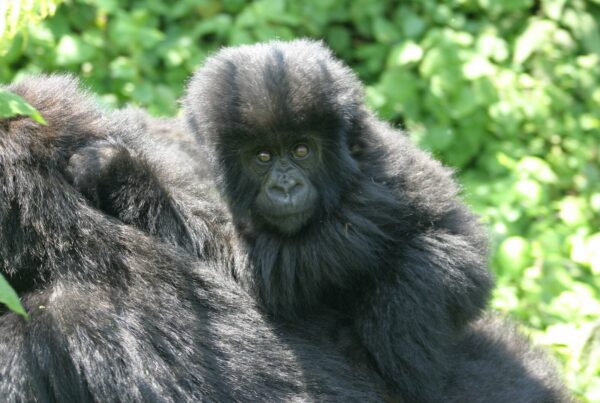
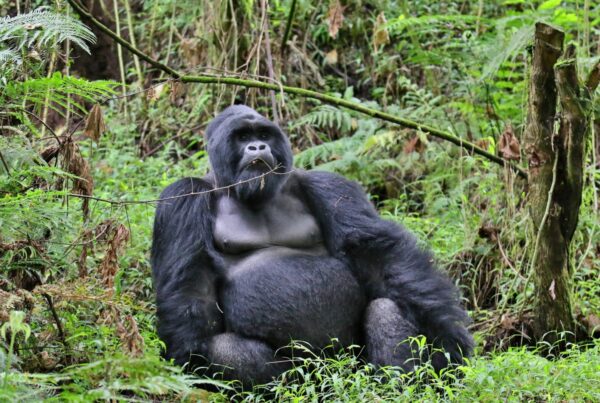
Gorilla trekking is the only great ape encounter that can be done with habituated wild gorillas at close range in a natural forest environment. The combination of physical challenge, ecological significance, conservation narrative, and the specific quality of a close encounter with a species 98 percent genetically identical to humans makes this the wildlife experience that appears on every expert list. Uganda — with its larger gorilla population, lower permit prices than Rwanda, and more extensive trekking sector options — is the primary destination for serious gorilla trekking in 2027.
2. The Great Migration, Serengeti/Masai Mara
The annual movement of 1.5 million wildebeest, zebra, and gazelle through the Serengeti-Mara ecosystem — including the river crossings at the Mara River where crocodiles wait at chokepoints — is the largest terrestrial animal migration on earth and the most visually overwhelming wildlife spectacle available to any traveller. The peak crossing season (July to October) draws wildlife photographers from every corner of the world. It belongs on every list because nothing else looks like it.
3. Antarctica Expedition
The white continent — two million square kilometres of ice, 90 percent of the world’s fresh water, and the most extreme environment humans can legally visit — delivers wildlife encounters (Emperor penguins, leopard seals, humpback whales) in a landscape of such abstract scale that most travellers describe their return as a permanent change in their understanding of what the world is. Expedition vessels make the continent accessible in a way that was unimaginable before the 1990s.
4. Galapagos Islands
Charles Darwin’s laboratory — a Pacific archipelago 1,000 kilometres west of Ecuador where evolution produced species found nowhere else on earth. Marine iguanas, blue-footed boobies, giant tortoises, Galapagos sea lions. Animals so unexposed to natural predation that they are genuinely unafraid of human visitors. The Galapagos is the only place on earth where a wild animal will look at you with the same curiosity you bring to it without fleeing.
5. Okavango Delta Mokoro Safari, Botswana
The Okavango Delta — a vast inland river delta in northern Botswana — is explored by dugout canoe (mokoro) poled by local guides through papyrus channels and open floodplains. The wildlife density is extraordinary: lions, elephants, hippos, wild dogs, buffalo, and one of the world’s highest densities of predator species. The intimacy of a water-level wildlife encounter from a canoe produces a perspective that no safari vehicle can replicate.
6. Komodo Dragon Trekking, Indonesia
The Komodo dragon — the world’s largest lizard, up to three metres long and 70 kilograms — is found only on a handful of Indonesian islands. Trekking with ranger escort among wild Komodo dragons in their natural habitat is one of the most viscerally confronting wildlife experiences available to a traveller: close proximity to an apex predator whose evolutionary lineage predates mammals by 200 million years.
7. Northern Lights, Svalbard or Northern Norway
The Aurora Borealis at its best — curtains of green, purple, and pink light moving across an Arctic sky — is a natural spectacle without terrestrial equivalent. It appears on every expert list not because it is a wildlife experience but because it is one of the few natural phenomena that most travellers describe as genuinely incomprehensible until they see it in person.
8. Orangutan Rehabilitation, Borneo
The orangutans of Borneo and Sumatra are the only great apes outside Africa. Semi-wild orangutans at rehabilitation centres like Sepilok in Sabah can be observed at close range. Wild orangutan trekking in Tanjung Puting or Danum Valley offers the rarest of encounters — a great ape in primary rainforest, with none of the infrastructure of African gorilla tourism. Expert consensus rates Borneo’s orangutan experiences below gorilla trekking in emotional impact but above most other wildlife encounters for genuine wildness.
9. Tiger Safari, Ranthambore or Bandhavgarh, India
The Bengal tiger in its natural habitat — stalking through sal forest or lying in the shade of a ruined fort — is one of the most powerful wildlife encounters available in Asia. India’s tiger reserves, having recovered from near-extinction in the 1970s through Project Tiger, offer increasingly reliable tiger sightings in the best reserves. A close vehicle encounter with a wild tiger generates an adrenaline response unlike any other terrestrial wildlife experience.
10. Snorkelling the Great Barrier Reef, Australia
The world’s largest coral reef system — 2,300 kilometres, 3,000 individual reef systems, 1,500 species of fish — is the most biodiverse marine ecosystem on earth and one of the few natural structures visible from space. Snorkelling or diving any healthy section of the GBR delivers sensory overload of a kind that no terrestrial environment can replicate. Its inclusion on every expert list is also, in part, a call to see it while the level of bleaching damage remains reversible.
Why Gorilla Trekking Tops Them All
Survey experts separately on which single experience they would recommend to any traveller with the time, budget, and fitness to do it, and gorilla trekking in Uganda is the most common first answer. The combination of factors that produce this consensus: the quality of the encounter, the conservation narrative, the physical engagement, the genuine sense of meeting another form of intelligence on its own terms. Contact us to plan your 2027 Uganda gorilla expedition — the experience at the top of every list.