Updated
If you are planning your first trip to Africa and trying to decide which wildlife experience to build your itinerary around, you are facing a genuinely complex choice. Africa offers more exceptional wildlife experiences than any other continent — and the range of options, destinations, price points, and physical demands can be overwhelming for someone without prior experience of what Africa wildlife travel actually involves. This guide is designed specifically for the first-time Africa traveller: what to consider, which experiences best suit which types of traveller, and why gorilla trekking in Uganda should be on every shortlist regardless of budget, fitness level, or prior wildlife experience.
Start With What You Value in a Wildlife Experience
The most important variable in choosing your first Africa wildlife experience is understanding what you value. Do you want the most visually spectacular experience available — the largest animals, the most dramatic landscapes, the most iconic scenes? The Serengeti and Masai Mara are your starting point. Do you want an intimate, personal encounter with an intelligent animal at close range? Gorilla trekking in Uganda or chimpanzee tracking in Kibale. Do you want physical engagement and the sense that you worked for the encounter? Gorilla trekking, walking safari in Zambia, or mountain trekking in Ethiopia. Do you want the easiest, most comfortable introduction to African wildlife? Kenya’s well-developed safari circuit with high-end lodges and smooth logistics.
Most first-time Africa travellers want some combination of these things, which is why multi-destination itineraries — combining a gorilla trekking component in Uganda with a classic savanna safari in Kenya or Tanzania — are so popular. But even within a single-destination first trip, clarity about what you value most helps narrow the choices significantly.
Why Gorilla Trekking Belongs on Every First Trip Shortlist
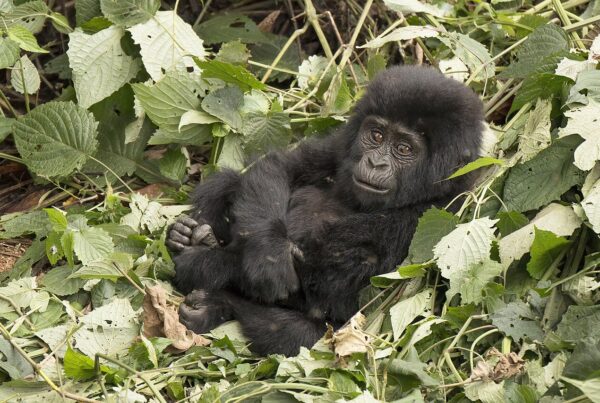
Gorilla trekking in Uganda belongs on the shortlist of every first-time Africa traveller for three reasons. First, it is the finest wildlife experience in Africa by expert consensus — if you can only do one Africa experience in your lifetime, the argument for making it gorilla trekking is strong. Second, it is more accessible than many travellers assume — moderate fitness, no specialist skills, good infrastructure, and English-speaking guides make it achievable for a wide range of travellers. Third, it is the experience that most often changes how people think about Africa and about wildlife, creating the desire to come back that sustains ongoing travel investment in a continent that rewards return visits.
What to Expect From Your First Uganda Gorilla Trekking Trip
A typical first Uganda gorilla trekking trip runs 5 to 7 days from Entebbe: one travel day to the Bwindi area, two to three nights in the Bwindi region with one gorilla trek and optional additional activities (Batwa trail, forest walk, birdwatching), and return to Entebbe. Many travellers add a day at Queen Elizabeth National Park (for savanna wildlife and the famous tree-climbing lions) and some add chimpanzee tracking at Kibale. A well-designed first Uganda trip can be accomplished in 7 to 10 days and includes enough variety to satisfy travellers with diverse interests.
The Budget Question
The gorilla trekking permit costs USD 700 per person per trek. This is non-negotiable — it is the Uganda Wildlife Authority fee and not subject to operator discounting. Ground costs (transport, accommodation, guide fees) vary from budget-conscious to luxury depending on lodge choice. A budget-conscious 7-day Uganda gorilla trekking trip can be done for USD 2,500 to 3,500 per person (excluding international flights). A luxury version of the same trip costs USD 5,000 to 8,000 per person (excluding international flights). In both cases, the gorilla encounter itself is the same. Contact us for a 2027 quote based on your budget and preferences.
First-time Africa travellers frequently discover that their pre-departure reading shaped expectations around East African savannah destinations that are both well-documented and heavily marketed. Uganda’s comparative underrepresentation in mainstream Africa travel media means that visitors arrive with less fixed expectations and are more open to the specific character of what Uganda actually offers — which tends to produce higher satisfaction ratings than destinations where expectations are set by years of aspirational content. The traveller who arrives in Uganda primarily expecting gorillas and leaves having also been moved by Kibale’s chimpanzees, surprised by Queen Elizabeth’s ecological variety, and charmed by Kampala’s energy has experienced something that the more tightly scripted savannah safari rarely delivers.
The most useful preparation a first-time Africa traveller can do before Uganda is to set aside the standard African safari mental model entirely and approach the destination as a new experience category — one that will produce its own vocabulary, its own reference points, and its own comparison standard.