Safety Perceptions Versus Safety Reality
When potential visitors research Uganda as a gorilla trekking destination, safety is often their first concern. Media coverage of African nations tends to focus on conflict, disease outbreaks, and political instability, creating impressions that bear little resemblance to the daily reality experienced by tourists. Uganda is no exception. For travellers who have never visited East Africa, the country can seem dauntingly unfamiliar, and unfamiliarity breeds anxiety that is not always proportional to actual risk.
The reality is that Uganda is one of Africa’s safest destinations for international tourists. The country has not experienced widespread conflict in decades, its people are famously welcoming to visitors, and the specific regions where tourists travel including Bwindi, Entebbe, Kampala, and the western safari circuit are stable and well-patrolled. Millions of tourists visit Uganda annually without incident, and the vast majority describe their experience as not merely safe but genuinely hospitable.
Personal Security in Urban Areas
Kampala and Entebbe, where most international visitors arrive and spend at least a night, require the same common-sense precautions as any large city anywhere in the world. Petty theft including pickpocketing and bag-snatching occurs, particularly in crowded markets, transport hubs, and nightlife districts. Violent crime against tourists is rare but not unheard of, usually involving opportunistic robbery rather than targeted assault.
Practical precautions include avoiding displays of expensive jewellery or electronics, keeping bags closed and in front of you in crowds, not walking alone after dark in unfamiliar areas, and using reputable taxi services rather than hailing random vehicles. These are standard urban safety practices that apply equally in Nairobi, Bangkok, Barcelona, or Kampala.
Road Safety and Transport
Road travel in Uganda presents more significant risks than personal security. Traffic accident rates are higher than in Europe or North America due to road conditions, vehicle maintenance standards, and driving behaviours that may seem aggressive to foreign visitors. The main highway from Kampala to the western safari circuit is paved and generally in reasonable condition, but secondary roads can be rough, particularly during rainy seasons.
Self-driving is not recommended for first-time visitors. Professional drivers who know the roads, local traffic customs, and vehicle capabilities provide both safety and peace of mind. If you do choose to self-drive, rent a four-wheel-drive vehicle, avoid driving after dark, and allow significantly more time than GPS estimates suggest for journeys on rural roads.
Health Safety Considerations
Health risks in Uganda are manageable with proper preparation. Yellow fever vaccination is mandatory for entry, and proof of vaccination is checked at immigration. Malaria is present throughout Uganda at lower elevations, though Bwindi’s high altitude means malaria risk at the trekking sites themselves is minimal. Anti-malarial medication is recommended for most visitors, along with consistent use of mosquito repellent and bed nets where provided.
Food and water safety follows standard tropical travel precautions: drink bottled or treated water, eat at reputable establishments, and be cautious with raw foods in informal settings. traveller’s diarrhoea is the most common health issue for visitors, usually mild and self-limiting, but worth preventing through careful food choices.
Security Around Bwindi and Gorilla Trekking
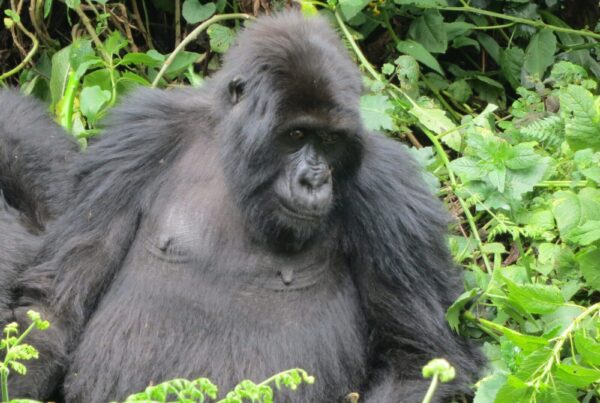
The gorilla trekking regions of southwestern Uganda are among the country’s most secure areas for tourists. UWA maintains a significant ranger presence, and the economic importance of gorilla tourism means local communities have strong incentives to protect visitors. Trekking groups are accompanied by armed rangers not because gorillas are dangerous, but as a precaution against the remote possibility of encountering poachers or hostile wildlife.
The border regions near the Democratic Republic of Congo receive additional security attention due to historical instability in eastern DRC. However, the areas where tourists actually travel are well inside Ugandan territory, separated from the border by significant distances and multiple security checkpoints. No tourist has been harmed in Bwindi due to regional instability.
Final Thoughts
Uganda’s safety record for tourists compares favourably with many popular destinations worldwide. The risks that exist are manageable through standard travel precautions that any experienced traveller would take anywhere. The greatest danger most visitors face is not crime, disease, or political instability but rather the mundane risk of road accidents, which can be mitigated by using professional drivers and reputable transport.
When you arrive in Uganda, you will likely be struck by how ordinary daily life appears: people going to work, children walking to school, markets bustling with commerce. This ordinariness is the reality that media coverage rarely captures. Behind the headlines that may have made you hesitate lies a country that welcomes visitors warmly, protects them conscientiously, and offers experiences that justify any reasonable concern you might have overcome to get there.
- Is Uganda Safe for Tourists in 2026? An Honest Travel Safety Guide
- Can You Go Gorilla Trekking While Pregnant? Safety, Risks, and Medical Advice
- Solo female travel in Uganda: safety, culture, and what to expect
- Crime and personal safety in Uganda: what travellers actually need to know
- Best Places to Travel Solo: Safe, Inspiring & Unforgettable Destinations
- Solo Female Gorilla Trekking in Uganda: Complete Safety Guide
- Water Safety in Uganda: What to Drink on Safari
- Gorilla Trekking Safety: What Your Guides Keep Watch For
- Is Gorilla Trekking Safe? Safety Facts and Myths
- Typhoid Vaccination Uganda: Travel Health Advice