Updated
Yes, gorilla trekking in Uganda is safe for visitors who follow the rangers’ instructions. Every group visits a habituated gorilla family with an armed ranger escort, and no tourist is known to have been killed by a habituated mountain gorilla. The real risks are more ordinary: slips and falls on steep, muddy forest trails, fatigue and dehydration, and the long road journeys to reach the park. The one serious security incident in Bwindi’s tourist history, the 1999 attack at Buhoma, led to the armed escorts and military patrols that protect trekkers today.

This guide looks at each kind of risk in turn: the gorillas themselves, security, the terrain, health, and what you can do to reduce each one.
Are the gorillas dangerous?
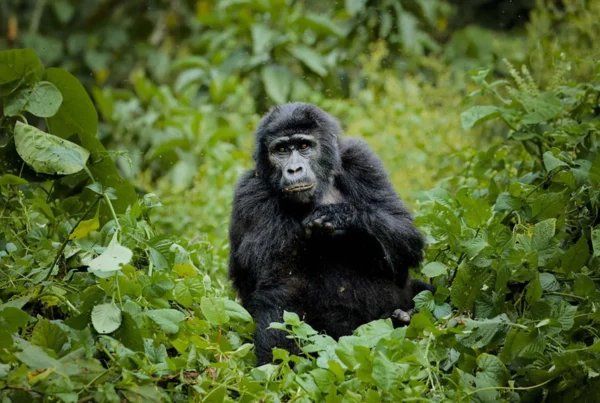
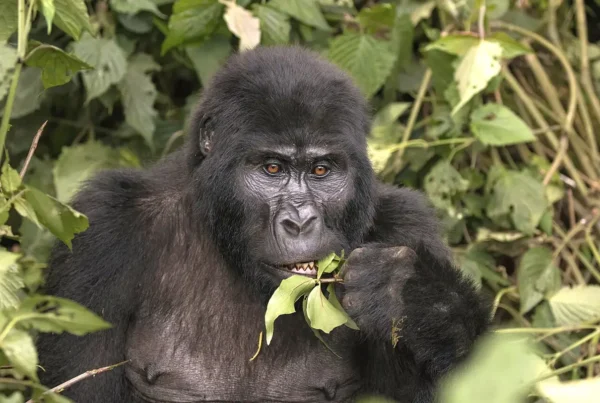
Mountain gorillas are large and very strong, since an adult silverback can weigh around 160–200 kg, but they are not predators and they do not see people as prey. They are herbivores that spend most of the day feeding and resting. Tourists only visit families that have been habituated, a process that takes two to three years of daily, carefully managed contact with researchers and trackers until the gorillas accept a small group of quiet people nearby as normal.
Aggression is almost always a reaction to something specific: a person moving suddenly, getting too close, separating a mother from her infant, or a silverback feeling that his group is under pressure, sometimes from another gorilla group. Even then, the usual response is a display rather than an attack. Our guide to whether gorillas attack humans explains these triggers in more detail.
What if a silverback charges?
Occasionally a silverback runs towards the group, beats his chest, tears vegetation or screams. This is a bluff charge, meant to warn rather than to make contact, and it normally stops short and ends within seconds. The response is simple and the ranger will talk you through it: stay still, crouch down, look down rather than into his eyes and never run. Running is the one thing that can turn a display into a chase. Our guide to what to do if a gorilla charges covers this step by step.
How the rules keep you safe
The Uganda Wildlife Authority (UWA) runs gorilla trekking under strict rules that protect both people and gorillas. A maximum of eight visitors visit each family per day, and the visit with the gorillas lasts one hour. You keep at least 7 m away, stay together behind the ranger, speak quietly, and do not eat, drink or use flash near the gorillas. Before setting off, every group has a briefing at the park office at about 7:30 am, which explains the rules and how to behave if a gorilla comes close.
Each group walks with a ranger guide, armed escorts and porters if hired, while trackers go ahead to find the gorillas from where they nested the night before. Rangers carry radios, read the gorillas’ mood constantly and will end a visit early if a family is unsettled. See our guide to gorilla trekking rules and etiquette.
Security: the 1999 attack and what has changed
On 1 March 1999, armed Rwandan Interahamwe rebels crossed from Congo, attacked the tourist camps at Buhoma and abducted a group of visitors. Eight of the tourists were killed, along with a Ugandan park warden. It was a political attack linked to the aftermath of the Rwandan genocide, not anything to do with the gorillas, and it led to a complete rethink of security in the park.
Bwindi reopened later that year with armed escorts on every trek and a permanent military and police presence around the park. There has been no comparable attack on tourists in Bwindi since. The wider region is not risk-free: in October 2023, two tourists and their Ugandan driver were killed by ADF rebels in Queen Elizabeth National Park, which many gorilla itineraries pass through. Since then, security on the park roads has been strengthened, but it is a reminder to check your government’s travel advice before you go and to use a reputable operator who follows it.
Our guides to security in the Bwindi region and safety in Uganda go into more detail.
The terrain is the bigger risk
Most injuries on gorilla treks come from the forest itself. Bwindi lies at about 1,160–2,600 m on steep, often wet ridges, and a trek can take anything from 30 minutes to six hours or more, sometimes off the trail through thick vegetation. Twisted ankles, falls on slippery slopes, scratches from thorny plants, stinging nettles, biting ants and exhaustion are far more common than any problem with the gorillas.
You can reduce these risks a great deal. Wear broken-in waterproof boots with good grip, gardening gloves and long trousers tucked into your socks. Take a walking stick, which is usually offered at the start, carry at least two litres of water and snacks, and hire a porter for about US$15–20 to carry your bag and help you on steep sections. Tell the ranger about any health or fitness concerns at the briefing so they can assign you a suitable family. See our guides to how fit you need to be and what to pack.
Health risks, for you and the gorillas
Disease risk runs in both directions, but the bigger worry is for the gorillas. They share about 98% of their DNA with us and can catch human respiratory infections, which have caused serious outbreaks in habituated groups. If you have a cold, flu or fever, you may be refused permission to trek, and you may be asked to wear a mask near the gorillas. Ask about the cancellation policy for illness when you book.
For your own health, a yellow fever vaccination certificate is required to enter Uganda, and malaria prevention is recommended even though the risk is lower at Bwindi’s altitude. Take insurance that covers trekking and medical evacuation, because the nearest major hospitals are many hours away by road. Our guide to vaccinations for Uganda sets out what you need.
Who should think twice
Trekkers must be at least 15 years old. People with serious heart or lung conditions, recent injuries or limited mobility should talk to a doctor first and choose their sector carefully; some families are often reached in under two hours, and a sedan chair carried by porters can be arranged in some sectors. Pregnant travellers should get medical advice before booking, as the terrain is demanding and medical help is far away.
Frequently asked questions
No tourist is known to have been killed by a habituated mountain gorilla. Injuries are very rare and usually happen when rules are broken.
Mainly for security, following the 1999 rebel attack at Buhoma, and in case of an encounter with forest elephants. Guns are not used against the gorillas.
Slips, falls and exhaustion on steep, muddy terrain. Good boots, a walking stick, water and a porter reduce these risks.
Bwindi has a permanent security presence and treks run normally. Check your government’s current travel advice before booking, as it covers both security and disease outbreaks.
Usually not. Rangers can refuse trekkers with a cough or fever, because human respiratory infections are dangerous to gorillas.