Separating Fear from Fact
The question of safety dominates many travellers’ minds as they consider gorilla trekking. Images of massive silverbacks, stories of wild animal attacks, and the inherent uncertainty of entering dense forest with creatures who could, in theory, cause serious harm, all contribute to apprehension that is entirely understandable but largely unfounded. Gorilla trekking, when conducted according to established protocols, is one of the safest wildlife activities available anywhere in the world. The statistics support this claim, the procedures ensure it, and the behaviour of habituated gorillas themselves confirms it.
This guide examines the safety realities of gorilla trekking, addressing common fears with facts, explaining the protocols that protect both visitors and gorillas, and providing the perspective needed to approach your trek with confidence rather than anxiety. Understanding safety transforms apprehension into informed respect, which is the appropriate attitude for any wildlife encounter.
The Statistical Reality
Gorilla trekking has an exceptional safety record. Since regulated tourism began in Uganda in the early 1990s, there have been no recorded fatalities of visitors during gorilla treks and only a handful of minor injuries, most resulting from falls on difficult terrain rather than gorilla aggression. This safety record compares favourably to everyday activities such as driving, swimming, or even walking in urban environments.
The reason for this safety is twofold: the non-aggressive nature of habituated mountain gorillas and the comprehensive protocols that govern every aspect of the trekking experience. Together, these factors create an environment where the probability of dangerous incidents is extraordinarily low.
Why Habituated Gorillas Are Not Dangerous
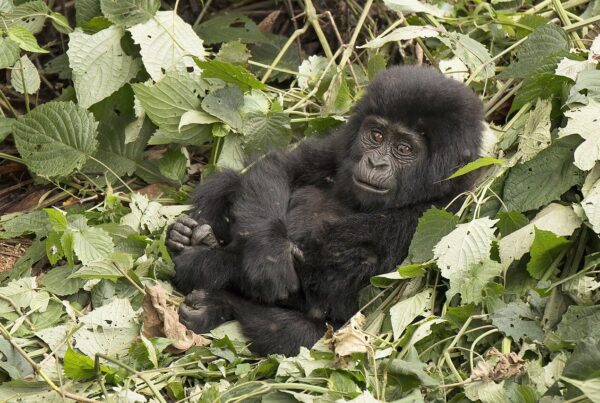
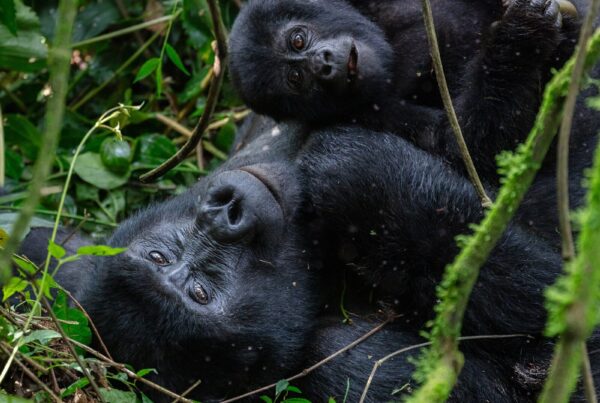
Mountain gorillas are not inherently aggressive toward humans. They are herbivores with no evolutionary history of hunting humans. Their social structure resolves conflicts within the group through display and submission rather than lethal violence. Even the massive silverback, who could theoretically overpower any human, uses his size and strength primarily for protection and display rather than aggression.
The habituation process, which takes two to three years, gradually accustoms gorilla families to human presence. During this process, researchers and trackers visit the family daily, allowing the gorillas to become comfortable with observers at close range. By the time a family is opened to tourism, the gorillas regard humans as neutral elements of their environment, neither threatening nor particularly interesting.
This does not mean gorillas are domesticated or tame. They remain wild animals with instincts, moods, and boundaries. But habituated gorillas have learned that humans who follow the rules pose no threat and require no defensive response.
The Seven-Metre Rule: Your Primary Protection
The seven-metre minimum distance rule is the cornerstone of gorilla trekking safety. This distance is not arbitrary; it represents the buffer zone that prevents disease transmission from humans to gorillas while also keeping visitors outside the gorillas’ defensive reaction zone. When maintained, this distance makes aggressive encounters virtually impossible.
Guides enforce the distance rule rigorously. If a gorilla approaches closer than seven metres, which happens frequently with curious juveniles, visitors are instructed to step back or crouch down, making themselves smaller and less threatening. Guides position themselves between visitors and gorillas when necessary to maintain appropriate separation.
The distance rule protects gorillas as much as visitors. Because gorillas share approximately ninety-eight percent of their DNA with humans, they are susceptible to human diseases. A respiratory virus that causes mild symptoms in a visitor could be fatal to a gorilla. Maintaining distance reduces this transmission risk significantly.
Guide and Ranger Protection
Every trekking group is accompanied by at least one UWA guide and one armed ranger. The guide manages the encounter, interprets gorilla behaviour, and ensures protocol compliance. The ranger provides security against the unlikely event of aggressive wildlife encounters, though in decades of trekking, rangers have rarely needed to use their weapons for this purpose.
Guides are extensively trained in gorilla behaviour and can read signs of stress, curiosity, or aggression in the animals. If a silverback displays signs of discomfort, such as chest-beating, vocalising, or charging, guides know how to respond. These displays are typically warnings rather than genuine attacks, and appropriate human response, remaining calm, avoiding eye contact, and slowly retreating, de-escalates the situation.
Health Protocols
Health screening before treks protects both visitors and gorillas. Visitors with visible signs of illness, particularly respiratory symptoms, may be denied participation. This policy protects gorillas from disease but also protects visitors from the physical demands of trekking while ill.
The one-hour time limit with gorillas reduces stress on the animals and limits disease exposure. Group size limits of eight visitors prevent overwhelming the gorillas with human presence. These restrictions, while sometimes frustrating for visitors who want more time, are essential safety and conservation measures.
Terrain and Environmental Safety
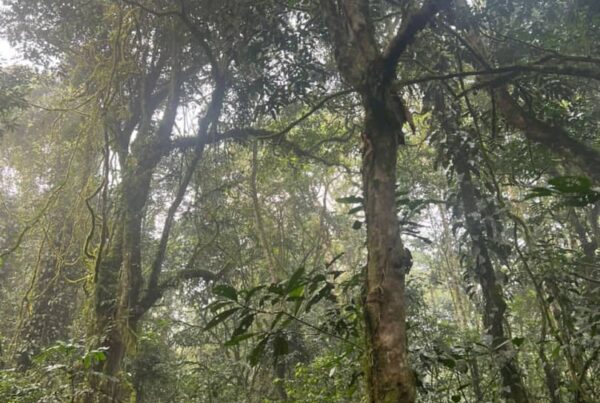
The most common safety risks in gorilla trekking are environmental rather than animal-related. Falls on steep, muddy terrain cause most trekking injuries. Stinging nettles, which line many trails, create painful but harmless skin reactions. Insect bites, while annoying, rarely cause serious problems with appropriate repellent use.
Mitigating these risks requires proper equipment, sturdy boots with ankle support, long trousers and sleeves, insect repellent, and reasonable fitness. Guides monitor group members for signs of exhaustion or distress and adjust pace accordingly. Porters assist with navigation on difficult sections.
What to Do If Something Goes Wrong
In the extremely unlikely event of a dangerous situation, follow your guide’s instructions immediately and without question. Guides are trained in emergency response and know the forest’s evacuation routes. Radios carried by guides maintain communication with park headquarters, enabling rapid response to any emergency.
Travel insurance covering medical evacuation is essential. While serious incidents are rare, the remote location of Bwindi means that medical facilities are hours away. Evacuation by road to Kabale or by air to Kampala can be arranged through lodge staff and UWA if necessary.
Final Thoughts
Gorilla trekking is safe not because the animals are tame but because the protocols are rigorous, the guides are professional, and the animals themselves, when treated with respect and distance, have no interest in harming humans. Your safety depends primarily on following the rules, listening to your guides, and maintaining the humility that appropriate wildlife observation requires.
Fear is natural when approaching large wild animals, but informed respect is more useful than fear. The silverback you encounter has been habituated over years of patient, daily contact with humans. He has learned that observers who maintain distance and behave appropriately pose no threat. Your job is to honour that learning by following the protocols that make this extraordinary encounter possible. Do so, and your safety is virtually guaranteed.