The combination of gorilla trekking at Bwindi and Rwenzori mountain hiking on a single two-week Uganda trip is the most ecologically dramatic itinerary available in East Africa: the two experiences occupy opposite ends of Uganda’s altitude range (Bwindi’s forest floor at 1,500–2,600m versus Rwenzori’s glaciated Margherita Peak at 5,109m), opposite ends of its vegetation spectrum (Bwindi’s equatorial closed-canopy forest versus Rwenzori’s otherworldly giant heather and Afro-alpine moorland), and opposite ends of the wildlife-mountaineering continuum — yet they share the same Albertine Rift landscape, are connected by 300km of western Uganda road through Queen Elizabeth National Park, and form a 14-day itinerary whose logical sequence (Rwenzori first for fitness building, gorillas second for emotional culmination) produces a complete portrait of what Uganda’s western highlands actually contain. This guide covers the full 14-day day-by-day itinerary, realistic fitness requirements for each component, packing strategy for a trip that combines tropical rainforest and high-altitude glacier zones, cost breakdown, and what to expect on each day of the Rwenzori central circuit before the gorilla trekking days. For gorilla permit booking, see the permit guide; for Bwindi sector details, see the sector guide.
Gorilla + Rwenzori 2-Week Combo: Essentials
- Itinerary structure: Days 1–2 Entebbe/Fort Portal; Days 3–9 Rwenzori 7-day circuit; Days 10–11 Queen Elizabeth; Days 12–13 Bwindi gorilla trekking; Day 14 return Entebbe
- Rwenzori fitness requirement: high — 7 days of sustained mountain hiking to 4,800m+; serious prior hiking fitness required
- Gorilla trekking fitness: moderate — made easier by Rwenzori altitude conditioning
- Permits needed: Rwenzori National Park permit + gorilla permit (both book well in advance)
- Best season: December–February and June–August — drier periods on both Rwenzori and Bwindi
- The combination gives you mountain gorillas, glaciers, and East African savannah wildlife in a single trip
Uganda offers two experiences that rank among the greatest adventures in Africa: gorilla trekking in Bwindi Impenetrable Forest and hiking the Rwenzori Mountains, the legendary Mountains of the Moon. Combining both in a single two-week itinerary creates a trip of unmatched variety, from face-to-face encounters with silverback gorillas at two thousand metres elevation to standing on glacial peaks above five thousand metres in one of Africa’s most dramatic mountain landscapes. This guide provides a complete day-by-day itinerary, practical planning advice, fitness requirements, packing considerations, and cost estimates for this ultimate Uganda adventure.
Why Combine Gorilla Trekking with Rwenzori Hiking?
Both experiences take you into Uganda’s most pristine wilderness, but they could not be more different. Gorilla trekking is a single-day expedition into dense tropical forest, intimate and emotionally intense. Rwenzori hiking is a multi-day mountain expedition through five distinct vegetation zones, physically demanding and visually stunning. Together they showcase the extraordinary ecological diversity of Uganda, from the equatorial jungle floor to the glacial peaks of Africa’s third-highest mountain.
Logistically, the two destinations are separated by only three hundred kilometres, connected by roads that pass through Queen Elizabeth National Park. This makes it practical to visit both on a single trip without excessive backtracking. The physical demands of both activities also complement each other: the altitude acclimatisation you gain during the Rwenzori trek makes the gorilla trekking hike feel easy by comparison.
Day-by-Day Itinerary: 14 Days
Days 1-2: Arrival and Transfer to Fort Portal
Arrive at Entebbe International Airport and transfer to your hotel. On day two, drive approximately five hours to Fort Portal, the charming town that serves as the gateway to the Rwenzori Mountains. Fort Portal sits at around one thousand five hundred metres elevation and is surrounded by tea plantations, crater lakes, and lush green hills. Use the afternoon to acclimatise, explore the town’s market, and enjoy the views of the Rwenzori peaks on the western horizon. Overnight at a Fort Portal hotel or a lodge near the Rwenzori trailhead.
Days 3-9: Rwenzori Mountains Trek (7 Days)
The standard Rwenzori circuit takes seven days and six nights, starting and ending at Nyakalengija trailhead near Kasese. This is the Central Circuit route, which takes you to Margherita Peak at five thousand one hundred and nine metres, the highest point of the Rwenzori range and the third-highest summit in Africa after Kilimanjaro and Mount Kenya.
Day 3: Nyakalengija to Sine Hut (2,596m) – 6-7 hours
The trek begins at Nyakalengija at one thousand six hundred and fifteen metres. The trail climbs through tropical rainforest rich with ferns, mosses, and butterflies. You will cross rivers on log bridges and climb steadily through the forest canopy. The first camp at Sine Hut sits in a clearing surrounded by giant tree ferns and heather. Accommodation is in basic mountain huts with bunk beds and mattresses. Porters carry your main bag while you carry a daypack with water, snacks, and rain gear.
Day 4: Sine Hut to John Matte Hut (3,505m) – 5-6 hours
The trail ascends through the bamboo zone and into the giant heather zone, where Erica trees draped in old man’s beard lichen create an otherworldly landscape. The vegetation becomes increasingly bizarre as you gain altitude. Giant groundsel and giant lobelia plants appear, species found nowhere else on Earth except at high altitude in equatorial Africa. John Matte Hut sits at three thousand five hundred metres in the Bujuku Valley, with stunning views of Mount Baker.
Day 5: John Matte to Bujuku Hut (3,962m) – 5-6 hours
This is one of the most spectacular days of the trek. You traverse the Bigo Bog, a vast high-altitude wetland that requires careful navigation across boardwalks and stepping stones. The landscape is dominated by giant groundsel plants that can reach six metres in height, with rosette-shaped leaves and tall flower spikes. The trail climbs through the afro-alpine zone to Bujuku Hut, nestled between Mount Baker, Mount Stanley, and Mount Speke. Lake Bujuku, a glacial lake of extraordinary colour, sits nearby.
Day 6: Bujuku to Elena Hut (4,541m) – 4-5 hours
The trail climbs steeply up the Scott-Elliot Pass at four thousand three hundred and seventy-two metres, offering panoramic views back over the Bujuku Valley. This is the highest pass on the circuit and one of the most physically demanding sections. From the pass, you descend briefly before climbing again to Elena Hut, perched on a rocky ridge below the glaciers of Mount Stanley. The air is thin and cold. Most trekkers feel the altitude here. Move slowly, drink plenty of water, and rest when needed.
Day 7: Summit Margherita Peak (5,109m) and Return to Elena – 6-8 hours
Summit day begins before dawn. The route from Elena Hut to Margherita Peak involves scrambling over rock and traversing the Stanley Glacier. Ropes, crampons, and an ice axe may be needed depending on conditions, and a certified mountain guide leads the summit bid. The final push to the peak is steep but not technically extreme for anyone in good physical condition with basic scrambling experience. At the summit, on a clear day, you can see across the Congo Basin to the west and the Great Rift Valley to the east. The descent back to Elena Hut takes three to four hours.
Day 8: Elena Hut to Guy Yeoman Hut (3,261m) – 6-7 hours
The descent begins in earnest. You drop from four thousand five hundred metres to three thousand two hundred metres in a single day, passing through the afro-alpine zone, the giant heather zone, and back into the bamboo forest. The trail passes through the Kitandara Valley, where two stunning glacial lakes sit in a natural amphitheatre between Mount Baker and Mount Luigi di Savoia. Guy Yeoman Hut is a welcome sight after the gruelling descent.
Day 9: Guy Yeoman Hut to Nyakalengija – 5-6 hours
The final day descends through tropical forest back to the trailhead at Nyakalengija. The trail is steep in places and can be slippery after rain. Your legs will feel the cumulative effect of six days of trekking. Arrive at Nyakalengija by early afternoon and transfer to your hotel in Kasese or Fort Portal for a hot shower, a proper bed, and a well-earned meal.
Day 10: Rest and Recovery Day
After seven days of mountain trekking, a rest day is essential. Stay at a comfortable lodge near Fort Portal or Kasese. Sleep in. Get a massage if available. Visit the crater lakes near Fort Portal or take a gentle nature walk. Your body needs time to recover before the next phase of the trip. This is also a good day to charge all your electronics, wash your trekking clothes, and reorganise your packing for the gorilla trekking segment.
Day 11: Transfer to Bwindi Impenetrable Forest
Drive from Fort Portal or Kasese to Bwindi, a journey of approximately six to seven hours. The route passes through the spectacular Ishasha sector of Queen Elizabeth National Park, famous for its tree-climbing lions. If time permits, stop for a game drive in Ishasha to look for lions lounging in fig trees along the plains. Arrive at your Bwindi lodge in the late afternoon and prepare for the next day’s gorilla trek.
Day 12: Gorilla Trekking Day
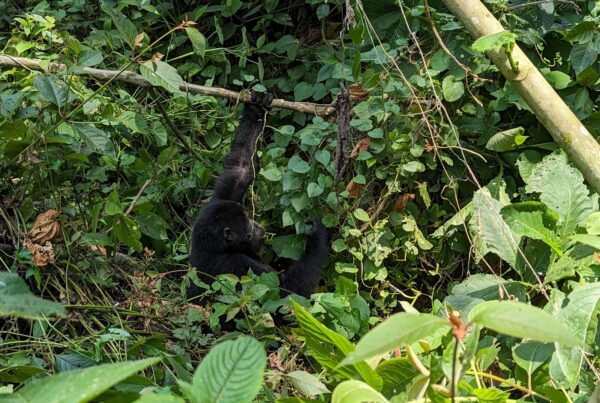
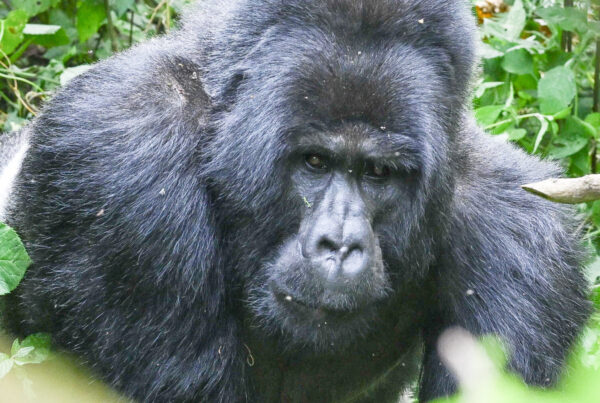
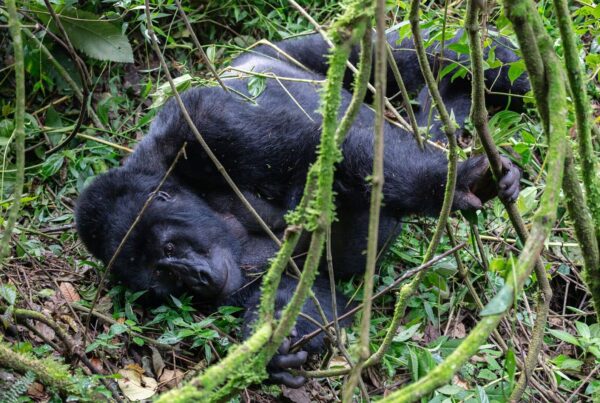
Wake at five thirty for an early breakfast. Transfer to the Uganda Wildlife Authority park headquarters for the morning briefing at seven thirty. Receive your gorilla family assignment and set off into the forest with your ranger guide and tracker team. The trek to the gorillas may take anywhere from thirty minutes to six hours depending on the family’s location. Spend one extraordinary hour with the gorillas before trekking back out of the forest. Return to your lodge for lunch, rest, and reflection. Many trekkers describe the gorilla encounter as the emotional highlight of the entire two-week trip, even after summiting the Rwenzori.
Day 13: Optional Activity Day
Use this day for a complementary experience near Bwindi. Options include the Batwa Cultural Experience, a guided birding walk in the forest, a community village walk, or a half-day trip to Lake Bunyonyi for canoeing and relaxation. Alternatively, if you purchased a second gorilla permit, you can do a second gorilla trek or the gorilla habituation experience, which allows four hours with a semi-habituated family instead of the standard one hour.
Day 14: Transfer to Entebbe and Departure
The final day involves either a long drive back to Entebbe, approximately eight to ten hours, or a domestic charter flight from Kihihi airstrip to Entebbe in ninety minutes. If flying, you will have time for a farewell lunch in Entebbe before heading to the airport. If driving, depart early and plan stops along the way to break up the journey.
Fitness Requirements
This two-week combo demands a good level of physical fitness. The Rwenzori trek involves six to eight hours of hiking per day over steep, often muddy terrain at altitudes above four thousand metres. You should be able to hike comfortably for six hours carrying a daypack, have experience walking on uneven ground, and ideally have some altitude hiking experience. Start training at least three months before your trip with hill walking, stair climbing, and cardiovascular exercise. The gorilla trekking portion is physically easier by comparison, typically two to six hours of forest hiking at lower altitude.
Cost Estimate for the 2-Week Combo
- Rwenzori Mountains trek (7 days, all inclusive): $2,200 – $2,800 per person
- Gorilla trekking permit: $700 per person
- Accommodation outside the trek (6 nights): $300 – $1,800 depending on budget
- Transport and guide fees: $800 – $1,800
- National park fees, activities, meals: $300 – $600
- Total estimated cost: $4,300 – $7,100 per person
Best Time to Do This Combo
The dry seasons of June to August and December to February offer the best trekking conditions for both the Rwenzori and Bwindi. Mountain trails are firmer, visibility is better, and the summit window for Margherita Peak is wider. However, the Rwenzori Mountains receive rain throughout the year, so you should always pack waterproof gear regardless of when you visit.
Final Thoughts
Combining gorilla trekking with Rwenzori mountain hiking creates the ultimate Uganda adventure. You will push your physical limits on Africa’s third-highest peak, stand in the presence of endangered mountain gorillas, and traverse some of the most extraordinary landscapes on the continent. It is not an easy trip, but it is a profoundly rewarding one that very few travellers ever complete. Those who do carry stories that last a lifetime.
Frequently asked questions about combining gorilla trekking and Rwenzori hiking
How difficult is the Rwenzori mountain circuit and who can do it?
The Rwenzori Central Circuit (the standard 7-day route from Nyakalengija trailhead) is a demanding high-altitude mountain trek that requires genuine mountaineering fitness, not merely gorilla trekking fitness. The circuit reaches an elevation of approximately 4,800m at Elena Glacier approach, and summit attempts on Margherita Peak (5,109m, requiring ice axe and crampons) are arranged separately as an extension. The terrain on the Rwenzori circuit is notoriously challenging — the lower forest sections involve thick root systems, deep mud, and sustained steep climbing; the upper zones involve rock scrambling and exposure to sudden severe weather. The circuit is not technically difficult in the mountaineering sense (no technical climbing or rope use required for the standard circuit), but the physical demand of 6–8 hours of mountain hiking per day at altitude for 7 consecutive days requires active fitness preparation. Recommended minimum preparation is 3 months of sustained hiking including days of 1,000m+ elevation gain. The circuit should not be attempted by visitors who have not recently done sustained mountain hiking.
What makes the Rwenzori Mountains different from other African mountain hiking?
The Rwenzori Mountains of the Moon produce one of the most botanically extraordinary highland landscapes in Africa — the combination of equatorial location and extreme altitude creates vegetation zones found nowhere else: giant tree heathers (Erica arborea) growing to 10 metres, giant lobelias (Lobelia wollastonii) standing 5 metres tall, and giant groundsel (Senecio erici-rosenii) forming alien forests in the upper zones, all above the normal limits of tropical vegetation in a landscape that simultaneously feels prehistoric and extraterrestrial. This is distinct from all other African highland hiking (Kilimanjaro’s more gradual zones, Simien Mountains’ Ethiopian plateau landscape) and produces a visual experience unavailable anywhere else on the continent. The Rwenzori also retain actual glaciers at their highest elevations — among the last equatorial glaciers in Africa, which are receding under climate pressure, making a visit to the ice fields an increasingly time-sensitive experience.
What equipment do you need for both Rwenzori hiking and gorilla trekking on the same trip?
The packing challenge of a Rwenzori plus gorilla trekking trip is that the two activities require overlapping but distinct kit lists. Shared items include: waterproof hiking boots (critical for both Rwenzori’s mud and Bwindi’s wet forest), waterproof jacket (essential for both), technical hiking trousers, warm base layer (used at Rwenzori altitude and useful at Bwindi’s 2,000m+), and a 25–35 litre daypack. Rwenzori-specific requirements include: down or synthetic insulated jacket, gloves and warm hat (used at altitude), trekking poles (strongly recommended for Rwenzori’s root terrain and steep descents), gaiters (Rwenzori’s mud is legendary), and headlamp. Gorilla trekking-specific requirements include: long sleeves and trousers for forest vegetation (same as Rwenzori kit), a smaller daypack or the Rwenzori daypack repurposed with porter assistance. The practical approach is to pack for Rwenzori as the more demanding requirement and treat the gorilla trek day kit as a subset — everything you need for Bwindi is already in your Rwenzori bag.
Does doing the Rwenzori first help with the gorilla trek fitness?
Yes — completing the 7-day Rwenzori circuit before the gorilla trek produces a meaningful fitness and altitude acclimatisation benefit for the Bwindi days. By the time you arrive at Bwindi for the gorilla trek (typically Days 12–13 of the 14-day itinerary), your body has adapted to sustained high-altitude exertion over a week of mountain hiking, your leg muscles are conditioned to steep forest terrain, and your cardiovascular system is operating efficiently at the elevations Bwindi’s trekking terrain presents. Visitors who do this sequence consistently report that the gorilla trek, despite being on a different day and in a different forest, feels physically manageable in a way it might not have at the start of the trip — the Rwenzori circuit functions as the most comprehensive possible physical preparation for Bwindi’s forest. The reverse sequence (gorilla trekking first, Rwenzori second) is also logistically possible but produces a less integrated fitness build-up.
What wildlife can you see in Queen Elizabeth National Park between the Rwenzori and Bwindi?
Queen Elizabeth National Park sits directly between the Rwenzori Mountains (northwestern boundary near Kasese) and Bwindi (southeast, via Ishasha sector), making it the natural 1–2 night stopover on this itinerary. Queen Elizabeth offers some of Uganda’s best savannah wildlife viewing: large hippo populations in the Kazinga Channel (the 2-hour boat safari is one of Uganda’s single best wildlife experiences), tree-climbing lions in the Ishasha sector (a population uniquely adapted to rest in large fig trees), large elephant herds, buffalo, Uganda kob (the national animal), and the channel’s extraordinary bird diversity (African fish eagle, goliath heron, African skimmer, pink-backed pelican, and dozens of species accessible from the boat). The Kazinga Channel boat safari works well as a low-physical-effort day between the Rwenzori’s demanding finale and the Bwindi gorilla trek preparation — it provides wildlife density and scenery without the exertion that the body needs to recover from mountain hiking before the forest day.
Plan the ultimate Uganda 2-week adventure
- Gorilla Permit Guide — book the gorilla permit as soon as Rwenzori circuit dates are confirmed
- Uganda Gorilla Families — the gorilla families at the end of the two-week adventure
- Bwindi Sector Guide — sector selection for the post-Rwenzori gorilla day
- Full Safari Cost Guide — full 14-day itinerary cost including Rwenzori permit and gorilla permit
- Safari Itineraries — 14-day Uganda itinerary designs including the Rwenzori-gorilla combination
- Rwenzori Mountains Uganda: Trekking the Mountains of the Moon
- Gorilla Trekking Uganda for Hikers: Combine Bwindi With the Rwenzori Mountains
- The Rwenzori Mountains: Africa’s Glaciers You Have Never Heard Of
- Rwenzori Turaco Uganda: Mountain Endemic Bird Complete Guide
- Stripe-Breasted Tit Uganda: Rwenzori Mountain Bird Facts
- Rwenzori Mountain Coffee Tour: Farm Visit Before Gorilla Trekking 2027
- The Rwenzori Mountains: Africa’s Mountains of the Moon near Uganda’s gorilla country
- The Rwenzori Mountains: mythology, exploration, and the Mountains of the Moon
- The Rwenzori Mountains and the Mountains of the Moon: their place in African exploration history
- Rwenzori Mountains and gorilla trekking: combining two of Uganda’s great adventures