You have heard of Kilimanjaro. You have probably heard of Mount Kenya. You may have heard of the Virunga volcanoes — the dramatic chain of peaks that forms the backdrop to gorilla trekking in Uganda, Rwanda, and the Democratic Republic of Congo. But there is a mountain range in western Uganda that is older, stranger, wetter, and in many ways more spectacular than any of these, and it remains almost completely unknown outside specialist hiking and mountaineering communities.
The Rwenzori Mountains — the “Mountains of the Moon,” as Ptolemy called them in the second century AD, as sources of the Nile — rise to over 5,000 metres on the Uganda-DRC border and carry permanent glaciers within two degrees of the equator. They are among the last places on Earth where equatorial ice still exists. And they are disappearing.
The Geography of the Impossible
The Rwenzoris are not volcanoes. Unlike Kilimanjaro, Mount Kenya, and the Virungas, they are a fault-block range — an ancient massif uplifted by tectonic forces over millions of years, composed of Precambrian metamorphic rocks that are among the oldest exposed rock formations in East Africa. The highest peak, Margherita, on the summit of Mount Stanley, reaches 5,109 metres and is the third highest point in Africa.
The range is famous among mountaineers for its extraordinary difficulty — not because of technical climbing challenges, though those exist, but because of the conditions. The Rwenzoris receive rainfall almost every day of the year. The forest zones below the peaks are among the wettest environments in Africa. The upper zones, above 4,000 metres, are covered in a bizarre and beautiful vegetation unlike anything found anywhere else in the world: giant lobelias the size of trees, groundsels that grow to six metres, heaths wrapped in beard moss that wave in fog-laden winds. It looks like a landscape designed by someone who had heard a description of a forest but never actually seen one.
The Glaciers
The glaciers of the Rwenzoris are the most spectacular and most urgent feature of the range. In 1906, when the Duke of the Abruzzi led the first major expedition to the peaks, the glaciers covered approximately 7.5 square kilometres. Today they cover less than one square kilometre. They are retreating at a rate that makes their disappearance within the coming decades essentially certain.
The loss of the Rwenzori glaciers is one of the clearest physical demonstrations of climate change in East Africa — clearer in some ways than temperature records or rainfall data, because ice you can see with your own eyes is more immediately compelling than a graph. The glaciers are also ecologically significant, feeding rivers that flow down from the mountains into communities that depend on them for drinking water and agriculture. Their disappearance will not be merely symbolic.
The World Below the Ice
Most visitors to the Rwenzoris never reach the glaciers. The approach takes multiple days of hiking through vegetation zones that are in themselves extraordinary. The montane forest at lower elevations is dense with tree ferns, orchids, and the calls of Albertine Rift endemics — birds found nowhere else on Earth. The zone gives way to bamboo, then to heath, then to the surreal afroalpine zone where the giant lobelias and groundsels create a landscape that seems to operate by different biological rules from everything below.
The Rwenzori Mountains National Park, which covers most of the Ugandan portion of the range, is a UNESCO World Heritage Site — one of only a handful in Uganda. The park’s rangers and guides are among the most experienced mountain specialists in East Africa, capable of navigating the range’s complex terrain and highly variable weather conditions with confidence that inspires visitors who are often considerably less comfortable.
The Margherita Circuit
The standard trekking route to Margherita Peak takes seven to nine days and covers approximately 55 kilometres of trail through all the major vegetation zones. The route is demanding — not technically, for the most part, but physically and psychologically. Days in the Rwenzoris often involve significant elevation gain in wet conditions, with trails that can be muddy, slippery, and exhausting. The reward is a summit view — on the rare clear days that the range provides — that extends across the western branch of the East African Rift Valley and into the Democratic Republic of Congo.
Most trekkers report that the journey matters more than the destination. The experience of moving through the Rwenzoris’ vegetation zones, from familiar forest through increasingly alien landscapes to the ice at the top, is unlike any other hiking experience in Africa. The range has its own ecology, its own atmosphere, and its own relationship with weather that makes every day’s walking different from the last.
The Mountains of the Moon in History
The Rwenzoris appear in recorded history earlier than almost any other geographical feature of equatorial Africa. Ptolemy’s second-century AD map includes the “Mountains of the Moon” as the source of the Nile — a remarkable piece of geographical accuracy for a time when most of Africa beyond the Mediterranean coast was terra incognita to the classical world. How Ptolemy obtained this information is still debated; the most plausible explanation involves a chain of trade contacts stretching from the East African interior to Egypt.
The mountains were not seen by European explorers until 1888, when Henry Morton Stanley glimpsed their snow-capped peaks during his Emin Pasha Relief Expedition. Stanley named the range Ruwenzori — a transliteration of the local name — and described his astonishment at finding permanent snow and ice at the equator. The Duke of the Abruzzi’s expedition of 1906 made the first ascents of the major peaks and produced the first detailed maps and photographs of the range, establishing the Rwenzoris as one of the great destinations of Edwardian-era mountaineering.
Local Relationship with the Mountains
For the Konzo people who live on the Rwenzoris’ lower slopes, the mountains are sacred — the home of Kitasamba, a spirit associated with rain and the mountain’s unpredictable weather. The rituals associated with Kitasamba governed the relationship between the Konzo and the mountain for centuries, determining when it was safe to ascend, how the mountain’s resources should be used, and what offerings were required to maintain the mountain’s goodwill.
These traditions have eroded significantly with modernisation and the influence of Christianity, but elements persist. Konzo guides working in the national park often describe their relationship with the mountain in terms that combine the practical knowledge of experienced mountaineers with a respect for the range’s power that goes beyond meteorological caution. The mountain, in their telling, has agency. It decides whether to reveal itself or hide behind cloud. This is mythology, but it is also accurate meteorology.
Combining Rwenzori with Gorilla Trekking
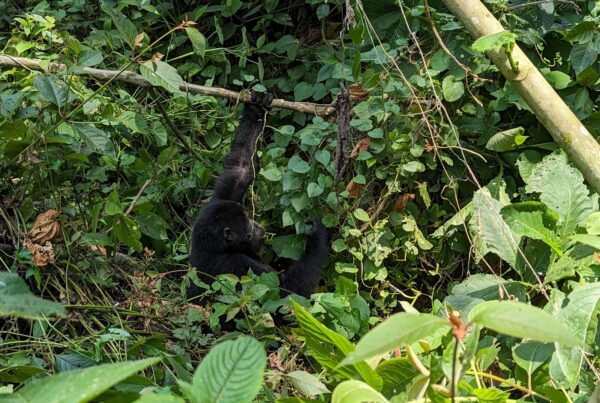
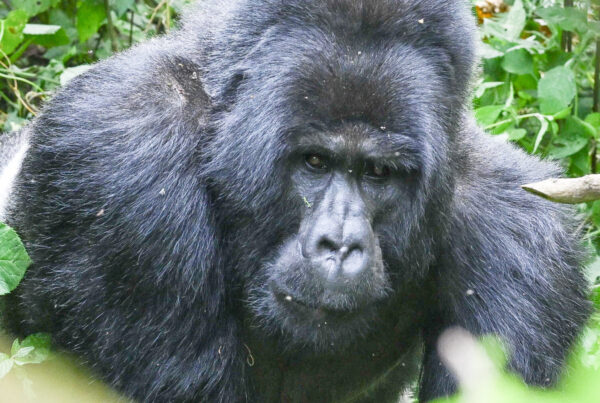
The Rwenzori Mountains are within a day’s drive of Bwindi Impenetrable Forest, making them a natural addition to a Uganda itinerary built around gorilla trekking. The combination is rarely done because the Rwenzori requires a minimum commitment of a week and most gorilla trekkers are working within tight itineraries. But for travellers with time — two weeks minimum — the combination of a mountain glacier trek and a gorilla encounter represents a scope of experience that almost no other country can match.
In 2027, Uganda’s tourism offering is dominated by the $800 gorilla permit and the experiences that surround it. The Rwenzoris represent a different Uganda — older, stranger, less visited, and in some ways more extraordinary. They are the mountains that Ptolemy wrote about two thousand years ago and that most travellers today have never heard of. That is, somehow, entirely appropriate for a range that has always preferred to keep its summit hidden in cloud.