Gorilla Trekking Group Size: Understanding Permit Limits and Group Rules
Mountain gorilla trekking operates under strict group size regulations designed to minimise stress on habituated gorilla families and protect the animals’ health. Understanding these rules — why they exist, how they are enforced, and what they mean for your experience — helps you appreciate the careful management behind one of wildlife tourism’s most intimate encounters. The group size rules also have practical implications for permit booking, group travel logistics, and the overall trekking experience.
The Eight-Person Rule
The fundamental rule governing gorilla trekking group size is that a maximum of eight visitors may be in the presence of a gorilla family at any one time. This rule applies equally at Bwindi Impenetrable National Park, Mgahinga Gorilla National Park in Uganda, and Volcanoes National Park in Rwanda. It means that Uganda Wildlife Authority sells a maximum of eight permits per gorilla family per day, and no more than eight people may approach and observe a given gorilla group during the daily trekking session.
Why Eight Visitors?
The eight-visitor limit is not arbitrary — it is based on research into gorilla stress responses to human presence and infection risk modelling. Mountain gorillas are susceptible to human respiratory diseases, and larger groups of visitors increase both the probability of pathogen transmission and the cumulative stress on the animals from human presence. Studies of gorilla behaviour during tourist visits found that groups larger than eight caused measurable increases in stress-related behaviours and disrupted normal gorilla activity patterns. Eight was determined to be the maximum number that allows a meaningful, close wildlife experience while maintaining acceptable infection risk and minimising behavioural disruption.
One-Hour Time Limit
The one-hour maximum time limit for each visitor group spent with gorillas works in conjunction with the eight-person rule. While eight people may visit, each visit is strictly limited to 60 minutes of direct observation time once the gorillas are found. Rangers time this precisely and give clear warnings when time is nearly up. The one-hour limit reduces the cumulative disease exposure risk and prevents the extended disturbance that could occur if visitor groups spent multiple hours with a family. Rangers have discretion to reduce the one-hour visit if gorillas are showing signs of distress or if weather conditions deteriorate significantly.
Multiple Groups per Park, One Group per Family
The eight-person limit applies per gorilla family, but parks with multiple habituated families can issue permits for all of them simultaneously. Bwindi Impenetrable National Park, with gorilla families in four sectors (Buhoma, Rushaga, Nkuringo, and Ruhija), can issue multiple groups of eight permits per day across all sectors simultaneously. A day in Bwindi’s Rushaga sector, which has multiple habituated families, might see several groups of eight departing concurrently to different families. This means that the total number of gorilla trekking permits available in Uganda on any given day can reach several dozen, even though each individual family receives only one group of eight visitors.
Ranger and Porter Accompaniment
Each visitor group is accompanied by a lead ranger/guide (often called a ranger guide or gorilla guide) and one or two additional rangers who provide safety coverage, assist with navigation, and manage any incidents. Porters, who carry luggage and provide stability support on difficult terrain, are separate from the ranger team. Rangers do not count toward the eight-person visitor limit — the limit applies specifically to paying visitors (permit holders). On a typical trek, a group of eight visitors might be accompanied by one lead ranger, one or two additional ranger/trackers, and a porter for each visitor who has hired one. The total group in the forest is therefore larger than eight people, but the visitor-to-gorilla exposure is managed by the eight-visitor rule.
Family Visits Per Day
Each habituated gorilla family receives one visitor group of up to eight people per day. The family is never visited twice in a single day by different groups. Researchers and conservation staff who work with gorilla families do so under separate protocols and are not counted within the tourist permit system. The single daily visit per family structure ensures that gorillas have the majority of each day undisturbed by human presence, maintaining the normality of their social behaviour, feeding routines, and ranging patterns.
Booking Implications of the Eight-Person Rule
For individual travellers, the eight-person rule is primarily relevant in terms of permit availability during peak season. When a popular gorilla family’s eight permits are booked by a tour operator group, no individual permits remain for that family on that date. During peak season (June to September and December to February), many gorilla families are fully booked months in advance. Individual travellers should book permits as far in advance as possible — ideally three to six months ahead for peak season visits — to secure their preferred family and dates.
Group Travel Logistics
For groups larger than eight travelling together — family groups, company incentive trips, or groups of friends — the eight-person rule creates a logistical consideration. A group of 12 travellers cannot all trek to the same gorilla family on the same day. They would need to split into two groups (e.g., eight and four) and be assigned to different gorilla families on the same day. This works well at Bwindi’s Rushaga sector where multiple families are available, but can be challenging at Mgahinga where only one family is habituated. Tour operators experienced with large groups can navigate these logistics, but they need to know your group size when booking permits so they can arrange appropriate family assignments across sectors.
Gorilla Habituation Experience: Different Rules
The Gorilla Habituation Experience (GHEX) offered at Bwindi’s Rushaga sector operates under slightly different rules. Instead of eight visitors per family, the habituation experience allows a maximum of four visitors per group, reflecting the more sensitive nature of habituation work. Visitors join researchers and rangers for a full day (from early morning to late afternoon) with a gorilla family that is in the process of being habituated to human presence. The smaller group size and longer exposure period requires more careful management of visitor impact. The GHEX permit costs significantly more than a standard trekking permit (approximately USD 1,800 compared to USD 700 for standard trekking) but provides a uniquely immersive and extended encounter.
Rules of Conduct in the Gorilla Presence
In addition to the group size and time limits, a set of conduct rules governs visitor behaviour during the gorilla encounter. Maintaining a minimum eight-metre distance from gorillas at all times is the most important safety and health rule — rangers enforce this actively. Flash photography is prohibited as it can startle or distress gorillas. Eating, drinking (except water), and smoking are not permitted within the gorilla presence. Speaking is allowed in low tones but loud sounds should be avoided. If a gorilla approaches or charges, visitors must remain still, crouch down, avoid direct eye contact, and follow the ranger’s instructions. These rules are explained in full during the pre-trek briefing at the sector headquarters and should be treated as mandatory rather than advisory.
The Effect of Group Size on the Experience
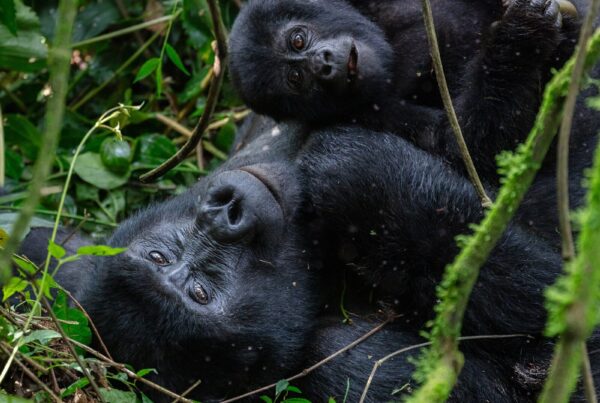
The eight-person limit has the beneficial effect of creating an intimate and personal gorilla encounter for every visitor. Unlike large safari vehicles or crowded observation platforms, gorilla trekking delivers a genuinely small-group wildlife experience. With only eight visitors and a few rangers in a forest clearing or hillside with a gorilla family, the experience feels personal and immediate. Many visitors report that the intimacy of the encounter — sitting quietly while a silverback feeds a few metres away or watching a mother nurse her infant — is what makes gorilla trekking profoundly different from any other wildlife experience they have had. This intimacy is entirely a product of the eight-person rule and the careful management that underpins it.