How Close Can You Get to the Gorillas During a Trek?
The question of how close can you get to gorillas shapes expectations long before a trek begins. Travelers often imagine a distant wildlife sighting, but gorilla trekking delivers something far more intimate. The experience brings you into the same space as a habituated gorilla family, surrounded by dense forest, natural sounds, and close-range observation.
At the same time, this proximity is carefully controlled. Gorilla trekking operates under strict conservation rules designed to protect one of the world’s most endangered primates. Every step of the encounter balances access with responsibility. The result is a rare combination of closeness and control, where visitors can witness gorillas at remarkably short distances without disrupting their natural behavior.
The Official Distance Rule in Gorilla Trekking
The official guideline across Uganda, Rwanda, and the Democratic Republic of Congo requires visitors to maintain a distance of 7 meters (approximately 23 feet) from the gorillas. This rule applies the moment the gorilla family is located and remains in effect throughout the one-hour viewing period.
Note: Uganda updated the distance to 10 meters for more full proof security.
This distance is not arbitrary. It is based on scientific understanding of disease transmission and animal behavior. Mountain gorillas share a high percentage of human DNA, which makes them vulnerable to common illnesses such as influenza, coughs, and other respiratory infections. A simple illness carried by a visitor could spread quickly within a gorilla group.
Beyond health concerns, the distance helps maintain natural behavior. Gorillas that feel crowded or threatened may alter their movement, feeding patterns, or social interactions. By keeping space, guides ensure that visitors observe authentic behavior rather than reactions to human presence.
Despite this clear rule, the forest environment introduces a level of unpredictability that often changes how distance is experienced.
Real-Life Encounters: When Gorillas Come Closer
In practice, how close can you get to gorillas often depends on the behavior of the gorillas themselves. These are not controlled animals, and trekking takes place in their natural habitat. Dense vegetation, uneven terrain, and constant movement make it difficult to maintain a fixed distance at all times.
It is common for gorillas to move closer than the recommended 7 meters. In some cases, they may approach within a few meters or even pass directly beside visitors. These moments are not staged. They occur because gorillas continue their daily activities without altering their path.
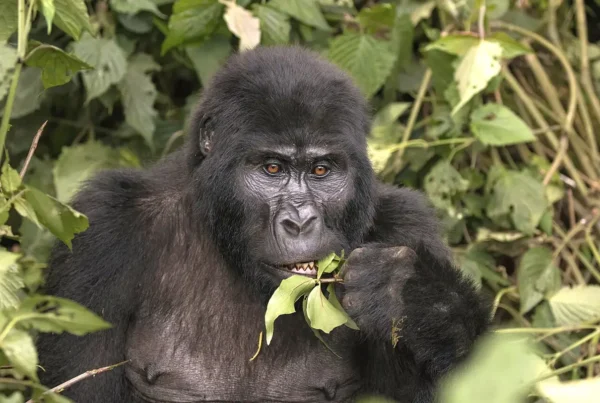
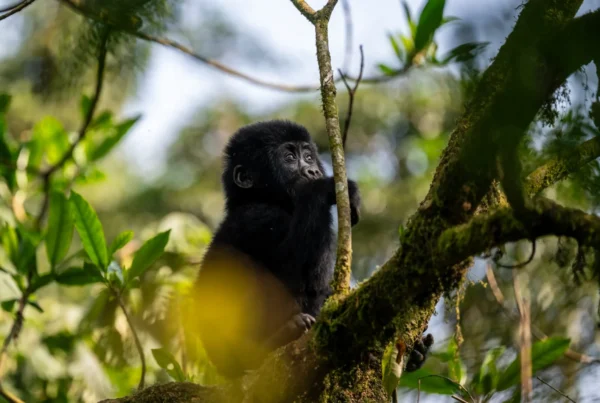
Juvenile gorillas are especially curious. They may pause to observe trekkers or move closer during play. Adult females often continue feeding nearby without concern. Silverbacks, while protective, usually remain calm and composed, even when close to visitors.
These encounters create a powerful sense of connection. The size, presence, and quiet intelligence of a gorilla at close range leave a lasting impression that cannot be replicated in any other wildlife experience.
Why Gorillas Allow Close Proximity
The ability to observe gorillas at such close distances comes from a process known as habituation. This is a long-term effort carried out by conservationists and trackers, where gorilla families gradually become accustomed to human presence.
Habituation takes several years. During this time, trained teams spend limited periods near the gorillas each day, allowing them to recognize humans as neutral rather than threatening. The process is carefully managed to avoid stress or behavioral changes.
Once a family is fully habituated, it becomes available for tourism. This does not mean the gorillas are tame. They remain wild animals with natural instincts and social structures. However, they tolerate human presence within controlled limits.
Because of this familiarity, gorillas do not react aggressively when visitors are nearby. Instead, they continue feeding, grooming, resting, and interacting as they would without human presence. This is what allows for close encounters while maintaining safety.
The Role of Guides in Managing Distance
Professional guides and trackers play a central role in maintaining safe and respectful proximity. Before the trek begins, visitors receive a detailed briefing that explains the rules, expected behavior, and what to do during the encounter.
Once the gorillas are located, guides position the group to maintain the recommended distance. They constantly observe both the gorillas and the visitors, adjusting positions as needed.
When gorillas move closer, guides assess the situation and provide instructions. Visitors may be asked to step back slowly, remain still, or crouch slightly to appear less imposing. These small adjustments help prevent tension and maintain a calm environment.
The presence of experienced guides ensures that even when the distance changes, the encounter remains safe for both sides.
What You Should Do When Gorillas Get Close
Moments of close proximity are often the highlight of a gorilla trek, but they require careful behavior. When a gorilla approaches, your reaction should remain controlled and respectful.
Keeping movements slow and deliberate helps avoid startling the animals. Sudden gestures, loud voices, or attempts to move closer can disrupt the group. Maintaining a calm posture signals that you are not a threat.
Eye contact should be limited. In gorilla behavior, direct staring can be interpreted as a challenge. Looking slightly downward or to the side creates a more neutral presence.
If a gorilla comes very close, guides may instruct you to crouch. This reduces your apparent size and helps maintain a non-threatening position. These moments often pass quietly, with the gorilla continuing its activity without concern.
Photography at Close Range
Photography is an essential part of the gorilla trekking experience, especially when considering how close can you get to gorillas in real conditions. Capturing images at short distances allows for detailed shots of facial expressions, interactions, and textures.
However, strict rules apply. Flash photography is not allowed under any circumstances. Sudden bursts of light can disturb the gorillas and alter their behavior.
Natural lighting, combined with the forest environment, creates unique photographic conditions. Early morning treks often provide softer light, while dense canopy areas may require adjustments to camera settings.
Photographers must balance the desire for close images with the responsibility to remain unobtrusive. The best images often come from patience rather than movement.
The One-Hour Rule and Its Impact on Proximity
Once the gorilla family is located, visitors are allowed exactly one hour with them. This time limit is enforced strictly across all trekking destinations.
The one-hour rule is designed to minimize stress on the gorillas. Continuous human presence can become overwhelming, even for habituated groups. Limiting interaction ensures that each family maintains its natural rhythm.
Within this hour, the sense of closeness becomes more meaningful. Visitors observe feeding, grooming, resting, and social interactions at short distances. The limited time encourages focused observation rather than prolonged disturbance.
The combination of proximity and time restriction creates an experience that feels both intense and respectful.
Differences Between Trekking Locations
While the rules remain consistent, the environment influences how close encounters feel. In Uganda’s Bwindi Impenetrable National Park, dense forest often reduces visibility and brings visitors into tighter spaces with gorillas. The thick vegetation creates an immersive setting where encounters can feel very close.
In Rwanda’s Volcanoes National Park, the terrain includes bamboo forests and open slopes. These conditions sometimes allow for wider viewing angles, although close encounters still occur frequently.
Each location offers a distinct experience, but neither guarantees distance or closeness. The behavior of the gorilla family on that day remains the most important factor.
Health and Safety Considerations
Understanding how close can you get to gorillas also involves recognizing the health measures in place. Visitors who show signs of illness are not allowed to participate in trekking. This policy protects gorillas from potential infections.
Hand sanitation, controlled group sizes, and guided movement all contribute to maintaining a safe environment. In some cases, face masks may be recommended or required, especially when proximity becomes unavoidable.
These measures ensure that tourism continues to support conservation without introducing unnecessary risks.
Why the Distance Rule Still Matters
Even though gorillas may come closer than 7 meters, the rule remains essential. It sets a standard for behavior and ensures that visitors do not intentionally approach the animals.
Without this guideline, close encounters could quickly become intrusive. The rule creates a framework where proximity happens naturally rather than being forced.
This distinction is important. Observing a gorilla that chooses to approach you feels very different from actively moving toward it. The experience remains authentic and respectful.
The Emotional Impact of Close Encounters
Few wildlife experiences compare to standing just meters away from a mountain gorilla. The quiet presence, steady gaze, and human-like expressions create a moment that feels deeply personal.
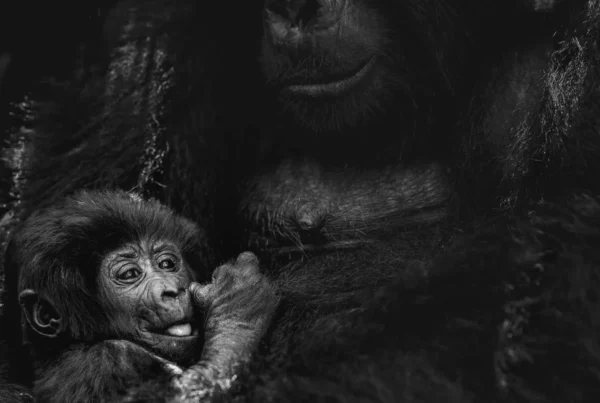
Visitors often describe a sense of connection that goes beyond observation. Watching a gorilla care for its young, interact with its group, or simply rest in the forest highlights the complexity of their social structure.
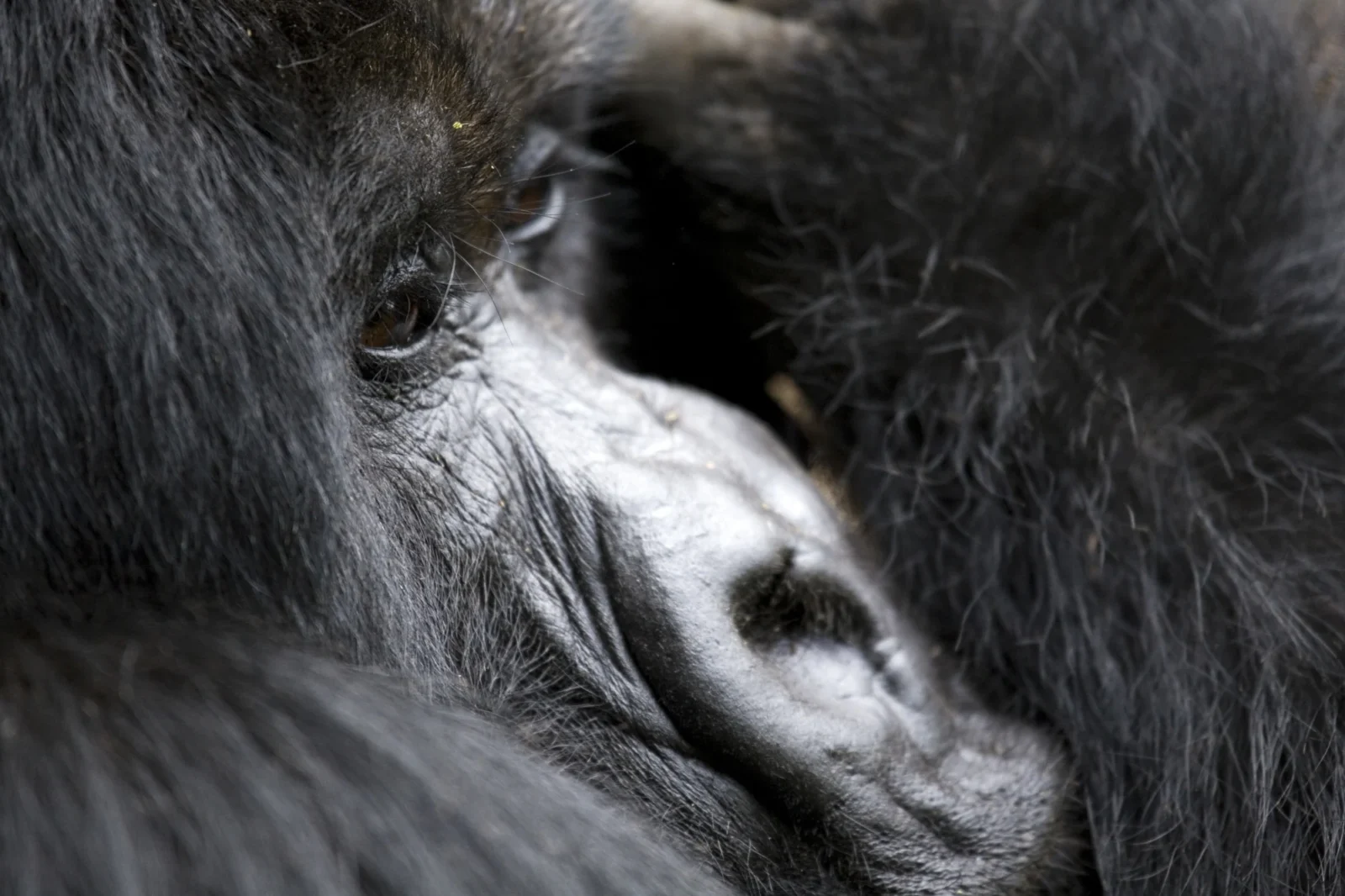
This emotional impact is closely tied to proximity. The ability to observe fine details—facial features, gestures, and subtle interactions—transforms the experience into something memorable and meaningful.
Responsible Tourism and Long-Term Conservation
The question of how close can you get to gorillas is ultimately linked to conservation. Gorilla trekking generates significant revenue that supports national parks, local communities, and conservation programs.
By maintaining strict rules on distance and behavior, these programs ensure that tourism benefits do not come at the expense of the gorillas. Each trek contributes to protecting habitats, funding research, and supporting anti-poaching efforts.
Visitors play a role in this system. Respecting guidelines, following instructions, and minimizing impact help preserve the experience for future generations.