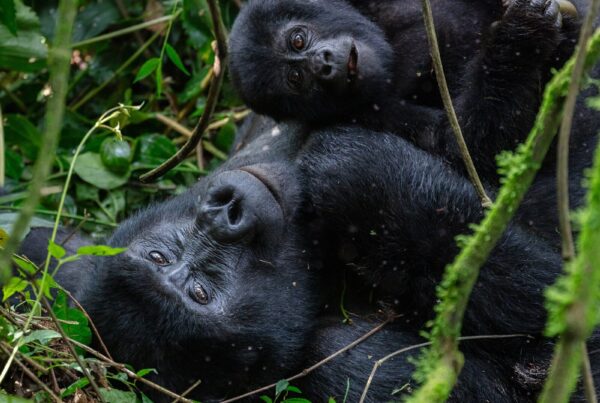
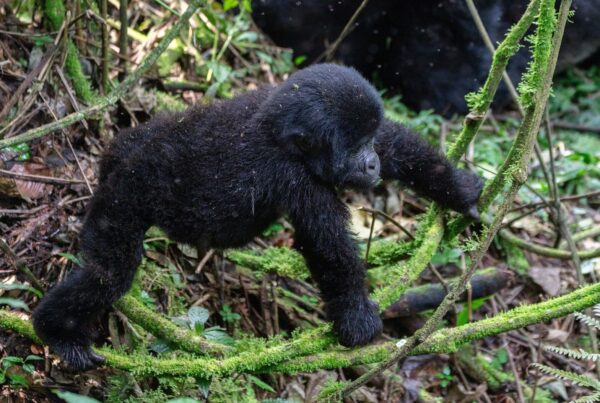
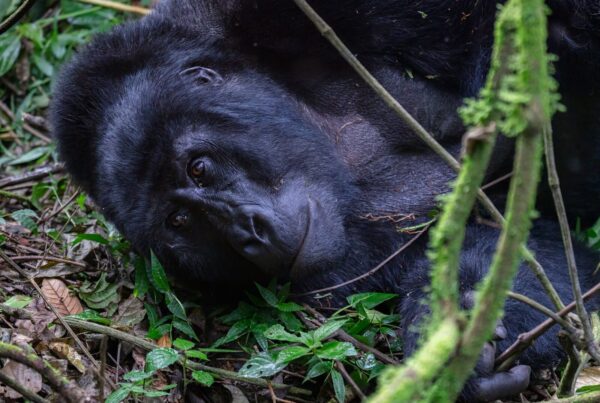
Gorilla trekking in Uganda is one of the most rewarding wildlife experiences in Africa, but preparation makes the difference between a smooth expedition and an avoidable struggle. From what to pack and what to wear, to how permits work and what happens on trek day, knowing what to expect before you go ensures every hour in the forest counts. Start with the permit guide and the Bwindi trekking overview for the full planning picture.
- Minimum age: 15 years (Uganda Wildlife Authority rule)
- Minimum fitness: able to hike 2–8 hours on uneven forest terrain
- Essential gear: waterproof hiking boots, long trousers, gloves, rain poncho
- Camera policy: no flash photography near gorillas
- Health rule: visitors with cold, flu, or respiratory illness must not trek
A gorilla trekking preparation checklist is one of the most valuable things a first-time visitor to Bwindi Impenetrable Forest can have. The gorilla trekking experience is so unlike other wildlife encounters that standard travel preparation — comfortable clothing, good footwear, a camera — is necessary but not sufficient. This 30-point checklist covers everything from practical logistics to physical preparation to the behavioural rules that apply during the encounter, organised in the order in which you will need the information.
Booking your permit (points 1-5)
1. Book your permit at least 3 months in advance
Gorilla trekking permits in Uganda are limited to a specific number per day per habituated family group, and permits for the peak months of June through August and December through February are frequently sold out months in advance. Booking at least 3 months ahead — ideally 6 months for peak season — gives you the best chance of your preferred dates and sector.
2. The permit costs $800 per person
Uganda Wildlife Authority sets the gorilla trekking permit price at $800 per person. This price does not vary by operator — it is the same whether you book through a budget operator or a luxury lodge. The permit covers your entry into the park and your one hour with the gorilla family.
3. Choose your sector carefully
Bwindi has four trekking sectors: Buhoma, Rushegura, Ruhija, and Nkuringo. Each has different terrain, different habituated families, and different character. Buhoma is the most accessible and most developed. Ruhija is higher, cooler, and more remote. Nkuringo offers the most dramatic landscape but the most demanding terrain. Ask your operator which sector suits your fitness level and preferences.
4. Your permit specifies a family group
Each trekking permit is for a specific habituated gorilla family, not for the sector generally. The family you are assigned to may be encountered within 30 minutes or may require up to 6 hours of walking to find on that day, depending on the family’s movements. You cannot switch family groups on the day of the trek.
5. A maximum of 8 visitors per family group per day
Uganda Wildlife Authority limits each habituated family to 8 trekking visitors per day. This limit exists to minimise stress on the gorillas and to maintain the quality of the encounter. The group of 8 will spend their hour together — you cannot go alone or in a pair without sharing the time limit with other visitors.
Physical preparation (points 6-10)
6. Start exercising at least 4 weeks before your trip
The physical demands of gorilla trekking are real. If you are not regularly active, build up your walking fitness over the 4 weeks before your trip — daily walks of increasing length and gradient will prepare you for the sustained effort of the trek itself.
7. Break in your hiking boots before you go
New hiking boots worn for the first time on a gorilla trek are a recipe for blisters. Wear your boots for several walks of increasing length before your trip to soften the leather and allow them to mould to your feet.
8. Altitude acclimatisation may be needed
Bwindi’s higher sectors (Ruhija, parts of Nkuringo) sit at altitudes above 2,000 metres, and visitors arriving from sea level may experience mild altitude effects — breathlessness, headache, fatigue. Spending a day in Kampala (at 1,200 metres) before travelling to the forest will provide partial acclimatisation.
9. Consider a porter
Local community members are available as porters at all park gates for a modest fee. They carry your daypack, provide support on steep terrain, and in most cases have valuable local knowledge to share during the walk. If you have any concerns about your fitness for the trek, a porter is strongly recommended.
10. Medical considerations
Gorilla trekking is not recommended for visitors with active respiratory infections. Gorillas are highly susceptible to human respiratory diseases, and Uganda Wildlife Authority requires trekkers showing symptoms to remain at the gate rather than proceeding into the forest. If you have a cold on the day of your trek, you will be asked to wait.
What to wear and carry (points 11-18)
11. High-sided waterproof hiking boots
The single most important item of equipment for a gorilla trek. The terrain is steep, wet, and uneven. Ankle support is essential. Grip is essential. Waterproofing is valuable.
12. Long trousers
Protection against stinging nettles, which are abundant in the forest and unavoidable on most treks. Lightweight trekking trousers are ideal — they provide protection without overheating.
13. Long-sleeved top
For the same reasons as the long trousers: protection against nettles, insects, and the scratchy undergrowth that the trek path passes through.
14. Waterproof jacket
The forest is wet. Even in the dry season, rain can arrive without warning and the forest itself is permanently moist. A lightweight, packable waterproof jacket that you can put on quickly is essential kit.
15. Gardening gloves
Cheap, lightweight gardening gloves provide excellent protection for your hands when pushing through vegetation. Experienced trekkers rate these as one of the most undervalued items of gorilla trekking equipment.
16. Water and snacks
Carry at least 1.5 litres of water per person, plus high-energy snacks for a trek that may take up to 6 hours. Energy gels, nuts, and dried fruit are ideal for sustained walking in heat and humidity.
17. Camera equipment
Any camera, from a smartphone to a professional DSLR, will produce memorable photographs in the right conditions. Flash photography is not permitted. A wide-angle lens (24-50mm equivalent) often produces better results in the confined forest space than a telephoto. A camera bag with quick-release access is valuable.
18. Trekking poles
Trekking poles are not compulsory but are highly recommended for steep terrain and for the descent, when tired legs on slippery paths create the highest risk of slipping. They are particularly recommended for visitors over 60 or with any knee issues.
The encounter rules (points 19-25)
19. Maintain a 7-metre minimum distance
The minimum distance from the gorillas is enforced by the ranger. Do not approach closer than the ranger permits. If a gorilla approaches you, the ranger will manage your position — follow his instructions without question.
20. No direct eye contact with the silverback
Direct eye contact with the silverback is interpreted as a challenge. Look at the gorillas, but do not stare directly into the silverback’s eyes for extended periods. If the silverback meets your gaze, look down.
21. Crouch if a gorilla approaches
If a gorilla approaches the group, the ranger will instruct you to crouch. Do so immediately and quietly. Crouching communicates non-aggression and deference to the gorilla’s social hierarchy.
22. No flash photography
Flash photography is strictly prohibited. It startles the gorillas and is potentially harmful to their eyes.
23. Do not eat or drink during the encounter
Eating and drinking during the encounter with the gorillas is not permitted — it can attract the gorillas’ attention and create situations that are difficult for the ranger to manage.
24. Do not touch the gorillas
Do not touch the gorillas under any circumstances. If a gorilla touches you — which happens occasionally with curious young animals — the ranger will advise you how to respond.
25. The hour limit is absolute
When the ranger tells you that the hour is up, leave immediately regardless of what is happening in the encounter. The time limit exists to protect the gorillas from stress caused by prolonged human presence.
After the trek (points 26-30)
26. Collect your certificate
Your gorilla trekking certificate — signed by your ranger and recording the family you visited — is presented at the gate after the trek. Keep it as a record of your experience.
27. Tip your porter and ranger
Tipping is standard practice in Uganda’s gorilla trekking industry. Recommended tip amounts vary, but $10-20 per porter and $10-20 per ranger are standard benchmarks for a group of 8 visitors sharing the tips.
28. Reflect before you share
The experience of gorilla trekking produces a strong impulse to share photographs and accounts immediately. Giving yourself a day before writing or posting about the experience often produces more considered and more meaningful communication than sharing in the heat of the immediate aftermath.
29. Consider supporting gorilla conservation
Your permit fee contributes to gorilla conservation. If the experience has moved you, consider an additional donation to one of the organisations working on mountain gorilla protection — the International Gorilla Conservation Programme, the Dian Fossey Gorilla Fund, or the Wildlife Conservation Society’s Uganda programme.
30. Start planning your return
The most consistent finding in gorilla trekking testimonials is that visitors want to come back. Book your next visit before you leave Uganda. The families change, the individuals grow, and the forest is different in every season. The experience that moved you the first time will move you differently, but no less powerfully, the second.
What should I wear for gorilla trekking in Uganda?
Wear long-sleeved shirts and long trousers to protect against nettles and insects in the forest. Sturdy waterproof hiking boots with ankle support are essential. Bring a rain poncho and garden gloves for handling vegetation on steep slopes.
Is gorilla trekking physically demanding?
Trek difficulty varies day to day because gorillas move freely through the forest. You could hike two hours or eight. Average fitness is sufficient for most treks, but steep and muddy terrain is common. Porters are available at all trailheads to carry your bag and provide physical support on difficult sections.
Can I bring a camera on a gorilla trek?
Yes, cameras and mobile phones are permitted. Flash photography is strictly prohibited as it disturbs the gorillas and can provoke stress responses. Keep your camera ready but move slowly and avoid sudden movements when photographing.
What happens if I am sick on gorilla trekking day?
If you have a cold, flu, cough, or any respiratory illness, Uganda Wildlife Authority rangers will not allow you to trek. Gorillas share around 98% of human DNA and are highly susceptible to human respiratory diseases. This rule is strictly enforced at the morning briefing point.
Do I need a porter for gorilla trekking?
Porters are optional but strongly recommended, especially on longer or steeper treks. They carry your bag, steady you on slippery slopes, and provide local employment for communities near the park. Porters are available at the trailhead and the standard fee is around $15 USD for the day.
- 25 Things You Did Not Know About Mountain Gorillas: Illustrated Guide
- Uganda Gorilla Trekking Checklist: 30 Things to Do Before You Go
- Why Travelers Fear Congo, But Marines Know the Thrill of This 5-Day Congo Gorilla Trekking and Nyiragongo Hike Adventure
- Uganda Travel Tips for First-Time Visitors: What You Need to Know Before You Go
- Gorilla Trekking Age Limit: Everything You Must Know Before Booking Your Safari
- Can You Visit Ngogo Chimps? What Travelers Need to Know
- Uganda Gorilla Trekking Myths: 12 Things People Get Completely Wrong
- Uganda Gorilla Trekking Near Kanungu: The Least Known Gateway
- Gorilla Trekking for Seniors: What You Really Need to Know
- Gorilla Trekking With Asthma or Breathing Conditions: What You Need to Know