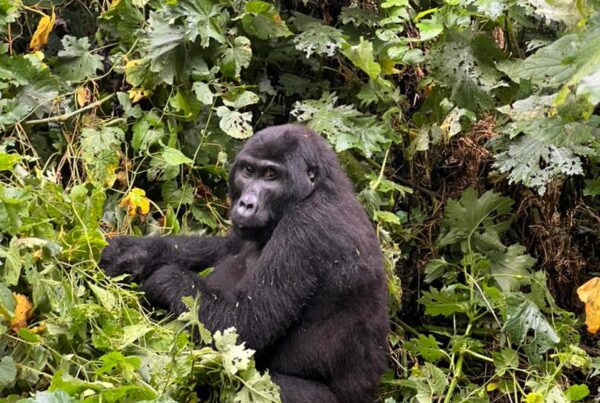
Bwindi Impenetrable National Park sits between 1,160 and 2,607 metres above sea level. Most gorilla trekking takes place in the mid-altitude zones around Buhoma, Ruhija, Rushaga, and Nkuringo, with Nkuringo being the highest at approximately 1,800 metres. While these altitudes are not extreme by alpine standards, they are high enough to affect trekkers who arrive from sea level without acclimatisation time, particularly when combined with the physical exertion of ascending steep, humid forest terrain. Understanding altitude physiology and practising breathing techniques can measurably improve your trekking experience.
How altitude affects the body during trekking
At Bwindi’s altitudes, the air contains roughly 15 to 18 percent less oxygen per breath than at sea level. For most people this reduction is subtle and manageable, but its effects are amplified by exertion. Your heart rate increases more steeply for a given level of physical work. Recovery between bursts of effort takes longer. Breathing becomes shallower and more rapid, which paradoxically reduces the oxygen saturation of each breath by limiting the time gases have to exchange in the lungs. Mild headaches, slight dizziness, and disproportionate fatigue are common in trekkers who are not acclimatised and who begin trekking without managing their breathing.
True acute mountain sickness (AMS) is unusual at Bwindi’s altitudes, though not impossible, particularly in trekkers who arrive from sea level and immediately begin the most demanding ascents around Nkuringo or Ruhija. Symptoms of AMS include persistent headache, nausea, vomiting, confusion, and loss of coordination. These symptoms warrant descent and medical attention. For most trekkers, however, what they experience is simply the normal challenge of aerobic exercise at moderate altitude, and it responds well to pacing and breathing strategy.
Diaphragmatic breathing: the foundation technique
Most people breathe shallowly into the upper chest, a pattern that is sufficient at rest but inefficient during exercise, especially at altitude. Diaphragmatic or belly breathing recruits the full volume of the lungs by engaging the diaphragm—the large muscle below the lungs—rather than just expanding the ribcage. To practise: place one hand on your chest and one on your belly. A correct diaphragmatic breath moves the belly outward while the chest remains relatively still. Inhale slowly through the nose for four counts, feeling the belly rise, then exhale through pursed lips for six counts, feeling the belly fall. This extended exhale reduces carbon dioxide accumulation in the blood, which is one trigger for the sensation of breathlessness.
Practise this technique for ten minutes each day in the weeks before your trek. By the time you reach Bwindi, it should feel natural enough to employ automatically on steep ascents without conscious effort. On the trail, remind yourself to slow your breathing whenever you feel the urge to pant or gasp—this counter-intuitive discipline almost always reduces perceived exertion within a minute or two.
Rest-step technique and breathing rhythm
Experienced high-altitude trekkers use the rest-step: on a steep section, place your weight on the rear leg with the knee locked, advance the front foot, rest for a full breath, then transfer weight forward. This brief rest between steps allows your heart rate to recover incrementally rather than accelerating into a range where breathing becomes laboured. Combined with diaphragmatic breathing, the rest-step can maintain a sustainable pace on even very steep terrain.
On gradual ascents, a rhythmic four-count inhale matched to four steps, followed by a four-count exhale over four steps, keeps breathing and movement synchronised. When the gradient steepens, shorten the rhythm to two steps per breath. The key principle is that breathing should always feel controlled—if you are unable to maintain rhythm, slow down further until you can.
Hydration and its relationship to altitude performance
Altitude increases the rate of fluid loss through respiration—moist air is exhaled more rapidly and in greater volume than at sea level. Dehydration compounds the symptoms of altitude-related fatigue and headache. Drink at least 500ml of water before the trek briefing begins, carry at least 1.5 litres in your pack, and drink proactively every 30 minutes regardless of thirst. Water bladder systems are more convenient than bottles for maintaining hydration while walking, since you can drink without stopping.
Avoid alcohol the evening before a trek, as alcohol impairs the body’s ability to manage altitude stress and disrupts the sleep quality that is essential for recovery. Caffeine in moderate amounts is generally fine and may slightly improve performance by reducing perceived exertion, but excessive coffee consumption increases urine output and can contribute to dehydration.
Acclimatisation before trekking
Arriving in Bwindi a day early and spending the afternoon on a gentle walk—the community trail around Buhoma or a short stroll to the waterfall—allows partial acclimatisation before the more demanding gorilla trek. Even 24 hours at altitude initiates physiological adaptations: red blood cell production increases, breathing patterns adjust, and the body begins to manage oxygen more efficiently. Trekkers who arrive the evening before their permit date and sleep at Bwindi altitude consistently report an easier trek than those who drive through the night and trek the same morning.
If you are combining Bwindi with a circuit that includes Kampala or other lower-altitude locations, the night before the trek should ideally be spent at Bwindi rather than starting the day’s ascent from Kabale or Kampala. The extra fuel and transport cost is a small price for the improved trekking experience.
- Ruhija Sector Bwindi: High Altitude Gorillas — Book Your Permit
- Altitude and gorilla trekking: managing the effects of Bwindi’s elevation
- The hagenia-hypericum zone: Bwindi’s high-altitude forest belt explained
- Sleep quality at altitude near Bwindi: what to expect on your first night
- Best Camps Near Ruhija Sector in Bwindi: Where to Stay for High-Altitude Trekking
- Bwindi Impenetrable Forest – Gorilla Trekking in Uganda’s UNESCO Jungle
- Top Gorilla Trekking Destinations in Uganda – Bwindi vs. Mgahinga 2025
- Chimpanzees Confirmed in Bwindi Forest
- Bwindi Forest: What Happened to the White-Bellied Duiker?
- Why Americans Choose Bwindi, Mgahinga, and Volcanoes Over the Museum