Updated
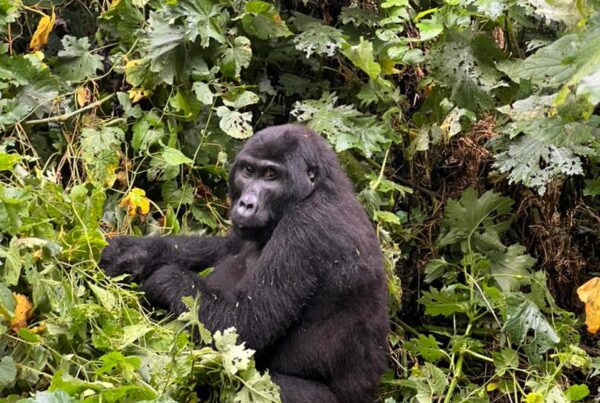
gorilla trekking memory why unforgettable neuroscience is one of Africa’s most extraordinary wildlife experiences, connecting travellers with mountain gorillas in their natural forest habitat. Gorilla trekking is on virtually every list of “life-changing travel experiences” published by major travel media. The phrase is used so often for so many things that it has partially lost its meaning. Yet visitors to Bwindi who were asked to describe the gorilla encounter five years, ten years or twenty years after it happened consistently produce accounts of unusual vividness and emotional specificity — not the generic “it was amazing” of a faded holiday memory, but detailed, particular recollections of specific moments, specific gorillas and specific feelings. Why does the encounter retain this quality? The answer reveals something about how the brain encodes memory, and about what makes the gorilla encounter physiologically different from most other travel experiences.
Memory and the gorilla trek: why the experience stays with you for decades
The neuroscience of emotionally significant memory
Memory encoding is not uniform — the brain does not store all experiences with equal fidelity. Events accompanied by emotional arousal — particularly those activating the adrenaline-noradrenaline system — are encoded more deeply and retained more durably than neutral experiences. The amygdala, the brain region most associated with emotional processing, modulates the hippocampus (the primary memory formation region) in ways that prioritise emotionally significant events for long-term storage. A gorilla encounter — physically demanding to reach, emotionally intense in execution, involving direct engagement with a species we recognise as kin — activates precisely the emotional signature that triggers enhanced memory encoding. The experience is not remembered despite being intense; it is remembered because of it.
The novelty premium in memory
Novel experiences are encoded more deeply than familiar ones — the brain treats new information as potentially more important than information that can be predicted from existing knowledge. A gorilla encounter is maximally novel for virtually any visitor: nothing in ordinary life prepares you for the specific sensory reality of standing within metres of a wild mountain gorilla. The size, the smell, the sound of the animal, the quality of the eye contact — all are experiences without prior template in most visitors’ memory banks. Novelty signals heightened encoding; the more unique the experience, the more durable the memory. Gorilla trekking is, almost definitionally, among the most novel experiences available to a visitor to East Africa.
The role of physical effort in memory consolidation
Research on exercise and memory consolidation has established that physical activity in the hours before and during a learning or experience event enhances subsequent memory encoding. The neurobiological mechanism involves BDNF (brain-derived neurotrophic factor), a protein whose production is stimulated by aerobic exercise and which promotes synaptic plasticity — the physical substrate of memory formation. A trekker who has spent four hours in sustained aerobic effort before reaching the gorillas has, inadvertently, primed their memory system for enhanced encoding of the encounter that follows. The trek is not simply the means of reaching the gorillas — it is, physiologically, part of why the encounter is remembered so well.
The “peak-end rule” and why the encounter structure matters
Psychologist Daniel Kahneman’s “peak-end rule” describes how humans remember experiences: not as a comprehensive average of all moments, but disproportionately weighted by the peak emotional moment and the ending of the experience. Gorilla encounters reliably produce a clear emotional peak — the moment of first direct eye contact with the silverback, the approach of an infant, the chest beat display — and a clear ending (the guide’s signal that sixty minutes have elapsed). The structure of the encounter, with its built-in climactic moments and defined conclusion, maps almost perfectly onto the memory conditions that produce vivid, durable recall. The UWA’s sixty-minute protocol, designed for conservation rather than psychological reasons, inadvertently optimises the memory architecture of the encounter.
What the memory asks of you on your return
The vividness and durability of the gorilla encounter memory has a practical implication: it tends to generate behaviour. Visitors who remember their encounter clearly and positively are more likely to donate to gorilla conservation organisations, to encourage others to visit, to vote for policies that support wildlife protection, and to make subsequent travel choices that prioritise conservation outcomes. The encounter memory is not merely a personal possession — it is, in aggregate across millions of visitors, a form of conservation capital. The organisations that invest in making the encounter as meaningful, as well-guided and as contextually understood as possible are investing in the quality of those memories and the behaviour they generate across the lifetimes of the people who carry them.
- Gorilla Trekking vs Northern Lights: Which Experience Stays With You Longer?
- What to Expect on a Gorilla Trek in Uganda – Full 2025 Experience Guide
- How to Plan the Batwa Cultural Experience
- Uganda Safari Tour —12 Days: From Jungles to Savannah, a Journey That Stays With You
- Safaris That Offer Unique Wildlife Experiences in Uganda: Beyond the Ordinary
- Travelers from Campania Say They Can’t Stop Thinking About Their Gorilla Trekking Experience in Uganda
- The World’s Most Famous Gorilla Tracking Experience: Why the USA Chooses Uganda
- Top African Wildlife Experiences
- Experience 3 Days of Gorilla Tracking in Bwindi
- Adventure Travel Experiences for 18–30’s Travellers in Africa