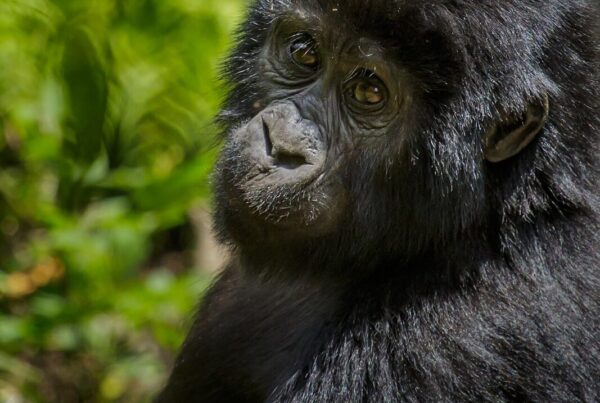
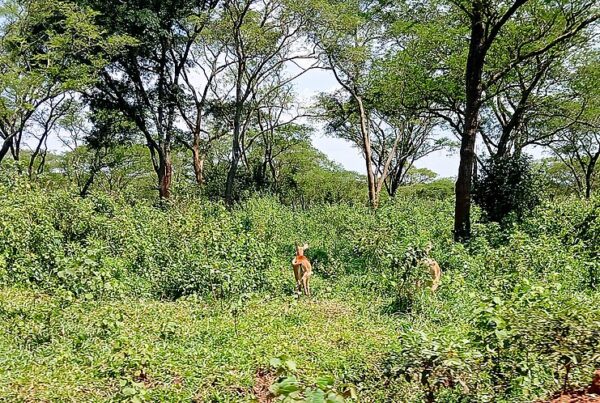
The forest that mountain gorillas inhabit in Bwindi Impenetrable National Park stores an extraordinary quantity of carbon. Tropical montane forests like Bwindi accumulate organic matter in biomass and soil at rates that make them among the most carbon-dense ecosystems on the planet. As the global carbon market has grown, and as international climate finance has sought mechanisms to fund forest conservation in developing countries, the carbon stored in Bwindi’s trees and soils has begun to acquire measurable financial value — a value that is reshaping the economics of forest protection and creating new incentives for communities to resist forest conversion.
How forest carbon credits work
A carbon credit represents one tonne of carbon dioxide equivalent (CO₂e) either removed from the atmosphere or prevented from being released. Forest carbon projects generate credits by demonstrating that a protected forest retains more carbon than it would have if left unprotected — the counterfactual scenario being that the forest would have been cleared or degraded without the project’s conservation activities.
The methodology for calculating forest carbon credits under programmes like REDD+ (Reducing Emissions from Deforestation and Forest Degradation) involves satellite monitoring of forest cover, on-the-ground biomass measurements, and statistical modelling of deforestation threats. Credits generated through this process can be sold to corporations seeking to offset their emissions, to governments with carbon neutrality commitments, or to individuals offsetting specific activities like air travel.
The voluntary carbon market — in which credits are purchased voluntarily rather than under regulatory compliance obligation — has grown substantially since 2015 and has become an important funding mechanism for conservation projects that cannot be sustained entirely by government budgets or conventional donor funding. For forests like Bwindi, which have measurable and internationally verifiable carbon storage, this market creates a mechanism for converting ecological services into cash flows that can fund conservation costs.
Bwindi’s carbon potential
Research conducted by the Institute of Tropical Forest Conservation (ITFC) at Ruhija — the research station within Bwindi operated by Mbarara University of Science and Technology — has produced detailed measurements of carbon stocks in different forest types within the park. The results confirm that Bwindi’s forests store carbon at densities comparable to the most carbon-rich tropical forests globally, with above-ground biomass carbon alone estimated at over 200 tonnes per hectare in the densest forest sections.
The total carbon value of Bwindi’s approximately 32,000 hectares of forest is substantial by any measure. At carbon credit prices that have ranged from USD 5 to USD 50 per tonne in voluntary markets, the annual carbon sequestration and avoided deforestation value of the park represents a financial resource that, properly structured and financed, could significantly augment the tourism-based revenue that currently provides the primary economic rationale for forest protection.
The challenges of forest carbon finance
Despite the theoretical value of Bwindi’s carbon, translating that value into reliable financial flows has proven more complex than early carbon finance optimism suggested. The voluntary carbon market has faced significant credibility challenges: a series of investigative reports in 2022 and 2023 revealed that many carbon projects — including some prominent African forest projects — had substantially overstated the carbon savings they claimed, generating credits that represented little or no actual emissions reduction.
These credibility problems have made buyers more cautious and standards bodies more rigorous. The leading certification standards — Verified Carbon Standard (now Verra), Gold Standard, and the Architecture for REDD+ Transactions (ART) — have all tightened their methodologies in response to the scrutiny. Projects that meet the new standards are better evidenced and more credible, but the process of achieving and maintaining certification has become more expensive and complex, particularly for smaller or institutionally limited forest management organisations.
The political economy of benefit sharing is a second challenge. Carbon revenue that flows to national governments may or may not reach the communities living adjacent to forests in meaningful proportions. Uganda has developed frameworks for community benefit sharing in the context of carbon projects, building on the precedent of the tourism revenue sharing mechanism, but the practical implementation has been uneven. Ensuring that carbon finance translates into tangible local benefits — rather than accumulating in national or corporate accounts — is a governance challenge that remains incompletely resolved.
The tourism-carbon nexus for visitors
Gorilla trekkers who fly to Uganda generate significant greenhouse gas emissions. A return flight from London to Entebbe generates approximately 2.5–3.5 tonnes of CO₂e per passenger, depending on route, airline, and flight class. This is a material emissions contribution for a single trip, and many visitors choose to offset it.
Offsetting with credits generated by Uganda forest conservation projects — including projects in the broader Great Rift forest system if not Bwindi specifically — creates a direct connection between the offset purchase and the conservation outcome relevant to the visit. Several operators in the Uganda tourism sector now offer carbon offsetting as part of their booking process, with specific project linkages that allow visitors to understand exactly where their offset payment goes and what it funds. This is a more meaningful form of offsetting than purchasing generic credits from a distant project with no connection to the places visited.
The deeper economic logic here is important: the same forest that sequester the carbon that makes offsetting possible also provides the habitat that makes the gorilla trek possible. A trekker who offsets their flight with Ugandan forest carbon credits is not just neutralising their emissions — they are contributing to the financial viability of the conservation framework that protects the specific ecosystem they have come to experience. The two transactions are not merely compatible; they are complementary parts of a single economic relationship between visitor spending and forest survival.
- Bwindi Impenetrable Forest: Ecology, History, and Conservation
- Carbon tourism and gorilla conservation: can your trek offset its own footprint?
- The Bwindi Impenetrable Forest Trust: how local investment sustains conservation
- What Bwindi’s forest rangers carry: the gear and tools of daily conservation work
- Bwindi Impenetrable Forest – Gorilla Trekking in Uganda’s UNESCO Jungle
- Meet the conservationist protecting mountain gorillas in the heart of the impenetrable forest.
- Chimpanzees Confirmed in Bwindi Forest
- Bwindi Forest: What Happened to the White-Bellied Duiker?
- Bwindi Forest Gorilla Trekking: An Unforgettable Journey
- Uganda Gorilla Trekking Bwindi Impenetrable Forest: The Complete Guide