October and November mark the short rainy season in south-western Uganda, the second of the country’s two annual wet periods. Understanding what the short rains actually mean for Bwindi—how much rain falls, when it falls, what the trails look like, and how the gorilla experience compares to the dry season—allows trekkers to make genuinely informed decisions about whether this period suits their travel plans and risk tolerance.
The short rains: pattern and intensity
Uganda’s short rains typically begin in late September and peak through October and into November before easing toward December. At Bwindi’s altitude, the rains arrive in the form of afternoon and evening showers rather than sustained all-day downpours—a pattern that matters practically for gorilla trekking, which takes place in the morning. Many trekkers complete their trek during the drier morning hours and return to the lodge before the afternoon rain begins. This pattern is less consistent than during the dry season, and mornings that begin clear can develop cloud and light rain during the trek, but sustained morning downpours are less common than in the long rains of April and May.
Bwindi’s total annual rainfall varies between sectors, with Ruhija in the north-east receiving somewhat more than Buhoma, and Nkuringo and Rushaga in the south receiving rainfall that reflects their position on the windward side of the Albertine Rift escarpment. During the short rains, total monthly rainfall across the park’s sectors typically ranges from 100mm to 200mm—significantly less than the 200mm to 350mm that characterises the long rainy season in April and May.
Trail conditions in October and November
The trails in Bwindi during the short rains are wetter and more slippery than during the July-August dry season peak, but generally less challenging than in April and May. Clay soils retain moisture and become slick after rain—the descent sections of Nkuringo’s high-altitude trails in particular can be very muddy. Rubber-soled hiking boots with good ankle support are essential; trail shoes that perform well on dry ground often lack the grip needed on wet clay slopes.
Gaiters are useful for keeping mud out of boot tops on lower sections of trail. Rain gear should be packed even if the morning looks clear—a lightweight waterproof jacket adds minimal weight and prevents the sudden discomfort of a wet shirt in an already humid forest. Plastic covers for camera bags are recommended, as even brief rain events can saturate unprotected camera equipment during trail sections where the jungle canopy is less protective.
Gorilla visibility and encounter quality
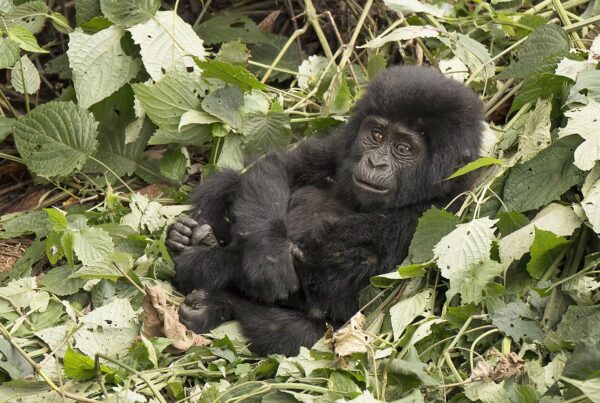
An interesting characteristic of rainy-season gorilla encounters is that the gorillas themselves tend to move less actively during and after rain events—they shelter in dense vegetation and sit quietly, which can actually make observation easier than in the dry season when family groups may range across large areas in active foraging. The combination of dramatic forest mist, rain-washed vegetation, and settled gorilla groups creates a photographic atmosphere that many trekkers rate as more evocative than the clear, bright conditions of peak dry season.
The forest’s appearance during the short rains is at its most vivid: vegetation is intensely green, ferns are lush, mosses glisten, and the light filtering through rain-misted canopy creates a quality that dry-season conditions rarely replicate. Wildlife photographers who plan their visits specifically for atmospheric forest images often choose the shoulder rainy seasons rather than peak dry season for precisely this reason.
Practical advantages of visiting in October and November
Permit availability in October and November is substantially better than in the July-August peak. Last-minute permit availability—rare or non-existent in July—occasionally exists in October and November, and even planned bookings can often be secured with shorter lead times. Accommodation prices at many lodges reflect the shoulder season status, with rack rates reduced by 15 to 25 percent at some properties. The overall crowd level at the park is lower, and the post-trek atmosphere at lodges is more intimate.
For travellers with flexibility who are not committed to specific dates, October and November represent a genuine sweet spot: the long rains have ended, the trails are recovering but still green, the gorilla encounters are excellent, and both permits and accommodation are more accessible than in peak season. The risk of a wet morning is real but manageable with appropriate gear, and the rewards for accepting that risk—atmospheric forest encounters, lower cost, better availability—are substantial.
- Gorilla trekking in October and November: navigating the short rains
- October and November in Bwindi: navigating the short rains for gorilla trekking
- Travel Advisories for Uganda: What Governments Say and What They Mean
- Uganda’s long rains and short rains: planning a gorilla trek around rainfall patterns
- Sustainability certifications in Uganda tourism: what they mean and whether to trust them
- Gorilla trekking in February and March: the dry season end and what it means for trekkers
- The sounds that gorillas make and what they mean during your encounter
- Gorilla Habitats and the Challenges They Face: The Struggle to Preserve Nature’s Gentle Giants
- Travelers from Campania Say They Can’t Stop Thinking About Their Gorilla Trekking Experience in Uganda
- This Is the Place Avicii Meant When Singing ‘The Nights’