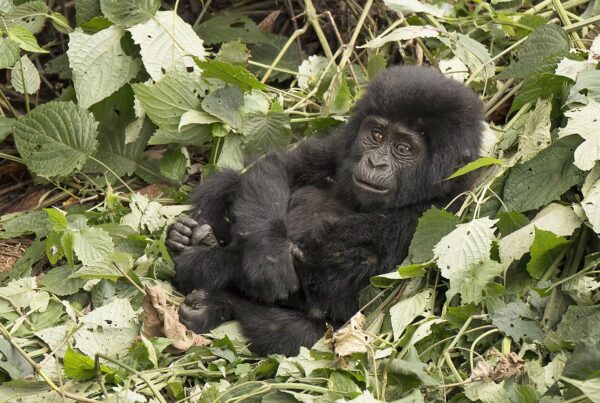
December is Uganda’s highest-demand gorilla trekking month of the year — European Christmas school holidays, North American winter break, and Australian summer travel all converge on a fixed daily permit allocation that exhausts Bwindi’s most popular sectors 9–12 months in advance — which means December is magnificent if you planned ahead, and genuinely unavailable if you didn’t. This guide covers exactly what December delivers: the weather transition from short rains to dry season, the gorilla family behaviour in that period, the savannah wildlife conditions across Queen Elizabeth and Murchison Falls, and the specific booking timelines that determine whether December works for your trip. Gorilla permits for December require booking by February–March of the same year; use the permit guide to start the process. See the full cost guide for December’s peak-season pricing across lodges and permits.
December at a Glance
- Gorilla permits: USD $800 — no low-season discount in December (peak month)
- Buhoma + Rushaga December availability: sold out by March if not booked earlier
- Trail conditions: improving through the month — early December can be muddy, late December near-dry
- Weather: short rains typically end Nov — December sees Uganda’s clearest skies of the year
- Savannah wildlife: excellent — dry conditions concentrate animals at waterholes and channels
- Gorilla families in December: active feeding, silverback displays common in the transitional dry period
December is one of Uganda’s two peak gorilla trekking months — a period combining European and North American winter holiday travel with Uganda’s short dry season transition period that creates both excellent wildlife conditions in the national parks and the highest annual demand pressure on gorilla permit availability and premium lodge accommodation. Understanding what December specifically offers in Uganda — the weather patterns of the early dry season, the gorilla trekking trail conditions as the short rains ease, the savannah wildlife dynamics, and the practical booking realities of the high season month — is essential preparation for visitors considering this popular but logistically demanding travel window. This guide covers everything you need to expect from a Uganda safari and gorilla trekking visit in December.
1. Gorilla Trekking in December — Peak Season Demand With Improving Trail Conditions
- December gorilla permits at Bwindi are among the most in-demand of the entire year — book 9-12 months ahead
- Trail conditions improve steadily through December as the short rains (October-November) recede
- Early December still sees some residual moisture on trails; mid-to-late December is drier and more accessible
- Holiday atmosphere in the gorilla zone with visitors from Europe and North America at peak numbers
- Gorilla family behaviour in December: active feeding on dry season vegetation; silverback displays more frequent
December gorilla permits at Bwindi Impenetrable National Park are subject to the most intense annual demand of the entire calendar year — a convergence of European Christmas school holidays, North American holiday season travel, and Australian summer break visitors creating pressure on the fixed daily permit allocation that exhausts availability months in advance for the most popular Bwindi sectors. Uganda Wildlife Authority’s Buhoma and Rushaga sectors fill for December dates by February or March of the same year, meaning visitors who do not begin the booking process 9 to 12 months in advance genuinely risk finding no permits available on their preferred dates and being forced to either accept alternative dates, alternative sectors, or cancel the gorilla trekking component of the itinerary entirely. December is the month where the advance planning discipline that the permit system always rewards becomes the most consequential for successful trip execution.
Trail conditions at Bwindi in December are in gradual transition from the wet conditions of the October-November short rains toward the dry season accessibility that fully establishes by January. Early December still carries residual forest moisture from the preceding short rain period — trails may be muddy and slippery particularly at lower elevations and in the shaded forest interior where soil drainage is slower than the exposed forest edge areas. By mid-to-late December, improving drainage and the absence of new rainfall creates conditions progressively closer to the excellent dry season trail quality of January and February, though the forest’s innate moisture-retaining character means Bwindi never becomes truly dry at any time of year. Visitors planning December gorilla trekking should budget for the full wet-season gear kit — waterproof gaiters, heavy grip hiking boots, waterproof jacket — regardless of the specific December week’s weather forecast.
December permits require October of the prior year booking at minimum: For December gorilla trekking, contact your operator or Uganda Wildlife Authority by October of the preceding year to begin the permit booking process. By December of the booking year, the best sectors and most desirable date combinations for December travel are typically fully committed. Do not treat December permit booking as equivalent to a standard advance booking — treat it as a full 12-month planning cycle with permit availability as the first and most time-sensitive element to confirm.
2. Wildlife Safari Conditions in December — Transition to Dry Season Across Uganda’s Parks
- December marks the transition from short rains to dry season across Uganda’s national parks
- Vegetation is still green in early December — lush and photogenic but reducing some open sightline views
- Game drive conditions improve steadily through December as grass dries and animals concentrate near water
- Queen Elizabeth game drives in December: excellent overall with improving Kasenyi Plains conditions
- Kidepo Valley in December: early dry season beginning — wildlife concentration increasing toward peak
December’s wildlife safari conditions across Uganda’s national parks reflect the country’s transition from the short rainy season of October-November into the January-to-March dry season. The vegetation character in December — still relatively green from recent rainfall but beginning to dry at the grass surface level — creates a landscape aesthetic different from both the peak wet season lushness and the dry season parched tawny quality. Queen Elizabeth National Park’s Kasenyi Plains in early December present grassland that is photogenically green with improving visibility as the grass height gradually reduces through the month, while the animal concentrations near permanent water sources begin to increase as seasonal water availability outside the parks contracts. Lion visibility on the plains improves through December as the shorter and drier grass of late December provides less cover for lions resting between activity bouts, making the December game drive progressively more productive as the month advances toward January’s established dry season conditions.
Murchison Falls National Park in December provides excellent game drive conditions on the northern bank as the grass dries and the large elephant herds begin their predictable concentration near the Albert Nile. The Nile boat trip to the falls is unaffected by the transitional weather conditions of December and provides reliable hippo, crocodile, and water bird viewing throughout the month regardless of the broader seasonal transition happening in the surrounding savannah. Kidepo Valley in December marks the beginning of the dry season concentration that peaks in August — the Narus River permanent water is beginning to draw wildlife toward predictable concentration points, and the game drive success rates are improving from the dispersed wet season conditions of November. December Kidepo visitors benefit from both the improving dry season concentration beginning to establish and the still-green landscape colour that the deep dry season months of July and August lose entirely.
December weather is Uganda at its most transitional: Expect some variation in conditions across the month — early December may still produce occasional afternoon showers from the retreating short rains, while late December is reliably dry across most of Uganda’s safari zones. Pack for both wet and dry conditions regardless of specific week, and treat any dry day in early December as a bonus rather than a guarantee.
3. December Accommodation — Christmas and New Year Premium Rates
- Christmas (December 24-26) and New Year (December 31-January 2) attract the highest annual lodge rates
- Many lodges charge mandatory minimum night stays and festive surcharges for the holiday period
- Book accommodation for the December 24-January 2 window at least 6-9 months in advance
- Alternative: travel December 1-20 to access the best wildlife conditions at non-festive rates
- Mweya Safari Lodge and quality Bwindi accommodation are typically fully committed by May for Christmas
December accommodation pricing in Uganda’s premium safari lodges is subject to the highest annual rates of the year across the Christmas and New Year holiday window — a period when international travellers willing to pay significant premiums for the specific experience of gorilla trekking or Uganda wildlife on Christmas Day or New Year’s Eve create a price dynamic entirely different from the rest of the month. Lodges near Bwindi’s gorilla sectors and the premium Mweya Peninsula accommodation at Queen Elizabeth typically implement festive surcharges, mandatory minimum stay requirements of three to five nights, and elevated daily rates that can add 30 to 60 percent above the standard December rate for December 24 through January 2 specifically. These festive rates are not necessarily indicator of higher service quality but simply reflect the supply-demand reality of the most expensive week in Uganda’s annual tourism calendar.
The practical implication for budget-conscious December visitors is that travelling December 1 through December 20 accesses essentially the same wildlife and trail conditions as the Christmas period — the weather, animal behaviour, and gorilla trekking trail accessibility are comparable across the full month — without the festive surcharge premium applied at the holiday specific accommodation properties. December 1 to 20 also has slightly better permit availability than the Christmas period while maintaining the peak-adjacent wildlife conditions and holiday atmosphere that December as a whole provides. Visitors without the specific motivation of celebrating Christmas or New Year’s Day in Uganda’s gorilla forest can achieve comparable or better value from the earlier December window than from the premium-rate holiday period that captures the highest demand concentration of the entire calendar year.
December 1-20 is the value sweet spot: Target December 1-20 for the best combination of improving dry season wildlife conditions, progressively drying gorilla trekking trails, and peak-adjacent lodge availability without the festive holiday surcharges that inflate the cost of the December 24-January 2 window beyond the wildlife experience value that the same conditions would deliver at standard seasonal pricing.
4. December Birding — Migratory Species Arrival Adds Diversity to Uganda’s Resident Bird Community
- December marks the arrival of Palearctic migrant species adding European and Asian wintering birds to Uganda
- Yellow wagtails, barn swallows, marsh harriers, and various waders arrive at Uganda’s waterways
- Resident bird breeding activity declining from the wet season peak but overall diversity remains high
- Mabamba Bay Shoebill site remains excellent throughout December — seasonal water levels ideal
- Combined gorilla and birding itinerary in December delivers the full diversity of Uganda’s avifauna
December birding in Uganda benefits from the arrival of Palearctic migrant species that winter in sub-Saharan Africa from breeding grounds in Europe and Asia — the yellow wagtails, barn swallows, and various warbler species visible in Uganda’s grasslands and wetlands from November through March that add a familiar European bird component to Uganda’s extraordinary resident avifauna. Marsh harriers from Eurasian breeding populations quarter the papyrus edges at Bigodi and Mabamba. Various wader species — common sandpiper, wood sandpiper, and ruff — use Uganda’s lake shores and wetland margins as wintering or passage sites. These migrant species do not constitute the primary birding motivation for international visitors coming to Uganda for its endemic avifauna, but their presence adds a familiar dimension that European birders in particular find pleasingly unexpected in a destination so far from their home range.
Mabamba Bay Shoebill site remains consistently productive throughout December, with the papyrus channel Shoebill population continuing their sedentary year-round occupancy of the same habitat channels that provide reliable encounters in every season. The water levels in December at Mabamba are typically at productive mid-range depths following the short rains — not so high that the papyrus channels are flooded to impassable depth, and not so low that the Shoebills’ preferred fishing habitat becomes too shallow for their characteristic lung fish ambush technique. The December Mabamba Shoebill encounter quality is consistently excellent and should be included in every December Uganda itinerary as the arrival or departure day extension to the main safari circuit that makes the time and logistical investment of the Entebbe-to-Mabamba transfer worthwhile.
December birding is excellent across all habitats: Add the Bigodi Wetland walk, Mabamba Shoebill canoe, and dawn forest birding at Bwindi to your December itinerary as standard additions to the gorilla and wildlife programme. The combination of Palearctic migrants in the wetlands, active resident forest species in Bwindi’s transitional dry season conditions, and the reliable Mabamba Shoebill encounter makes December one of Uganda’s most complete months for the combined gorilla-and-birding itinerary visitor who wants both great ape encounters and a high-quality Uganda bird list from a single well-designed two-week programme.
5. Planning Checklist for December Uganda Safari — Key Advance Actions
- Gorilla permits: book 9-12 months in advance for December dates — January of the same year at the latest
- Accommodation: book Bwindi and Queen Elizabeth lodges for Christmas period by April-May at the latest
- Flights: December international flights to Entebbe are expensive — book 4-6 months in advance for best pricing
- Yellow fever vaccination: mandatory for Uganda entry — ensure vaccination is at least 10 days old by departure
- Travel insurance: Uganda requires medical evacuation coverage — include this in any December holiday travel policy
December Uganda safari planning requires the most extensive advance preparation of any month in the Uganda tourist calendar — the convergence of maximum permit demand, maximum accommodation occupancy, and maximum international flight pricing to Entebbe during the Christmas period creates a booking environment where standard three-to-six-month advance planning timelines are insufficient for securing the best options. Gorilla permits for December should be confirmed by January or February of the same year — October at the absolute latest for any sector with availability remaining that late in the booking cycle. Bwindi accommodation at the most desirable lodges near each gorilla sector should be booked simultaneously with permit confirmation rather than as a secondary step. Queen Elizabeth and Murchison accommodation for the December 20 to January 5 window should be confirmed by May or June of the booking year.
International flights to Entebbe in December reflect the full peak holiday pricing premium — Amsterdam, Dubai, Addis Ababa, and Nairobi connections all see December price increases relative to the March or November equivalent. Booking flights 4 to 6 months in advance locks in rates before the highest-demand December dates begin to attract premium pricing from the competition created by multiple travel parties attempting to secure the same limited seat inventory on peak travel date combinations. Yellow fever vaccination is mandatory for Uganda entry and must be administered at least 10 days before the travel departure date — ensure your vaccination certificate is current and will not expire during the December travel window if you received it years earlier for previous travel to a yellow fever country. Travel insurance including medical evacuation coverage is highly recommended for any Uganda safari — the remote locations of gorilla trekking zones and the limited medical infrastructure in southwest Uganda make evacuation coverage the most important single insurance component for any visitor considering the risk profile of the destination honestly.
December is extraordinary and demanding in equal measure: The combination of excellent wildlife conditions, peak gorilla trekking demand, festive atmosphere at the lodges, and the European winter holiday backdrop makes December a genuinely special time to visit Uganda for visitors who complete the advance planning the month demands. The reward for that planning effort is a Uganda safari in conditions of exceptional wildlife quality with the atmosphere of the year’s most celebrated holiday period layered over one of Africa’s most extraordinary wildlife destinations — a combination that makes December, for many visitors, the most memorable travel month of their lives.
December in Uganda delivers the full convergence of improving dry season conditions, peak gorilla trekking demand, and the festive holiday energy that makes this one of the year’s most sought-after and most logistically demanding Uganda travel windows. Plan further ahead than for any other month, book every component simultaneously rather than sequentially, and treat the advance planning investment as the first stage of an experience that will justify every hour of preparation with a December Uganda safari that exceeds expectation at every stage from first gorilla sighting to final airport departure.
Frequently asked questions about Uganda safari in December
How far in advance should I book Uganda gorilla trekking in December?
Book December gorilla permits 9–12 months in advance. Buhoma and Rushaga — the most in-demand Bwindi sectors — typically exhaust December allocations by February or March of the same year. Ruhija and Nkuringo sectors have slightly better late availability but are also under pressure. If you are planning a December trip and today’s date is already after April, contact Uganda Wildlife Authority directly to check remaining availability rather than assuming your preferred dates are still open. Low-season rates (USD $600) do not apply in December — peak pricing of USD $800 applies throughout the month.
What is the weather like in Uganda in December?
December marks the end of Uganda’s short rains (October–November) and the beginning of the main dry season that runs through January and February. Early December may still carry residual moisture from the preceding rains — Bwindi trails can be muddy, particularly at lower elevations. By mid-to-late December, Uganda typically has some of its best weather of the year: clear skies, lower humidity, and excellent visibility for both photography and savannah game drives. The Albertine Rift’s mountain parks (Bwindi, Mgahinga) are cooler and remain capable of cloud and mist at altitude regardless of the season — this is standard mountain forest weather, not a December-specific condition.
Is December a good time to see wildlife in Uganda’s savannah parks?
Yes — December is one of the best months for savannah wildlife viewing in Queen Elizabeth and Murchison Falls national parks. The transitional dry conditions concentrate elephants, hippos, buffaloes, and predators around permanent water sources (the Kazinga Channel in Queen Elizabeth, the Nile at Murchison) where they can be viewed from boat cruises and vehicle game drives with exceptional proximity. The Ishasha sector of Queen Elizabeth — home to Uganda’s famous tree-climbing lions — is particularly good in December when the lions rest in fig trees near water. Kidepo Valley in the northeast is also excellent in December, with its semi-arid landscape and large elephant and buffalo herds.
Are Uganda lodges expensive in December?
December is peak pricing for Uganda lodges, particularly those near Bwindi and in Murchison Falls. Expect peak-season surcharges of 20–40% above shoulder season rates at many mid-range and luxury properties. Top lodges near the most popular gorilla trekking sectors (Sanctuary Gorilla Forest Camp at Buhoma, Clouds Mountain Gorilla Lodge at Nkuringo, Volcanoes Bwindi Lodge at Buhoma) may also have Christmas and New Year minimum night requirements. Book accommodation at the same time as permits — availability for quality lodges near Bwindi in December is limited, and the combination of permit + preferred lodge needs to be secured together rather than sequentially.
Should I choose December or January for Uganda gorilla trekking?
January has meaningfully better trail conditions than early December — the dry season is fully established, Bwindi’s trails are at their most accessible, and photography in the forest benefits from less atmospheric moisture. January also has slightly less permit demand pressure than December because the European and North American holiday concentration has passed, meaning better availability if you are booking with less lead time. The trade-off: January has less of the festive atmosphere and holiday energy that some visitors specifically want in December. For the pure gorilla trekking quality, January is marginally better. For the holiday-season experience around the trek, December is the choice — just book the permit by the February before you travel.
Book your December gorilla trek
- Uganda Gorilla Permit Guide — start the booking process immediately for December dates
- Bwindi Sector Comparison — Buhoma fills first; check all sectors for availability
- Uganda Gorilla Families — the families assigned across all sectors in December
- Full Safari Cost Guide — December peak-season budget planning
- Safari Itineraries — December trip shapes for 7 to 14 days
- What a 3-Day Uganda Wildlife and Cycling Safari Did to My Family Was Beyond Anything We Expected
- Wildlife Safaris: What to See, Expect, Prepare & Plan — Plus Where to Go in Africa
- Why a 2-Day Uganda Wildlife and Cycling Safari Is the Perfect Business Break
- What I Expected vs What I Got on a 3-Day Gorilla Trekking and Cultural Safari in Uganda
- Why Would My Soul Long for a 9-Day Uganda Gorilla Trekking and Wildlife Safari?
- Murchison Falls Uganda Wildlife Safari — 4-Days: Where the Nile Breaks and the Wild Roars
- Safaris That Offer Unique Wildlife Experiences in Uganda: Beyond the Ordinary
- 50 Incredible Safari Animals to See in Africa — A Complete Wildlife Guide
- Internet and Wi-Fi in Bwindi: What to Expect on Safari
- Uganda Road Conditions: What to Expect on Safari Drives