October and November mark Uganda’s short rainy season — a period that sits awkwardly in most gorilla trekking planning guides, described as “shoulder season” or “wet season” with a note that conditions are less predictable than the dry months. The reality is more nuanced. October and November in Bwindi are not simply worse versions of June — they are a different experience with distinct advantages and real challenges, and for visitors with flexibility, they deserve more careful consideration than the simple “avoid if possible” advice that circulates online.
What the short rains actually mean in Bwindi
Uganda’s short rains (locally called Omupunga) run roughly from mid-October through November, sometimes extending into early December. In Bwindi, this manifests as afternoon and evening rainfall several days per week, with mornings frequently clear or only mildly overcast. The rainfall pattern is more predictable than the long rains (March–May) — bursts of heavy precipitation typically in the afternoon, not sustained all-day downpours. A gorilla trek that begins at 7am and reaches the gorillas by mid-morning is often completed in dry or only lightly drizzled conditions even on days when the afternoon brings substantial rain. The short rains are not the same as the long rains.
Trail conditions in the short rains: honest assessment
The trails are wetter and muddier than in the dry season — this is simply true. Steep sections that are manageable in June become genuinely slippery in October, and the assistance of a porter is more practically valuable rather than merely optional. The Nkuringo sector’s descent from the starting point to the forest interior, which is steep under any conditions, becomes a sustained exercise in controlled mud navigation after several wet days. Ruhija, at the highest elevation, accumulates moisture and cools rapidly — rain gear is not optional in October. Buhoma’s lower elevation makes its trails more manageable than the highland sectors after rain; it is the most reliably accessible sector through the short rains.
Gorilla behaviour in October and November
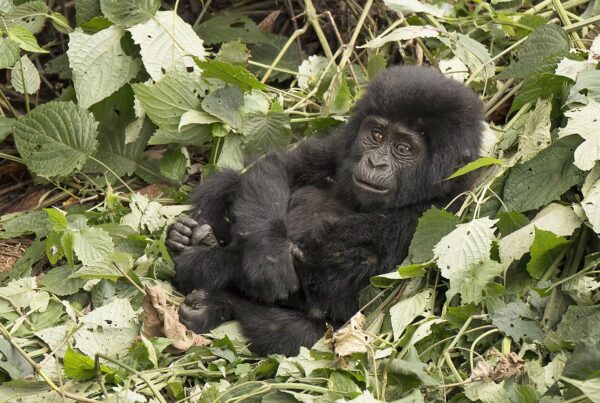
Mountain gorillas do not retreat from rain. They may seek shelter under dense canopy or move to lower elevations during the heaviest downpours, but they remain active and trackable year-round. The short rains bring an explosion of new vegetation — fresh shoots, fruiting plants responding to moisture — that draws gorillas into feeding behaviour that can be spectacular to observe. Gorillas feeding intensively are active, purposeful and constantly moving, providing a dynamic visual experience that complements the more sedentary resting behaviour sometimes seen in peak dry season when food is less abundant. October and November encounters can be among the most behaviourally interesting of the year.
The pricing advantage: real savings in shoulder season
The $800 permit fee is fixed regardless of season. However, lodge rates in October and November are typically 20–40% lower than in the June–August peak, and availability is substantially better. Visitors who can work around school holiday constraints — the primary demographic driver of peak season demand — find October and November offering the same gorilla encounter at lower overall trip cost. Some lodges offer specific shoulder season packages that bundle accommodation and activities at reduced rates not available in peak months. The financial case for the short rains is real for cost-conscious visitors who prioritise value over optimal trail conditions.
Photography in the short rains: challenges and unexpected rewards
Rain is the photographer’s enemy in terms of equipment risk and reduced light. It is also, unexpectedly, an aesthetic opportunity. Wet forest has a saturation and lustre absent in dry conditions — leaves gleam, mosses intensify to vivid green, the forest floor reflects available light upward in ways that make the atmosphere visually extraordinary. A gorilla photographed in damp forest with rain droplets on its fur and mist in the canopy background creates images with a painterly quality that dry-season shots, however well-lit, cannot replicate. Photographers who prepare with appropriate weather sealing on their equipment and a willingness to shoot in difficult conditions often find October their most compelling month in Bwindi.
Practical preparation for short rains trekking
Good waterproof gear is essential, not optional. A quality rain jacket, waterproof trouser covers and fully waterproof boots (not just water-resistant trail shoes) make a meaningful difference on a six-hour wet trek. Pack your camera equipment in a waterproof dry bag within your daypack and carry it separately from your poncho rather than relying on the poncho to protect gear if you fall. Accept a porter — the investment is modest (typically $15–20 for the full trek) and on wet trails a porter’s steadying hand on difficult sections is as valuable as the load-carrying. Tell your guide you want to begin as early as possible to take advantage of the morning dry window before afternoon rain arrives.
- Gorilla trekking in October and November: navigating the short rains
- Gorilla trekking in October and November: the short rains and what they mean for trekkers
- Micro-climates of Bwindi: why it rains in the forest and what to expect
- Uganda’s long rains and short rains: planning a gorilla trek around rainfall patterns
- Uganda’s railway history and why there are no trains to Bwindi
- Bwindi Impenetrable Forest – Gorilla Trekking in Uganda’s UNESCO Jungle
- Top Gorilla Trekking Destinations in Uganda – Bwindi vs. Mgahinga 2025
- Chimpanzees Confirmed in Bwindi Forest
- Bwindi Forest: What Happened to the White-Bellied Duiker?
- Why Americans Choose Bwindi, Mgahinga, and Volcanoes Over the Museum