Updated
gorilla trekking February Bwindi shoulder season is one of Africa’s most extraordinary wildlife experiences, connecting travellers with mountain gorillas in their natural forest habitat. February sits in the gap between Uganda’s two wet seasons — the long rains that run from March to May and the short dry period that follows. It is often described in broad terms as part of the “dry season,” yet the experience of trekking in Bwindi in February is distinctly different from the dry season peak of June through August. The month has its own character: variable weather, lower visitor numbers, specific wildlife patterns and a quality of light and forest atmosphere that visitors who trek in February frequently describe as uniquely atmospheric. It is not the optimal month by every metric, but it is underestimated.
February gorilla trekking in Bwindi: shoulder season with surprising rewards
Weather in February: what actually happens
February in Bwindi typically brings drier conditions than the preceding months of November and December, with reduced rainfall and more frequent clear mornings. However, it is not as reliably dry as June or July — afternoon showers occur regularly, mist persists in the valleys longer than in peak dry season, and the approach to March brings increasing rainfall probability as the long rains begin to establish. The practical result for trekkers is trail conditions better than the wet season but less predictable than peak dry season. A waterproof layer remains essential; muddy sections are possible on lower trails; but the brutal trail conditions of November are generally absent in February.
Visitor numbers and permit availability in February
February is a genuine shoulder month for gorilla trekking in Uganda — not the crowded peak of June–August nor the rock-bottom availability of the wettest months. Permit availability is better than in the peak season, and advance booking times are shorter. Many lodges offer shoulder rates that represent meaningful savings on peak-season pricing. The trekking groups assembled for each family encounter are more likely to include fellow travellers from diverse nationalities and backgrounds — the peak-season demographic skew toward European and North American family holiday travellers is less pronounced in February, when independent travellers and long-haul visitors make up a higher proportion of the visitor mix.
Gorilla behaviour in February: pre-breeding season activity
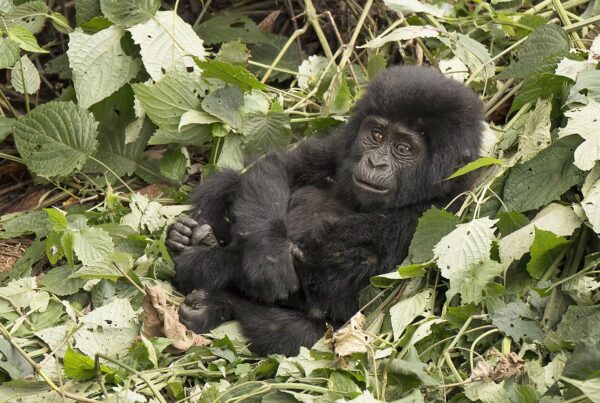
Mountain gorillas do not have a defined breeding season — conceptions and births occur throughout the year. However, research on habituated Bwindi families has documented patterns in social activity that vary with season. February, in the period following the short rains’ vegetation flush, often finds gorilla families in active, purposeful movement as they exploit fresh growth. Infants conceived in the previous year’s breeding activity are sometimes born in February — newborn gorilla infants, clinging to their mothers’ chests, represent some of the most emotionally resonant gorilla trekking moments possible. The visibility of young infants varies by family, but February treks have a reasonable statistical chance of including newborn encounters.
Combining with other Uganda activities in February
February’s weather conditions and lower visitor numbers make it a particularly good month for Uganda’s broader safari circuit. Queen Elizabeth National Park is excellent for wildlife viewing in February — the tree-climbing lions of the Ishasha sector are resident year-round, and the park’s buffalo, elephant and hippo populations are active and visible. Murchison Falls National Park’s boat trips along the Victoria Nile offer reliable wildlife viewing. The roads between these parks and Bwindi are in better condition in February than in the March–May rains, making the overland connections more straightforward. A combined gorilla-and-savannah itinerary designed around February conditions can take advantage of the month’s relative accessibility across multiple park zones.
What February trekkers remember most
Visitors who trek Bwindi in February consistently mention the quality of the forest atmosphere: the combination of post-rain freshness, misty valleys on cool mornings and the particular light of a partly cloudy day filtering through the canopy creates visual conditions that photographers describe as uniquely painterly. The birds are active — February is within the range of many species’ breeding periods, making male birds vocal and visible in ways they are not in the dry season. The reduced visitor numbers at lodges create a more intimate experience — communal dinners where every guest is a fellow gorilla trekker, guides with more time for informal conversation during meals, a general sense that you are visiting a destination rather than queuing for an experience. February does not deliver the optimal trail conditions of August, but it delivers something different and often unexpectedly memorable.
- Why Bwindi Gorilla Permits Sell Out for February First (And How to Get One in 2026)
- The dry season at Bwindi: what June, July, and August look like in the forest
- Gorilla trekking in September: what to expect from Uganda’s shoulder season
- Gorilla trekking in February and March: the dry season end and what it means for trekkers
- Bwindi Impenetrable Forest – Gorilla Trekking in Uganda’s UNESCO Jungle
- Best Time for Gorilla Trekking in Uganda – Monthly Guide to 2025 Seasons
- Top Gorilla Trekking Destinations in Uganda – Bwindi vs. Mgahinga 2025
- Chimpanzees Confirmed in Bwindi Forest
- Bwindi Forest: What Happened to the White-Bellied Duiker?
- Why Americans Choose Bwindi, Mgahinga, and Volcanoes Over the Museum