Updated
Gorillas communicate with a mix of sounds, gestures, facial expressions, body postures and touch. Researchers have described more than a dozen distinct calls, from soft contented rumbles to alarm barks and the silverback’s hooting display, and around a hundred gestures. The famous chest-beat is a display that, research on mountain gorillas suggests, also signals the size of the silverback. Knowing the basics helps you understand what is happening during your hour with a gorilla family.
Everyday sounds
The sound you are most likely to hear is a soft, double rumble, sometimes described as a belch vocalisation or “naoom”. It is a contact and contentment call used while feeding and resting, helping group members keep track of each other in thick vegetation, and rangers imitate it to reassure gorillas when visitors arrive. Gorillas also grunt to keep order or call a youngster, whimper when upset, give short “pig grunts” during minor squabbles or while travelling, and hum or sing while eating favourite foods. See our guide to gorillas singing while they eat.
Alarm and threat calls
A sharp “cough grunt” or bark is a mild threat, often aimed at a youngster or a person who has come too close. Screams and roars accompany fights or serious alarm, and a silverback may roar at a threat. Hoots that build in speed are part of the silverback’s display sequence, which can end in a chest-beat, a sideways run, slapping the ground and tearing vegetation. These displays are mostly bluff and rarely end in contact.
The chest-beat
Gorillas beat their chests with cupped hands, not fists, producing a drumming sound that can carry up to around a kilometre through the forest. All ages do it, and youngsters chest-beat in play. A 2021 study of mountain gorillas in Rwanda found that larger silverbacks produce lower-frequency chest-beats, so the sound may tell rivals and females how big the beater is. Silverbacks chest-beat to show strength, warn rivals, attract females and sometimes to scare off people.
Faces, gestures and touch
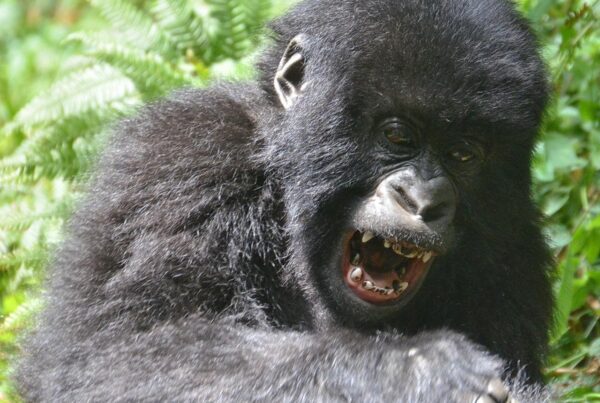
A relaxed face with an open mouth and covered teeth is a play face, often seen in wrestling youngsters. A tight-lipped, staring face signals irritation, and a direct stare is a threat, which is why visitors are told not to stare back at a silverback. Looking away and turning the body signal submission or calm. Gorillas also use many gestures, such as arm swings, slapping, beckoning and touching, to invite play or move others along. Grooming is less frequent than in chimpanzees but strengthens bonds, especially between mothers and infants. See our guide to gorilla social behaviour.
What it means for trekkers
If you hear soft rumbles, the gorillas are relaxed. If a silverback grunts, stares, hoots or chest-beats in your direction, stay calm, crouch, look down and do not run; the ranger will guide you, often by imitating gorilla calls. Speak quietly, avoid sudden movements and keep at least seven metres back. The permit costs US$800, or US$600 in April, May and November. See our guides to gorilla trekking safety and baby gorilla development.
Frequently asked questions
With calls, chest-beats, facial expressions, gestures, postures and touch.
To display strength, warn rivals and attract females; the sound may also signal body size.
It is a contented contact call used while feeding and resting.
No. A direct stare can be seen as a threat; look down if a silverback approaches.