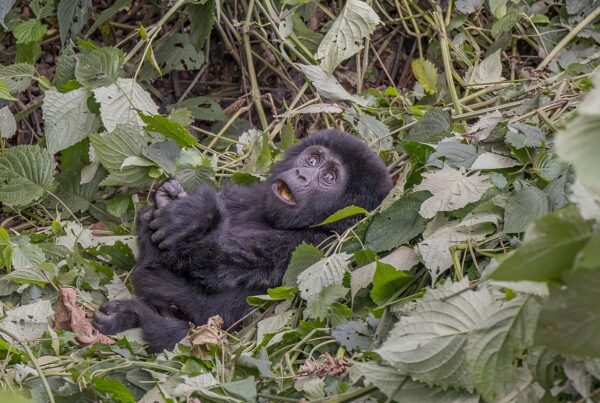
Uganda is a genuinely excellent family safari destination with one specific age limit to plan around: gorilla trekking requires visitors to be 15 years or older, which means families with younger children build their Uganda trip around the extraordinary abundance of alternatives — boat safaris, chimp tracking for over-12s, Jinja white-water rafting, the Nile horseback ride, and a wildlife diversity across Queen Elizabeth and Murchison Falls that captivates children who have never seen anything beyond a zoo. This guide covers the best child-friendly activities in Uganda by age group and interest, with practical notes on safety, guide support, and how families typically structure their Uganda trip around the age-15 gorilla minimum. For families with teenagers, the gorilla permit anchors the trip; for younger families, the circuit through Kibale, Queen Elizabeth, and Murchison Falls delivers a Uganda wildlife experience that rivals any East Africa destination for children’s engagement.
Key Family Safari Facts
- Gorilla trekking minimum age: 15 years — no exceptions in Uganda or Rwanda
- Chimp trekking (Kibale): generally accepted from age 12 — confirm with UWA on booking
- Kazinga Channel boat safari: all ages — safest, most wildlife-dense family activity in Uganda
- Jinja white-water rafting: minimum age typically 14–15 depending on operator
- Game drives: all ages — children under 8 may find long drives challenging
- Best family Uganda parks: Queen Elizabeth (boat + savannah) and Murchison Falls (Nile cruise)
Uganda is a genuinely family-friendly safari destination that rewards visitors who bring children — a country where the wildlife encounters are dramatic enough to captivate young imaginations, the education value is explicit and memorable, and the range of activities from boat safaris to chimpanzee trekking provides variety across different ages, attention spans, and physical capabilities. The gorilla trekking programme at Bwindi has an age minimum of 15 years, but the vast majority of Uganda’s wildlife experiences have no restrictive age limits and can be enjoyed by children from primary school age upward with appropriate preparation and guide support. This guide covers the best child-friendly safari activities in Uganda for families planning a combined wildlife and educational trip to East Africa’s most primate-diverse destination.
1. Kazinga Channel Boat Safari — Wildlife From a Safe Flat-Bottomed Boat
- Two-hour boat trip on the Kazinga Channel between Lake George and Lake Edward in Queen Elizabeth NP
- Completely safe for all ages — flat-bottomed tourist boats with rails, shade, and stable platforms
- Hippos, Nile crocodiles, elephants, and an extraordinary concentration of water birds visible from the boat
- Children can move freely on deck between photo stops; no trekking, driving, or fitness required
- UWA-licensed boats operate departures at 9am, 11am, and 2pm — book through Mweya Safari Lodge
The Kazinga Channel boat safari is widely considered the single best child-friendly wildlife activity available anywhere in Uganda — a two-hour flat-bottomed boat trip along the 30-kilometre channel connecting Lake George and Lake Edward that delivers extraordinary wildlife density from a completely safe and accessible platform suitable for children of any age. Hippo pods at close range — sometimes dozens of animals in a single view from the boat — are invariably the most memorable element for younger children, who respond to the enormous snorting shapes in the water with a combination of excitement and reverence that is one of the most enjoyable reactions to observe in any wildlife context. Nile crocodiles sunning on the sandy banks, elephants wading into the channel to drink at close approach distance, and the extraordinary water bird concentrations on both channel edges — African skimmer, pied kingfisher, African fish eagle, Goliath heron, and dozens more — provide a visual density of wildlife encounters per hour that no game drive can consistently match for multi-species excitement.
The physical accessibility of the boat safari is the primary child-friendly advantage: no walking, no fitness requirement, no steep terrain, and no distance between the boat deck and the wildlife. Children who might struggle with a long game drive in a hot vehicle are engaged throughout the boat trip by the constant proximity of animals and birds along the channel edge, and the ability to move around the boat deck and observe from different angles gives restless children a physical outlet that the vehicle game drive does not. The 2pm departure is particularly recommended for families with younger children who benefit from the late afternoon golden light for photography and the cooler temperatures of the late afternoon compared to the midday heat of the 11am departure. Book through Mweya Safari Lodge activities desk on arrival morning to guarantee space on the departure time that best suits your family’s daily schedule at the park.
The definitive family Uganda activity: If you include only one activity specifically for children in your Uganda family safari, make it the Kazinga Channel boat safari. The combination of accessible format, extraordinary wildlife density, and the undeniable drama of hippos at close range from a low-sided boat consistently produces the most enthusiastic child reactions of any Uganda wildlife experience and requires no preparation, special gear, or physical fitness beyond the ability to sit comfortably for two hours.
2. Chimpanzee Trekking at Kibale Forest — Primate Encounter With High Child Appeal
- No minimum age for chimpanzee trekking at Kibale Forest National Park
- Chimpanzee vocalisations — screaming, pant-hooting, and drumming — are dramatically memorable for children
- Trek duration 2-4 hours on accessible forest trails; children 8+ generally manage comfortably
- Ranger interpretation of chimpanzee behaviour, social structure, and forest ecology engages all ages
- Combine with Bigodi Wetland afternoon walk for additional wildlife without additional trekking demands
Chimpanzee trekking at Kibale Forest is an extraordinary child-friendly wildlife experience — dramatically more accessible and suitable for families than the age-restricted gorilla trekking at Bwindi, and in some respects more viscerally exciting for children in the 8 to 14 age range because of the sheer noise, energy, and dynamism of a habituated chimpanzee community. When the Kanyanchu chimpanzees wake and begin their morning vocal display — the cascading pant-hoots amplifying through the forest canopy, the drumming on buttress roots, and the aerial acrobatics of animals charging through branches at 20 metres above the trail — the child reaction to this performance is typically one of pure astonished delight at a spectacle that no zoo or documentary experience can replicate. The close proximity of the observation distance — chimpanzees accustomed to human presence in the habituated community approach to within 5 to 8 metres — combined with the genuine wildness of the forest environment creates an educational experience of overwhelming power and memorability for children of the appropriate age and fitness level.
The physical demands of the Kanyanchu chimpanzee trek are moderate — forest trails at relatively flat elevation with some root-and-mud navigation — and children of 8 years or older in reasonable physical condition manage the 2 to 4 hour trek comfortably when moving at a pace that allows rest stops and observation time without the rushed pace of the game drive alternative. Pre-trek ranger interpretation at the Kanyanchu briefing room provides excellent educational context about chimpanzee social structure, the science of habituation, and the conservation challenges facing Kibale Forest that gives older children and teenagers meaningful intellectual framing for the wildlife encounter rather than a purely sensory experience divorced from ecological understanding. Rangers leading the trek are experienced in interpreting the behaviour of individual animals and explaining what specific observed behaviours — grooming, food sharing, status displays — signify in the social life of the chimpanzee community being tracked.
Best for children 8 and over: Kibale chimpanzee trekking is the premier Uganda wildlife activity for families with children aged 8 and above. Younger children can participate but should be assessed honestly for the stamina to manage 2-4 hours of walking in forest terrain at altitude. The vocalisations and close proximity of the chimpanzee encounter typically produce the most memorable wildlife reaction of any East Africa family safari experience across this age group.
3. Ziwa Rhino Sanctuary — Guided Rhino Tracking on Foot
- Uganda’s only wild rhinos accessible on foot with armed ranger escort at Ziwa Rhino Sanctuary
- Walking distance to rhinos typically 1-3 km on flat terrain; accessible for children 6 and older
- Educational conservation narrative about Uganda’s rhino reintroduction programme engages school-age children
- Rangers explain rhino biology, behaviour, and the tracking method in child-accessible terms
- On the main Kampala-to-Murchison road — no route detour needed; stop on the transit drive north
Ziwa Rhino Sanctuary is a particularly well-suited family activity for children because the tracked animals — southern white rhinos at approximately 2,000 kilograms each — create an immediate and visceral impression of scale that no other Uganda wildlife encounter matches. Approaching a white rhino on foot at close range with only an armed ranger between the family and the animal provides the kind of heart-pounding physical proximity that redefines children’s understanding of how large and real wild animals actually are in comparison to the zoo enclosure versions that most have previously encountered. The tracker navigation, the reading of footprints and vegetation disturbance, and the gradual approach in silence toward an animal located by radio collar GPS all contribute to an experience that children describe afterwards as genuinely exciting and educationally significant in ways that passive vehicle viewing cannot deliver at the same intensity level.
The conservation education dimension of the Ziwa visit is exceptional for school-age children — the ranger guides explain Uganda’s history of rhino poaching during the civil conflict period, the decision to establish a breeding sanctuary, the specific scientific management of the breeding programme, and the long-term goal of releasing rhinos into Uganda’s national parks when population numbers are sufficient. This narrative of conservation intervention, success, and ongoing management gives children a model of conservation that is concrete, specific, and currently unfolding — a far more powerful educational framework than abstract general statements about endangered species and conservation importance. The walk to find the rhinos on flat grassland terrain is accessible to children from approximately 6 years old and requires no special fitness or equipment beyond comfortable walking shoes and insect repellent.
Stop at Ziwa on every Murchison transit: Ziwa Rhino Sanctuary sits directly on the main Kampala-to-Murchison Falls highway — a transit stop that adds only 90 minutes to the Murchison drive and delivers one of Uganda’s most educational and physically impressive wildlife encounters. For families travelling this route, stopping at Ziwa is an obvious decision that should be built into every Murchison Falls family itinerary regardless of the additional permit cost involved.
4. Bwindi Community Education Walks — Cultural Learning for Young Visitors
- Community walks near Bwindi sectors introduce children to Batwa culture, forest life, and conservation history
- Batwa Trail at Mgahinga or community village walks at Buhoma provide guided cultural immersion
- Children learn about forest-based hunter-gatherer life, plant uses, and traditional skills
- Walking distances short and terrain gentle compared to gorilla trekking forest terrain
- Community guides speak to children directly; school-age children engage enthusiastically with comparison to home cultures
The Batwa Trail experience at Mgahinga Gorilla National Park — one of the most significant cultural tourism offerings in southwest Uganda — is particularly well-suited to family visits with older children who are ready to engage with the complexity of indigenous cultural displacement and conservation history. The Batwa people were the original forest dwellers of the Bwindi and Mgahinga area, living as hunter-gatherers in the gorilla forest for thousands of years before its gazettement as a national park in 1991 required their resettlement on forest boundaries. The Batwa Trail programme — led by Batwa guides in traditional dress — demonstrates forest survival techniques, plant medicine knowledge, honey extraction from forest hives, and traditional tool use in a living cultural encounter that addresses the human story behind gorilla conservation with honesty and educational integrity. For families who want their Uganda trip to include critical thinking about conservation ethics alongside wildlife wonder, the Batwa Trail delivers both dimensions in a guided format that engages school-age children effectively.
Community village walks in Buhoma and the other Bwindi sectors introduce children to the agricultural communities living adjacent to the gorilla forest — the farming families, school children, market traders, and craft workers whose daily lives provide dramatic contrast with the international visitor experience and whose cooperation with the national park’s conservation goals is the non-negotiable foundation on which gorilla conservation actually rests. Children who engage with Ugandan children of their own age during a community walk typically have the most impactful cultural exchange of the entire safari — a moment of cross-cultural recognition that transcends the parent-guided educational framework and operates at the peer-to-peer level of children meeting children across cultural difference with genuine curiosity and shared energy. These moments are among the most powerful educational experiences any family safari can produce and are entirely free of the wildlife industry’s commercial framing.
Schedule the community walk alongside gorilla day: Plan a Batwa Trail or community village walk as the Day 2 activity at Bwindi — the afternoon after the gorilla trek, or the morning of a day without a gorilla permit. The combination of gorilla wildlife encounter and human cultural encounter at Bwindi creates an educational pairing that addresses the whole conservation ecosystem rather than just the charismatic animal species that headline the experience for most visitors.
5. Murchison Falls Top Walk and Boat Safari — Two Nile Perspectives in One Day
- The Murchison Falls viewpoint walk is a 20-minute flat trail from the car park — accessible from age 4 upward
- The entire Nile compressed through a 7-metre rocky cleft — the most powerful waterfall in the world
- Afternoon boat trip to the falls base delivers hippo, crocodile, and water bird viewing from the river
- The dual perspective — top of falls and base of falls — is uniquely educational about the Nile’s power
- Game drives on the northern bank for giraffes, elephants, and lions before the falls activity sequence
Murchison Falls National Park provides the most geographically dramatic and educationally layered family wildlife day in Uganda — combining the morning game drive on the northern bank savannah with the afternoon boat trip to the base of Murchison Falls, followed by the short walk to the viewpoint at the top of the falls for the contrasting aerial perspective. For children who have begun learning about geography and specifically about river systems, the Murchison Falls experience provides concrete sensory evidence of the Nile’s power and scale in a way that no classroom description or documentary can replace. The falls itself — the entire Victoria Nile forced through a 7-metre cleft between rocks in a thundering compressed column of white water — is simply one of the most dramatic natural spectacles in Africa, and child reactions range from wide-eyed silence to irrepressible physical excitement depending on personality and age.
The northern bank game drive at Murchison is among Uganda’s best family game drive experiences — Rothschild’s giraffes in photographable proximity from the vehicle, large elephant herds crossing the game drive tracks, and the dramatic backdrop of the Rift Valley escarpment above the Albert Nile creating the scenic framework that makes every wildlife view aesthetically as well as zoologically rewarding. The afternoon Nile boat trip to the base of the falls provides the aquatic counterpart — hippos in extraordinary density along the river channel, Nile crocodiles on sandbars in numbers that initially seem implausibly large, African fish eagles calling from riverside trees, and the gradual intensification of spray and sound as the boat approaches the base of the falls creates a theatrical crescendo that children find thrilling in direct proportion to how closely the boat can approach the plunge pool base in current water conditions. The two-perspective Murchison Falls day — top of falls and base of falls — delivers Uganda’s most dramatic landscape experience alongside its best northern savannah game drive in a single memorable day.
Structure the Murchison day around both falls perspectives: Prioritise morning game drive on the northern bank for wildlife, afternoon boat trip for the falls approach and river wildlife, and the falls viewpoint walk on arrival afternoon or departure morning depending on itinerary logistics. Do not skip the viewpoint walk — it takes only 20 minutes from the car park and provides the conceptual context of the falls’ full scale that the boat-level view alone cannot convey to children trying to understand what they are looking at from the water below.
Uganda’s family safari options extend far beyond the gorilla trekking programme that anchors most adult-focused itineraries — a rich landscape of boat safaris, cultural walks, rhino tracking, chimpanzee trekking, and waterfall experiences that collectively deliver one of Africa’s most educational and varied family wildlife itineraries. The key to a successful Uganda family safari is matching activities to children’s ages and fitness levels, building rest and flexibility into the schedule, and recognising that the most memorable moments are often not the headlined wildlife encounters but the unexpected connections — a child touching the mist from Murchison Falls, a chimpanzee choosing to sit beside the trail and make eye contact, or a Batwa guide showing a child how to make fire from forest sticks in the shadow of the mountain gorilla forest.
Frequently asked questions about family safaris in Uganda
Can children go gorilla trekking in Uganda?
No — the minimum age for gorilla trekking is 15 years old in both Uganda and Rwanda. This rule is strictly enforced by Uganda Wildlife Authority at the morning briefing, with no exceptions. The rule exists because younger children are more likely to make unpredictable movements and vocalisations that can stress or provoke gorilla families, and because the trek requires reliable instruction-following in close proximity to large wild animals. Families with children under 15 can still visit Bwindi — adults can trek while children under 15 stay at the lodge or participate in guided forest walks — but the children cannot join the gorilla encounter itself. For teenagers of 15 and over, gorilla trekking is entirely appropriate and is frequently one of the most impactful experiences of their young lives.
What is the best Uganda safari activity for children under 10?
The Kazinga Channel boat safari at Queen Elizabeth National Park is consistently the favourite Uganda activity for young children — hippos at close range, crocodiles sunning on the bank, elephants wading into the water, and an extraordinary density of colourful water birds produce constant visual stimulation from a completely safe flat-bottomed boat with railings. Young children can move around the boat, ask questions continuously, and process the encounter at their own pace without the physical demand of a game drive. The two-hour duration is manageable for most children. Follow it with an afternoon game drive on Kasenyi Plains for lions and buffalo, and young children will have more wildlife experiences in a single Queen Elizabeth afternoon than most African zoos provide in total.
Is Uganda safe for families with children?
Yes — Uganda is generally safe for family safari travel with appropriate preparation. The main park circuits (Queen Elizabeth, Murchison Falls, Kibale, Bwindi) have well-established family visit infrastructure and experienced guides comfortable with children. Health preparation is important: ensure children are up to date on vaccinations including yellow fever, and discuss appropriate malaria prophylaxis for children’s weight and age with a travel medicine provider. Children should be fitted with high-DEET insect repellent at dusk every day. Entebbe, Kampala, and the safari lodge zones are all family-appropriate environments. The main practical challenge for families is the long driving distances between parks — consider domestic flight legs (Entebbe to Kihihi/Kisoro) to reduce the vehicle time for younger children.
What should I tell children before visiting gorilla trekking areas?
For teenagers doing the gorilla trek, the most important pre-briefing points are: the 7-metre distance rule and why it exists (disease transmission risk), what to do if a gorilla approaches (stay still, look down, follow the guide’s instructions), that the hour goes fast and silence is important, and that their camera flash must be off before entering the forest. Reading the gorilla family profiles and understanding the conservation story before the trek dramatically increases the quality of teenagers’ engagement during the encounter. For younger children at the lodge while parents trek, guides can organise forest bird walks, butterfly spotting, and cultural community visits that maintain engagement and create their own set of Uganda memories outside the gorilla zone.
Which Uganda lodges are best for families with children?
Family-friendly lodges in Uganda are those with interconnected rooms or family tents, child-appropriate activities, and guides experienced with young visitors. At Bwindi, Buhoma Community Rest Camp and Gorilla Safari Lodge (Buhoma) offer family accommodation; at Queen Elizabeth, Mweya Safari Lodge has family rooms and the most diverse activity programme including the Kazinga boat, game drives, and cultural visits. At Murchison Falls, Paraa Safari Lodge has excellent family infrastructure including the Nile boat cruise and savannah drives. Most lodges can arrange guided junior naturalist walks, bird identification sessions, and village visits on request — ask at booking for the guide’s experience with children specifically.
Plan your family Uganda safari
- Gorilla Permit Guide — for teenagers 15+; book as the anchor of the family trip
- Uganda Gorilla Families — read with teenagers before the trek
- Bwindi Sector Comparison — choose the sector best suited to your family’s fitness level
- Full Safari Cost Guide — family trip budgeting including multiple permits and activities
- Safari Itineraries — family-designed trip shapes from 7 to 14 days
- Best activities at Lake Bunyonyi for Uganda safari visitors
- Top Activities to Complement Your Uganda Gorilla Safari
- Activities to Complement Uganda Chimpanzee Safaris
- Best Uganda Safari Books to Read Before You Go
- Best Photography Spots in Uganda: Safari Photographers Guide
- First Safari? Why Uganda in 2026 Is the Best Decision You’ll Ever Make
- The 5 Best Gorilla Safari Instagram Accounts You Should Be Following
- Best Restaurants in Entebbe: Where to Eat Before or After Safari
- Best camera bags for safari: how to protect your gear on the gorilla trek
- Gorilla conservation games and activities for children on a Uganda safari