

Updated
Lake Bunyonyi, near Kabale in south-western Uganda, is a highland lake at about 1,950 m, surrounded by steep terraced hills and dotted with 29 islands — and the most popular place to relax before or after gorilla trekking in southern Bwindi. It is about 2–3 hours by road from the Rushaga sector and around 30 minutes from Kabale town. The lake is widely considered free of bilharzia, crocodiles and hippos, so swimming, canoeing and simply doing nothing on a lodge deck are the main activities.
Its name is usually translated from the local Rukiga language as “place of many little birds”, and on a misty morning, with dugout canoes gliding between the islands, it is one of the most photographed views in Uganda. Here is what to do, where to stay and how to fit it into your trip.
Lake Bunyonyi at a glance
| Details | |
|---|---|
| Location | Near Kabale, south-western Uganda |
| Altitude | About 1,950 m; cool evenings |
| Islands | 29, several inhabited |
| From Rushaga (Bwindi) | About 2–3 hours by road |
| From Kigali | About 3 hours via the Katuna border |
| Swimming | Considered free of bilharzia, hippos and crocodiles |
Things to do
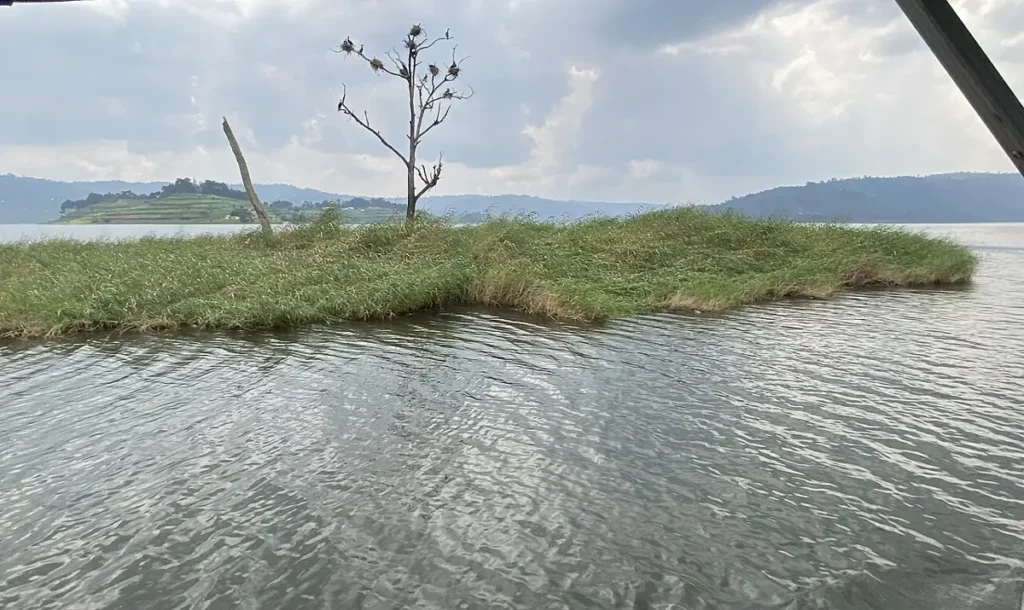
The classic Bunyonyi experience is a trip by dugout canoe or motorboat between the islands. Paddling yourself is slow, peaceful and surprisingly tiring; a guided boat lets you cover more and hear the stories behind each island. Swimming from lodge jetties is popular, as the water is cool and clean, though deep, so stay near the shore. Birdlife is rich along the papyrus-lined shores, with kingfishers, herons, weavers and, with luck, grey crowned cranes, Uganda’s national bird, in nearby wetlands.
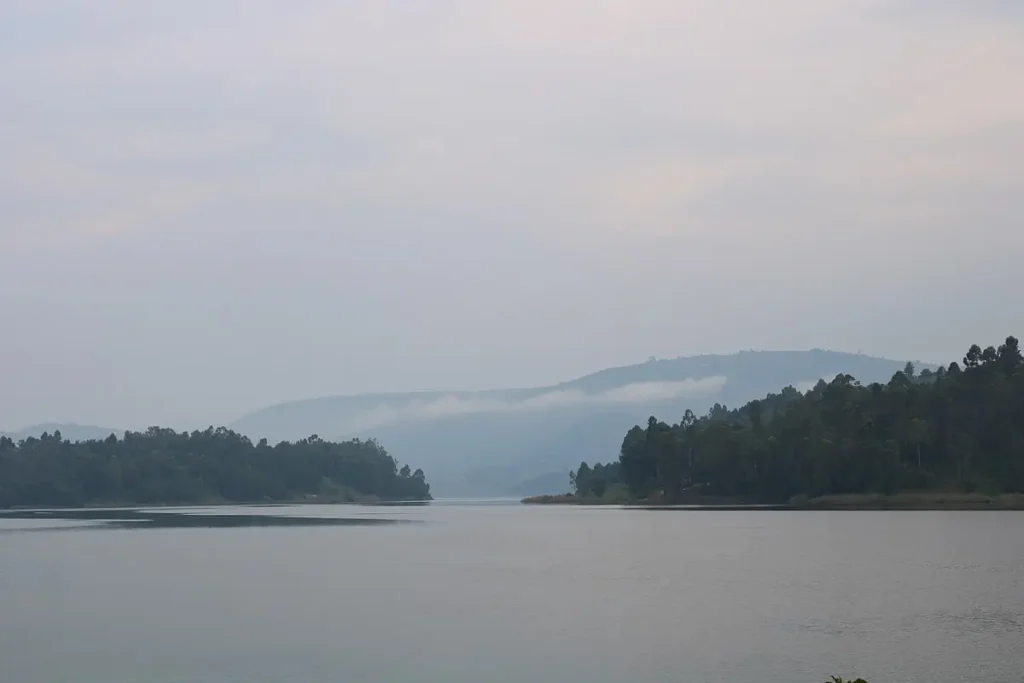
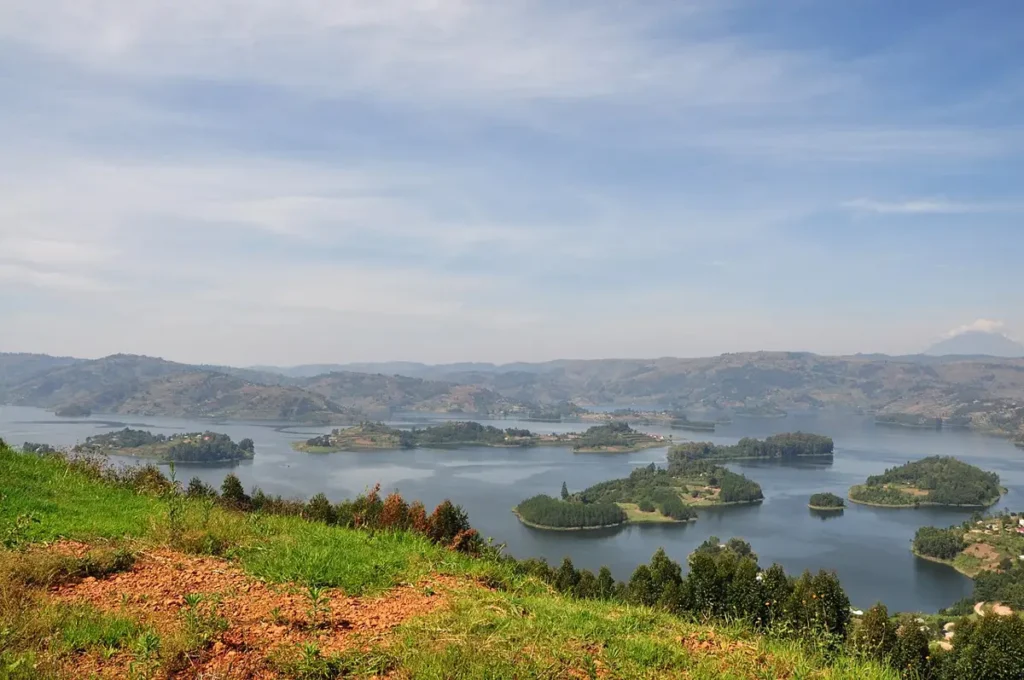
On land, walks and bike rides along the terraced hillsides lead through villages and farms with views over the lake, and many lodges arrange visits to local schools or craft groups. Kabale’s markets, about 30 minutes away, are a lively stop. Most visitors simply slow down here after the early starts and long drives of a gorilla safari, and that is the lake’s real gift.
Punishment Island
The tiny island of Akampene, known as Punishment Island, has a sad history. According to local oral tradition, unmarried girls who became pregnant were once left there as punishment, unable to swim to shore; some were rescued by men from the mainland who could not afford a bride price, while others died. Boat trips often pass the island, and guides explain its story. It is a reminder of how much attitudes have changed, and a place to visit respectfully.
Where to stay
Lodges at Bunyonyi range from simple island camps and backpacker hostels to comfortable lodges with private cottages and lake views. Island properties feel the most secluded, reached by boat from the mainland jetty, while mainland lodges are easier to reach with luggage. Evenings are cool at this altitude, so rooms with fireplaces or warm bedding are welcome. Book ahead for the busy months, especially for the best-placed cottages. For lodges near the gorillas, see lodges near Bwindi and Mgahinga.
Fitting Bunyonyi into a gorilla trip
Bunyonyi works best with the southern gorilla sectors — Rushaga and Nkuringo — and with Mgahinga, because it lies on the road between them and Kabale, Kigali or the drive back to Kampala.
A typical plan is to trek with the gorillas, then spends one or two nights at the lake to rest before the onward journey; it also makes a good stop before your trek if you are arriving from Kigali. From Buhoma in the north, it is several hours further, so it suits travellers continuing south. See what to do after a gorilla trek and Bwindi’s sectors compared.
Bunyonyi is also a favourite for families and honeymooners: children enjoy the canoes and swimming, and couples the quiet decks and sunsets. See gorilla trekking honeymoons.
Frequently asked questions
It is widely considered free of bilharzia, hippos and crocodiles. The water is cool and deep, so swim near the shore and avoid swimming alone.
One or two nights are ideal after a gorilla trek, enough for a canoe trip, a walk and a proper rest.
About 2–3 hours from the Rushaga sector by road. Buhoma, in the north of Bwindi, is several hours further.
Any time of year. The drier months bring clearer skies, while the wetter months make the hills especially green.










