TALK TO AN EXPERT +256 716 068 279 WHATSAPP OPEN NOW.
Wildlife Beyond Gorillas

Giant Forest Hog Uganda: Africa’s Largest Wild Pig Facts

Home / Travel News, Stories & Tips / Tales from the Mist / Giant Forest Hog Uganda: Africa’s Largest Wild Pig Facts

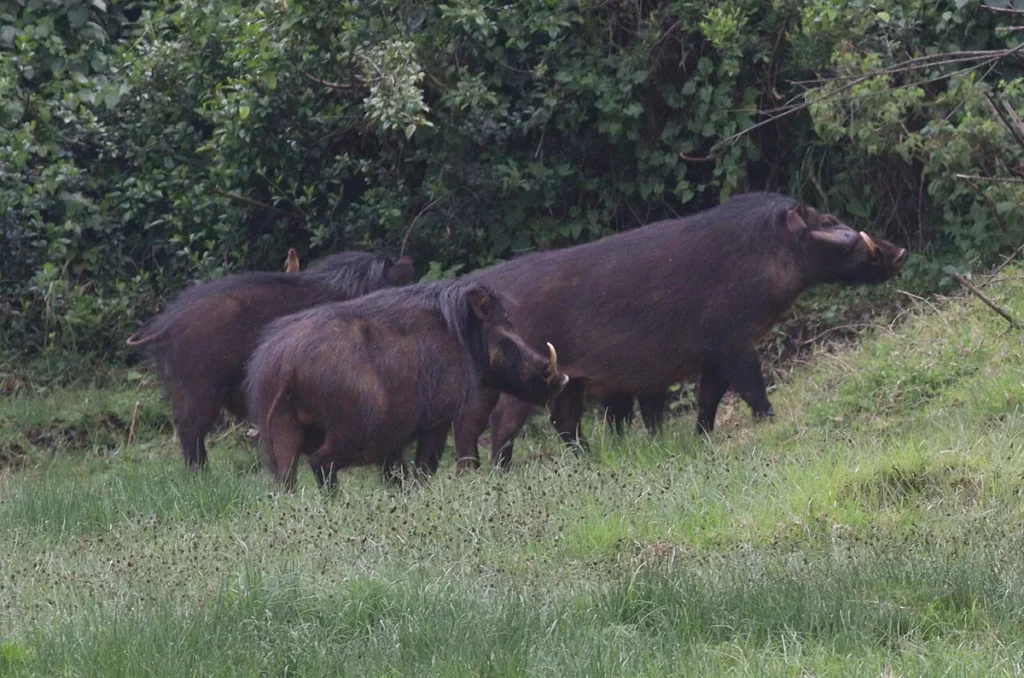
The giant forest hog holds the title of Africa’s largest wild pig and the largest member of the pig family anywhere on Earth. Despite this, it remains largely unknown outside specialist wildlife circles — a function of its dense forest habitat, its primarily nocturnal activity, and the fact that it was not scientifically described by Western science until 1904, making it one of the last large African mammals to be formally documented. Uganda’s montane forests and forest-savanna edges hold populations of this remarkable animal, and sightings, though uncommon, are possible in several parks.

Physical Description

The giant forest hog (Hylochoerus meinertzhageni) is a formidable animal: adults weigh 100 to 275 kilograms and reach 1.3 to 2.1 metres in body length. Males are substantially larger than females. The coat is dark — brownish-black to black — and bristly, with a thick, shaggy mane along the back. The face is large and dramatic, with prominent facial warts, a broad snout, and large, upward-curving tusks in males. The ears are large and rounded. The overall impression is of a heavily built, powerfully muscled animal — which it is.

The tusks — both upper and lower — are formidable weapons. The upper tusks sweep upward and outward in males and can reach 35 centimetres. Males use them in combat with other males and in defence against predators. Leopards and lions occasionally take young or sick giant forest hogs, but healthy adults, particularly in family groups, are dangerous enough that most predators avoid them. Documented cases of giant forest hogs driving lions away from their groups are not unusual.

Habitat and Ecology

Giant forest hogs inhabit montane forest, lowland forest, and forest-grassland edge habitats across a restricted band of equatorial Africa. In Uganda, they are found primarily in the montane forests of the Albertine Rift — Bwindi Impenetrable Forest, Kibale National Park, and the forests of the Rwenzori foothills. They also occur in the Kigezi highlands and in some forest-savanna mosaic areas in western Uganda.

Giant forest hogs are grazers and browsers, feeding on grass, herbs, roots, fruit, and occasionally carrion. They are crepuscular and nocturnal, resting in dense forest during the heat of the day and emerging to feed in forest clearings, glades, and along forest edges in the morning and evening. Family groups — a boar, several sows, and their young — use regular trails between forest and feeding areas, and the presence of giant forest hogs in an area is often indicated by the characteristic broad, deep trails they create through undergrowth.

Social Structure

Giant forest hogs live in family groups (sounders) of 6 to 20 individuals led by a dominant boar. Unlike warthogs, which are often seen in open savanna, forest hog sounders keep close to forest cover and are rarely seen in open terrain. The social bonds within the group are strong — sounders are cohesive units that move, forage, and rest together. When threatened, the group closes ranks with the boar facing the threat and females and young behind, a defensive formation that is effective against most predators.

Giant Forest Hogs in Uganda

Giant forest hog sightings in Uganda are uncommon but possible. The best opportunities are at forest-grassland edges in Bwindi and Kibale in the early morning or evening. Night drives in areas where they are permitted sometimes produce sightings. The Queen Elizabeth National Park area bordering Kibale occasionally has giant forest hog activity in the transition forest areas. Their size and distinctive appearance make them unmistakable when encountered — a large group of giant forest hogs crossing a forest track in the early light is one of Uganda’s more unexpected and impressive wildlife moments.

Ready to experience Uganda’s mountain gorillas in 2026? Secure your gorilla permits early and let us craft a seamless safari tailored to your travel style, preferred trekking sector, and accommodation level. From luxury lodges to well-designed midrange journeys, every detail is handled for you. Every itinerary is carefully planned to maximize your time in the forest while ensuring comfort, safety, and unforgettable encounters.

Have questions about gorilla permits, travel dates, or the best itinerary for you? Speak with a safari expert and get clear, honest guidance to plan your trip with confidence.

When is the last time you had an adventure? African Gorillas!!! Up Close With Uganda’s Wild Gorillas Touched by a Wild Gorilla: An Unforgettable Encounter Inside Gorilla Families: Bonds, Hierarchies & Jungle Life Face to Face With a Silverback: The Wild Encounter You’ll Never Forget