

Updated
Lake Mburo National Park is a compact savannah park about 240 km west of Kampala, just off the main road to Bwindi, best known as the only park in Uganda with impala and the only park in western Uganda with zebra and eland. It has no elephants, which leaves its acacia woodland and lakes unusually quiet, and it offers activities rarely found elsewhere in Uganda: walking safaris, horseback safaris and cycling among the zebras. It makes an ideal overnight stop on the long drive to the gorillas.
Here is what you can see, the best activities and how Lake Mburo fits into a gorilla trip.
Wildlife at a glance
| Animal | Where and how to see it |
|---|---|
| Zebra | Large herds on the open grassland; easy on game drives and walks |
| Impala | Acacia woodland; Lake Mburo is the only Ugandan park with impala |
| Eland, topi, buffalo, waterbuck | Grassland and lake edges |
| Hippos and crocodiles | Boat trip on Lake Mburo |
| Leopards, hyenas | Present; best chance on night drives |
| Birds | Over 300 species, including the African finfoot and papyrus specialists |
What makes Lake Mburo different
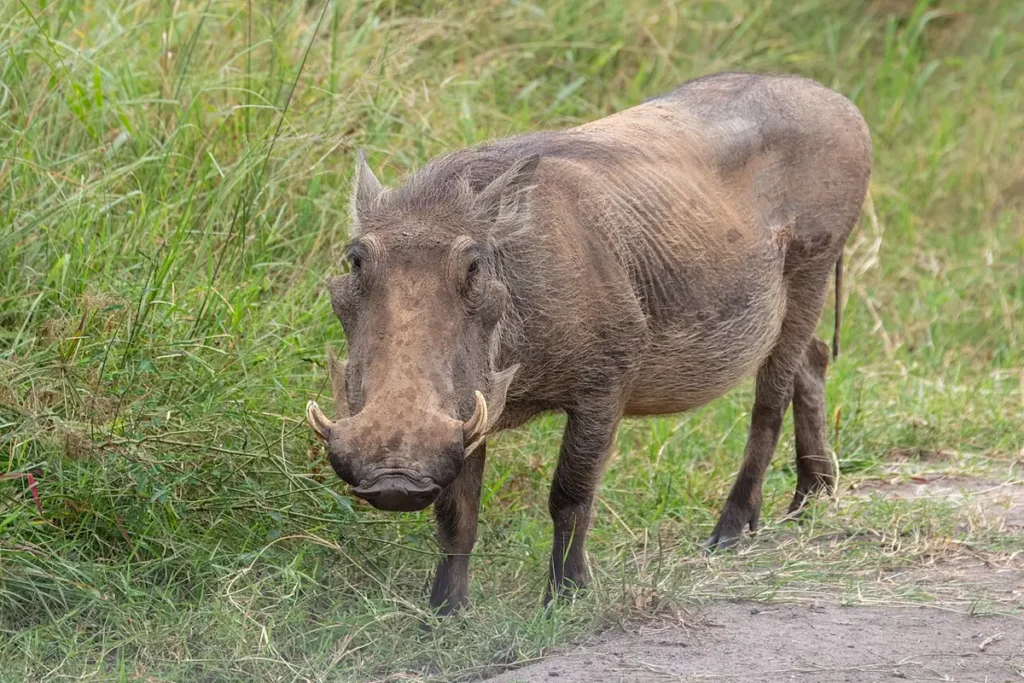
Lake Mburo’s landscape of rolling grassland, acacia thickets, rocky outcrops and five lakes linked by papyrus swamps feels unlike Uganda’s other parks. Without elephants or many large predators, the park is gentle and open, and that is what allows activities on foot, by bicycle and on horseback. Being among zebras and impala without a vehicle is a memorable change from game drives, and a welcome chance to stretch your legs after long hours on the road.
Things to do
Game drives on the park’s loop tracks find zebra, impala, eland, topi and buffalo, especially in the early morning and late afternoon. The boat trip on Lake Mburo brings you close to hippos, crocodiles and water birds, including, with luck, the shy African finfoot along the shoreline.
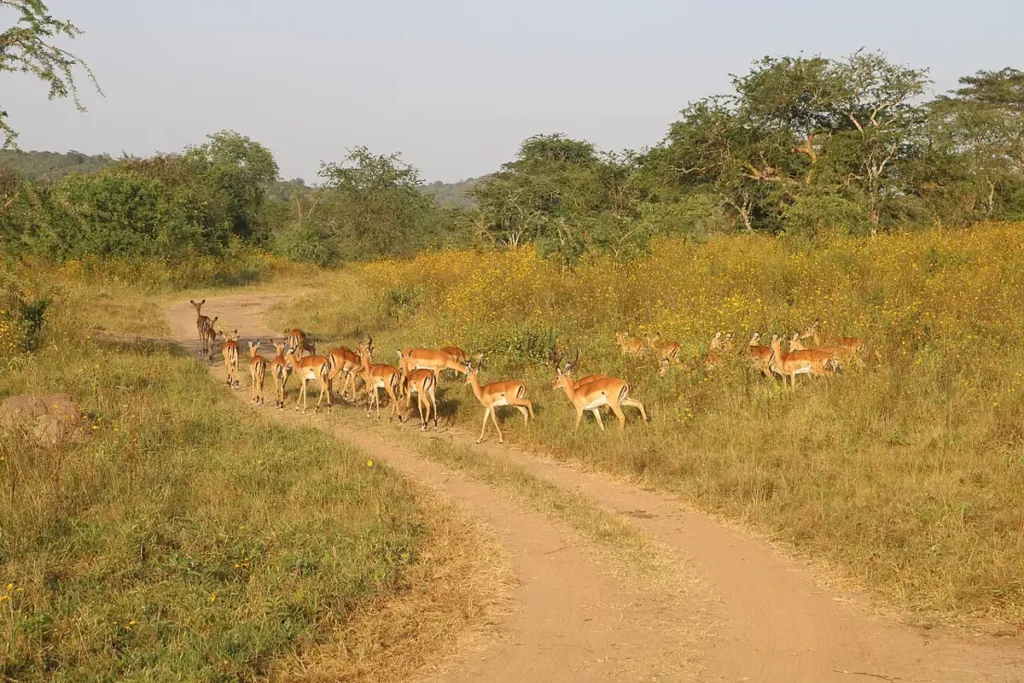
Guided walking safaris with a ranger cover the grassland and woodland on foot, and horseback safaris, run from just outside the park, let you ride among the herds, which tend to be more relaxed around horses than people on foot. Night drives give the best chance of leopards, hyenas, bushbabies and other nocturnal animals.
Lake Mburo on the way to Bwindi
Lake Mburo lies near the Masaka–Mbarara road, about four hours from Kampala and roughly halfway to Bwindi, so it breaks the 8–10 hour drive to the gorillas into two manageable days. Arrive in the afternoon for a boat trip or game drive, stay overnight, and do a walking or horseback safari the next morning before continuing to Bwindi’s southern sectors or to Queen Elizabeth National Park. It works just as well on the way back to Entebbe. See our day-by-day gorilla trip schedule and Bwindi gorilla trekking guide.
Where to stay and when to go
Accommodation ranges from Uganda Wildlife Authority bandas and campsites to comfortable tented camps and lodges inside the park and on its edges, many with views over the lakes or plains. The park can be visited all year; the drier months of June–August and December–February make walking and game drives easier, while the wetter months bring green grass and good birding. Park entry is charged per day, with activities priced separately. For other parks on the route, see Queen Elizabeth National Park and wildlife day trips from Kampala.

Frequently asked questions
Rarely. Lions disappeared for years and have been sighted again recently, but they are not reliably seen. Leopards and hyenas are present.
No. Lake Mburo has no elephants, which is one reason walking, cycling and horseback safaris are possible.
Yes. It splits the long drive, and its zebras, impala and walking safaris add something different from Uganda’s other parks.
Yes, in Kidepo Valley National Park in the far north-east. Lake Mburo is the easiest place to see them on a gorilla trip.










