

Updated
Queen Elizabeth National Park is Uganda’s most visited savannah park and the natural partner to gorilla trekking: it lies between Kibale Forest and Bwindi, and is best known for the Kazinga Channel boat trip and the tree-climbing lions of the Ishasha sector. Most visitors spend one or two nights here, combining game drives on the Kasenyi plains, a two-hour boat trip among hippos and elephants, and a drive through Ishasha on the way to Bwindi’s Buhoma sector.
The park covers nearly 2,000 square kilometres of savannah, wetlands, crater lakes and forest along the Rwenzori foothills, with more than 600 bird species. Here is what to see and how to fit it into a gorilla safari.
Highlights at a glance
| Area | What you see | Best time of day |
|---|---|---|
| Kazinga Channel | Hippos, buffalo, elephants, crocodiles, waterbirds from a boat | Afternoon trip |
| Kasenyi plains | Uganda kob, lions, buffalo, elephants | Early morning game drive |
| Ishasha sector | Lions resting in fig trees, topi, buffalo | Morning and late afternoon |
| Kyambura Gorge | Chimpanzee tracking in a sunken forest gorge | Morning |
| Crater lakes and Katwe | Explosion craters, traditional salt mining | Any time |
The Kazinga Channel boat trip
The Kazinga Channel is a natural waterway about 32 km long linking Lake George and Lake Edward, and its banks attract some of the densest gatherings of hippos in Africa.
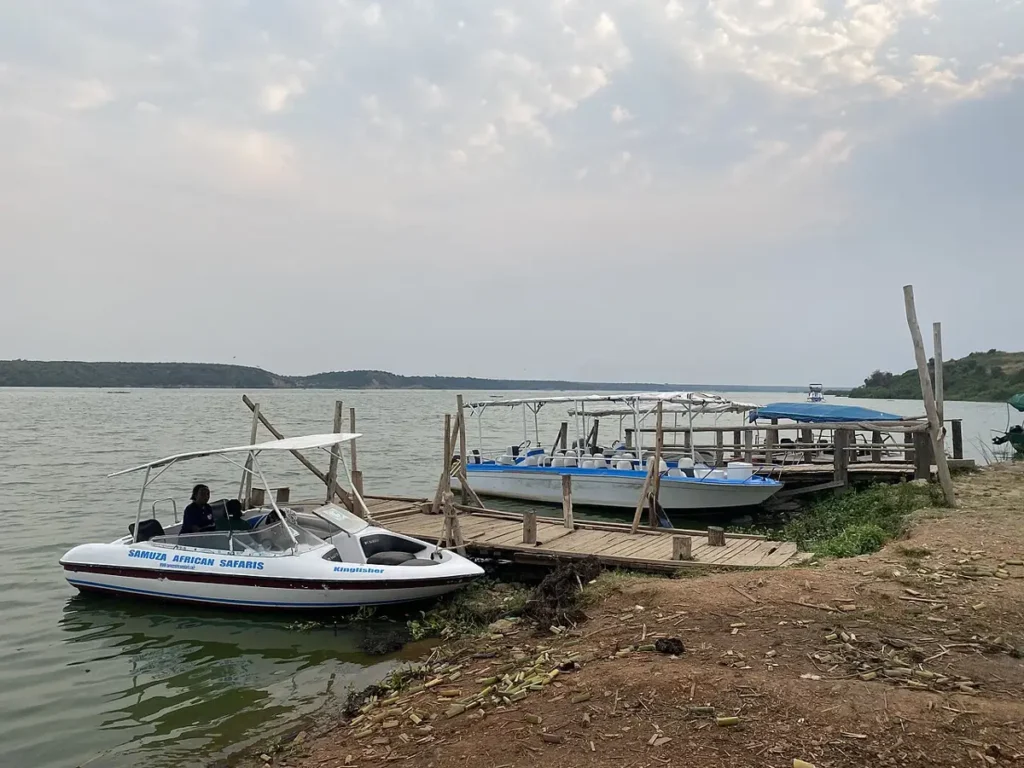
The two-hour boat trip moves slowly along the shore, bringing you close to hippos, buffalo wallowing in the shallows, elephants coming down to drink and Nile crocodiles basking on the banks, along with pelicans, kingfishers, fish eagles and many other birds. Because you are at water level, the views and photographs are unusually intimate. The afternoon trip has warmer light and more animals at the water’s edge.
The tree-climbing lions of Ishasha
In the remote southern Ishasha sector, lions often rest in the branches of large fig trees, a behaviour seen in only a few places in Africa. Nobody knows for certain why: theories include escaping biting insects and heat on the ground, and getting a better view over the plains.
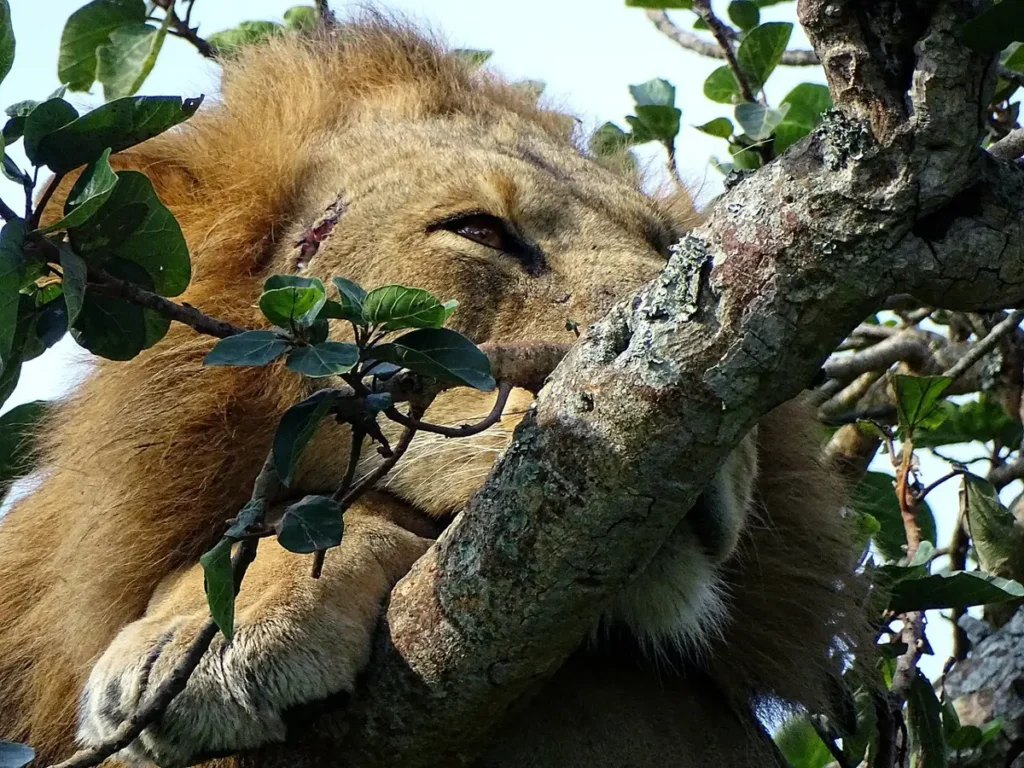
Finding them takes patience and some luck, as the lions move between trees, but Ishasha is worth the drive for its quiet, wild atmosphere even without a sighting. It also lies on the route to Buhoma, about two to three hours away, which makes it easy to include on the way to the gorillas. See the tree-climbing lions of Ishasha.
Game drives and other activities
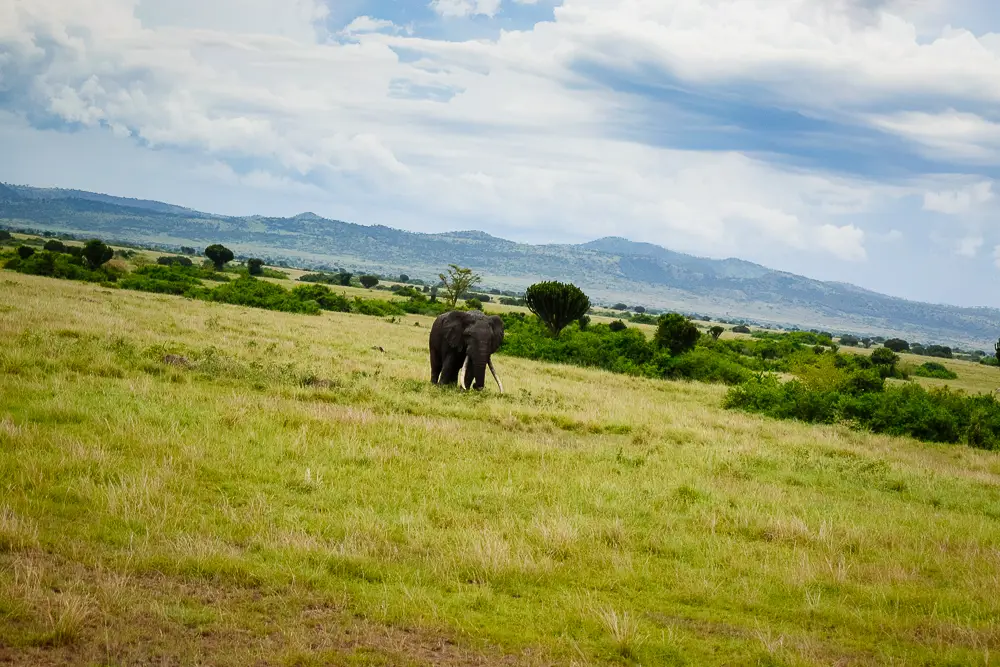
In the north of the park, early-morning game drives on the Kasenyi plains find large herds of Uganda kob, buffalo and elephants, with lions, leopards and spotted hyenas among the predators. Kyambura Gorge, a deep forested ravine cutting through the savannah, has a small chimpanzee community that can be tracked; sightings are less reliable than in Kibale but the setting is dramatic.
The explosion craters near Katwe, and the traditional salt mining on Lake Katwe, show a different side of the park. Birdwatchers can find many species around the channel, the crater lakes and the Maramagambo Forest. See Queen Elizabeth park animals.
Fitting Queen Elizabeth into a gorilla safari
Queen Elizabeth sits in the middle of the classic western Uganda route. Coming from Kibale Forest, it is about two to three hours’ drive; from the park, Ishasha leads south to Bwindi’s Buhoma sector. A typical 7-day trip runs Entebbe – Kibale (chimpanzees) – Queen Elizabeth (boat trip and game drives) – Bwindi (gorillas) – Entebbe or Kigali, with no single driving day becoming too long. Two nights in the park allow both a morning game drive and an unhurried afternoon boat trip. See day-by-day gorilla trip schedules and chimpanzee tracking in Kibale.
Safety and practical notes
Park entry fees are charged per day, on top of activities such as the boat trip and chimpanzee tracking. The park borders the Democratic Republic of Congo, and in October 2023, two tourists and their driver were killed in an attack in the park, which led to increased security and changes in government travel advice. Check your government’s current advice before travelling, follow your guide’s instructions and stick to established routes and lodges. Read our honest Uganda safety guide.
Frequently asked questions
Two nights is ideal: a morning game drive, an afternoon Kazinga Channel boat trip, and Ishasha on the way south to Bwindi.
No. Sightings are common but depend on where the lions are. A morning and afternoon drive improve your chances.
Four of them: lions, leopards, elephants and buffalo. There are no rhinos; for rhinos in Uganda, visit Ziwa Rhino Sanctuary.
From Ishasha, Buhoma is about two to three hours by road. From the northern part of the park, allow four to five hours.










