Kampala sits at the geographic centre of Uganda in a way that places it within practical day-trip distance of several genuinely significant wildlife sites — Mabamba Swamp (home to Uganda’s most reliable shoebill stork population, 90 minutes from the city centre), Ziwa Rhino Sanctuary (the only place in Uganda where white rhinos can be tracked on foot, 3 hours north), the Ngamba Island Chimpanzee Sanctuary on Lake Victoria (1.5 hours by boat from the Entebbe peninsula), and the Entebbe Botanical Gardens (primate species including red-tailed monkeys and black-and-white colobus in a maintained lakeside garden, 45 minutes from Kampala) — all of which can be visited as a single day without overnight accommodation away from the city. These day trips are most valuable for safari visitors who have extra time in Kampala before the western circuit drive, visitors making a return trip to Uganda who want to explore beyond the standard western parks, and travellers with limited overall time who want wildlife encounters concentrated around the airport gateway. This guide covers the best wildlife day trips from Kampala ranked by encounter quality relative to distance and logistics. For the gorilla trekking that most Kampala visitors are planning, see the permit guide and the safari itineraries page.
Best Wildlife Day Trips from Kampala
- Mabamba Swamp: Shoebill stork — 90 min drive from central Kampala, canoe trip, encounter rate 80%+
- Entebbe Botanical Gardens: Primates (colobus, red-tailed monkey), waterbirds — 45 min from Kampala
- Ngamba Island Chimp Sanctuary: Chimpanzee feeding session — 1.5 hrs by boat from Entebbe
- Ziwa Rhino Sanctuary: White rhino tracking on foot — 3 hrs north of Kampala, stay 2 hrs minimum
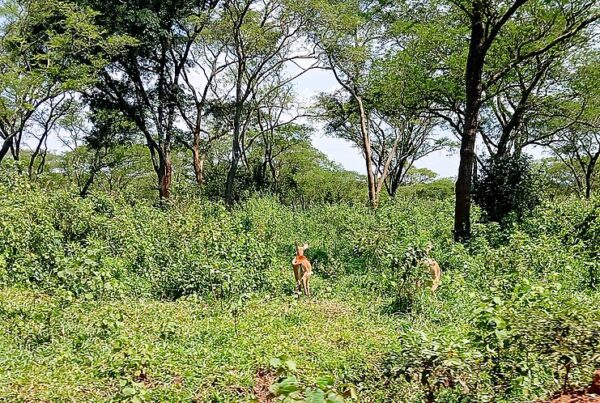
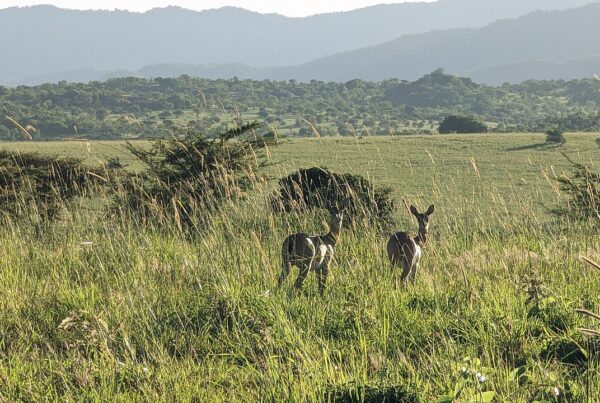
- Lake Mburo NP: Zebra, hippo, impala — 4 hrs southwest; too far for a day trip without an early start
- All day trips are best in early morning departure (6am from Kampala for Mabamba; 7am for Ziwa)
Kampala’s position in central Uganda — within easy driving distance of several of the country’s most important wildlife sites — makes it far more than a transit hub for safari visitors. A full day from the capital can deliver a shoebill stork encounter, a chimpanzee feeding session, a rhino tracking walk, or a game drive for zebras and hippos — all accessible without the logistics of a multi-day safari departure. These are the best day trips from Kampala specifically selected for wildlife-focused visitors, ranked by quality of encounter relative to distance and effort required.
1. Mabamba Swamp — Shoebill Stork Encounter
- Uganda’s most reliable shoebill stork site with encounter rates above 80%
- 90-minute drive from central Kampala via Entebbe road
- Canoe trip into papyrus channels brings visitors within 10–30 metres of standing shoebills
- Also produces sitatungas, multiple kingfisher species and diverse waterbirds
- Best visited on a morning departure from Kampala (leave by 6am for optimal light and bird activity)
The shoebill stork is one of Africa’s most extraordinary birds — a massive, prehistoric-looking species with a shoe-shaped bill, slate-grey plumage and a fixed, unblinking stare that makes it appear more like a sculpture than a living animal. It stands up to 1.4 metres tall, has a wingspan approaching 2.4 metres, and feeds by standing motionless in shallow papyrus swamp water for extended periods before striking at lungfish with its enormous bill. The fact that it stands motionless makes it, paradoxically, one of the most easily photographed of Africa’s rare birds once located. Mabamba Swamp on the northern shore of Lake Victoria is where this encounter happens most reliably in Uganda — and Uganda is the best country in the world to see one.
The canoe approach at Mabamba is the key to the encounter. Narrow papyrus channels, navigated by local fishermen guides in traditional dugout canoes, bring visitors quietly through the wetland to the shoebill’s feeding territory. The approach is slow and silent — shoes removed if they are noisy, voices kept low — and the moment the guide points silently to a grey shape standing in the papyrus margin and you realise it is actually a bird is one of the genuine wildlife revelations available in Uganda. Encounter duration varies from five minutes to thirty minutes or more depending on whether the bird is actively feeding or resting; both produce good photography opportunities at close range.
The swamp also delivers significant additional wildlife. Sitatungas — the semi-aquatic antelope that wades through papyrus margins — are regularly encountered from the canoe. Malachite kingfishers, giant kingfishers and pied kingfishers hunt from papyrus stems. African jacanas walk on floating vegetation with their impossibly large feet. The sunrise light on the swamp from a canoe, with the shoebill standing motionless in the near distance, is one of the best single wildlife photography situations in East Africa — and it is ninety minutes from Kampala.
Plan your day trip: Depart Kampala at 6am to reach the swamp by 7:30am for the best bird activity and light. The canoe trip takes three to four hours return including the shoebill encounter. Return to Kampala by noon, leaving the afternoon free for city activities or onward travel. Book through your Kampala hotel or a specialist birding guide — Mabamba guides are experienced but variable in quality, and a pre-arranged specialist guide significantly improves the species count beyond the shoebill itself.
2. Ngamba Island Chimpanzee Sanctuary
- Chimpanzee sanctuary on a 95-hectare forested Lake Victoria island
- Over 90 rescued and rehabilitated chimpanzees in natural forest habitat
- Close encounters during scheduled feeding sessions without forest trekking
- 45-minute boat trip from Entebbe marina; full day from Kampala feasible
- Managed by the Chimpanzee Sanctuary and Wildlife Conservation Trust
Ngamba Island Chimpanzee Sanctuary sits in Lake Victoria forty-five minutes by boat from Entebbe and offers a chimpanzee encounter fundamentally different from Kibale’s forest tracking. The ninety-plus chimpanzees living on the island are all rescued and rehabilitated individuals — animals confiscated from illegal trade, orphaned by bushmeat hunting, or surrendered by people keeping them illegally as pets. They live in a 95-hectare natural forest that covers most of the island, moving freely within their territory during the day and returning for supplemental feeding in the afternoon. The feeding platform adjacent to the electric boundary fence allows visitors to observe chimpanzees from close range — typically two to five metres — without the exertion of forest trekking and without the lottery of encounter rates that forest tracking involves.
The scheduled feeding sessions at Ngamba are at 11am and 2pm; the afternoon session often produces more active chimpanzee behaviour as the animals return from their daytime forest ranging. The island’s forest can also be entered with a guide for a walking experience among the trees and wetland edges where kingfishers, fish eagles and forest birds are resident. The boat trip itself produces Lake Victoria waterbirds — Marabou storks, yellow-billed kites, African fish eagles — and on calm mornings the lake surface provides extraordinary photographic opportunities of the island rising from the water.
For visitors combining Ngamba Island with the Botanical Garden in Entebbe, a full day in the Entebbe area produces: colobus monkeys and birds in the Botanical Garden in the morning, Ngamba Island in the afternoon, and a lakeside dinner in Entebbe before returning to Kampala or departing for Bwindi the following morning. This is one of the best single wildlife day structures available in Uganda without entering a national park.
Plan your day trip: Book the Ngamba Island trip at least two days in advance through the CSWCT website or your Kampala hotel. The morning boat departs Entebbe at 9am; arrival on the island allows the 11am feeding session before the return boat. Full-day visits with both feeding sessions can also be arranged. The total cost including boat, island entry and the feeding session guide is approximately USD 100–120 per person.
3. Lake Mburo National Park — Zebras, Hippos and Walking Safaris
- Uganda’s most accessible national park from Kampala — 3 hours by road
- The only park in southern Uganda with Burchell’s zebras
- Walking safaris available without a vehicle — unusual in East Africa
- Lake hippos viewable from a shore hide or by boat
- Best as an early-start day trip or one-night stop on the Bwindi drive
Lake Mburo National Park — three hours from Kampala on the main road to Bwindi — occupies a special position in Uganda’s safari geography as the only park in southern Uganda where Burchell’s zebras are found. The park’s savanna and acacia woodland environment is entirely different from the forest character of Bwindi; the combination of zebras, impalas, buffaloes, warthogs and the hippos visible from the lake shore provides a quick-turnaround savanna wildlife experience that introduces visitors to East Africa’s open-country animals before the gorilla trekking centrepiece at Bwindi.
The walking safari option at Lake Mburo is one of the most distinctive available in Uganda. Unlike most East African national parks where vehicle-based game drives are the only permitted wildlife experience, Lake Mburo allows guided walking with armed rangers through the park’s savanna zones — a qualitatively different encounter with wildlife than a vehicle-based drive. Walking quietly toward a grazing zebra herd, or following a ranger’s hand signal to crouch while a giraffe moves between acacia trees, produces an intensity of engagement that no vehicle can replicate. The walking safaris typically last two hours and cover three to five kilometres on the lake’s western shore.
The boat trip on Lake Mburo itself is particularly productive for hippos — large pods rest in the shallows within twenty metres of the boat path — and for waterbirds including the African finfoot (a shy, rarely seen species). The evening hippo emergence, when the animals leave the water to graze on the lakeside grass at dusk, is one of the most reliable wildlife events in the park and a practical reason to time an afternoon visit to the lake rather than the morning game drive circuit.
Plan your day trip: Depart Kampala by 6am to reach the park by 9am for a morning game drive. Complete the boat trip and walking safari, and return to Kampala by 7pm. Alternatively, stay one night at Mihingo Lodge, Rwakobo Rock or Arcadia Cottages — all excellent mid-range options within the park — and continue to Bwindi the following morning as part of a staged overland approach that avoids the seven-hour direct Kampala-to-Bwindi drive.
4. Ziwa Rhino Sanctuary — Uganda’s Only White Rhinos
- Uganda’s only white rhino population — currently 22+ animals
- Guided tracking on foot brings visitors within 20 metres of free-ranging rhinos
- 3 hours north of Kampala on the main Murchison Falls road
- Combined with a Murchison Falls overnight or as a standalone day trip
- A key stop on the Kampala–Murchison Falls route for northern Uganda itineraries
Ziwa Rhino Sanctuary north of Kampala is the only place in Uganda where white rhinos can be seen — a species that was eliminated from Uganda by poaching in the 1970s and ’80s and has been gradually restored through the Rhino Fund Uganda’s breeding programme since 2005. The sanctuary now holds over twenty animals, a recovering population that represents one of Africa’s more hopeful large mammal conservation success stories. The rhino tracking experience at Ziwa is on foot — no vehicle is available or necessary, as the rangers locate the rhinos by radio tracking and bring visitors to within twenty metres on foot, making it one of the most intimate large mammal encounters in Uganda.
White rhinos at close range are physically overwhelming — massive, horn-forward animals with a presence that triggers a primal response in most visitors regardless of how prepared they thought they were. The southern white rhino is the least aggressive of the two rhino species; the Ziwa animals are habituated enough to allow close approach without stress, but the ranger’s guidance is still followed precisely, as the animals’ behaviour can change without warning. The ninety-minute tracking walk through the sanctuary’s grassland and acacia woodland is also productive for birds — the sanctuary’s savanna and riverine habitats hold a different bird community from the forest parks, with rollers, bee-eaters and various raptors common.
Plan your day trip: Ziwa is directly on the Kampala-to-Murchison Falls highway — it is most naturally visited as a stop on the way to Murchison rather than as a dedicated day trip from Kampala. If treated as a day trip from Kampala, a 6am departure reaches the sanctuary by 9am for the morning tracking session, with a return to Kampala by 3–4pm. Book the tracking in advance through the Rhino Fund Uganda to ensure a ranger and tracking time slot is available.
5. Entebbe Botanical Garden — Colobus Monkeys and Lake Victoria Birds
- Habituated black-and-white colobus troops visible daily without searching
- 300+ bird species; exceptional morning birding along the lakeside paths
- Historical site: Tarzan film location in the 1940s; botanical collection assembled since 1898
- Safe for independent exploration; local guides available at the entrance
- Directly adjacent to Entebbe International Airport — ideal for arrival or departure day
The Entebbe Botanical Garden is covered more fully in the Kampala city guide above, but its quality as a standalone wildlife destination merits emphasis here. For visitors spending a night in Entebbe before flying home, a dawn visit to the Botanical Garden produces wildlife encounters — particularly the colobus monkeys — that rival anything available in Uganda’s fee-charging national parks. The monkeys are entirely unafraid of visitors and feed within arm’s reach of the garden’s paths; the birds include species that most visitors specifically drive for hours to find in the national parks. The combination of zero entry stress, short distances, and genuine wildlife quality makes the Botanical Garden one of Uganda’s most underrated wildlife destinations.
The lakeside section of the garden, where the ground slopes gently to Lake Victoria, is particularly productive. African fish eagles call from the tall trees overhanging the water and occasionally plunge-dive into the lake within view of the garden paths. Giant kingfishers — larger than most visitors expect, with a raucous, laughing call — hunt from overhanging branches. Grey crowned cranes, Uganda’s national bird, are occasionally present in the garden’s open areas. The garden’s fruit-bearing trees attract weavers, sunbirds, barbets and hornbills throughout the day. A morning in the Botanical Garden before a noon international departure captures the best of the garden’s wildlife activity and provides a final Uganda wildlife memory before the flight home.
Plan your day trip: The garden opens at 7am and is most productive from 7–10am for bird activity. The entrance fee is minimal; guides available at the gate charge approximately USD 10 for a two-hour guided walk. The garden is within five minutes’ drive of both the Entebbe airport terminal and the main Entebbe hotel strip. It requires no advance booking and is accessible on very short notice — even for visitors who discover it only on their final morning in Uganda.
6. Lake Bunyonyi — A Half-Day Stop on the Bwindi Drive
- Uganda’s deepest lake and one of the most scenic in East Africa
- 29 islands, papyrus margins and terraced hillsides
- Bilharzia-free and safe for swimming — unusual among Ugandan lakes
- 2 hours from Bwindi; 5 hours from Kampala — best as a staged overnight rather than a day trip
- Canoe trips, island visits, birdwatching and swimming available from any lakeshore lodge
Lake Bunyonyi is too far from Kampala for a genuine day trip — five hours each way makes it impractical as a return journey. However, as a staged overnight on the Kampala-to-Bwindi drive (breaking the journey two-thirds of the way), it functions beautifully. Arriving at the lake in the mid-afternoon after driving from Kampala, spending the evening and following morning on the lake by canoe, and then completing the two-hour drive to Bwindi the next day converts the standard seven-hour Kampala-to-Bwindi slog into a two-day journey with a genuinely memorable overnight in the middle.
The lake’s afternoon light — the water surface shifting from deep blue to turquoise to orange as the sun drops behind the western hills, the Virunga volcanoes visible on the horizon on clear days — is one of southwestern Uganda’s most beautiful natural events. A sunset canoe from the lakeshore lodge, following the papyrus margins in the fading light with kingfishers diving around the boat, provides a natural decompression after the day’s drive and a genuine sense of arrival in the landscape where gorilla trekking will happen the following day. Lake Bunyonyi is not technically a day trip from Kampala — but as a component of the Bwindi journey, it deserves a place on every itinerary.
Plan your staged overnight: Mid-range lodges on Lake Bunyonyi include Birds Nest Resort, Byoona Amagara Island Retreat, and Lake Bunyonyi Eco Resort — all offering canoe hire, boat trips and comfortable accommodation at USD 80–150 per night. Book the same night as Bwindi accommodation to ensure availability in peak season. The drive from the lake to Bwindi Buhoma sector is straightforward; to Rushaga or Nkuringo sectors it involves a more scenic but slower road through Kabale and the Bwindi buffer zone.
Frequently Asked Questions
The Mabamba Swamp shoebill stork experience is consistently rated the best single-day wildlife encounter accessible from Kampala, for the combination of rarity, encounter quality, and accessibility. The shoebill stork is one of Africa’s most sought-after birds globally — a massive prehistoric-looking species with a globally restricted range and an estimated total population of 5,000–8,000 individuals, of which Uganda holds approximately 50%. Mabamba’s papyrus swamp provides access by canoe to within 10–30 metres of standing shoebills hunting lungfish — an encounter of extraordinary intimacy with one of the world’s rarest large birds, 90 minutes from Kampala. Encounter rates at Mabamba are above 80% on morning canoe trips. For a visitor who has one day in Kampala and wants the highest-quality wildlife encounter per hour of investment, the Mabamba shoebill trip is the unambiguous recommendation. Can you see chimpanzees on a day trip from Kampala? Chimpanzees can be seen on a day trip from Kampala via the Ngamba Island Chimpanzee Sanctuary on Lake Victoria. Ngamba Island is a forest island sanctuary managed by Chimpanzee Trust for rescued and orphaned chimpanzees — approximately 50 chimpanzees live on the island in a forest enclosure. Visitors arrive by boat from Entebbe (1.5 hours each way) and observe the feeding session from a raised viewing platform at the forest edge where rangers bring food to encourage the chimpanzees into the open. The Ngamba experience is categorically different from wild chimpanzee trekking at Kibale — you are watching sanctuary chimpanzees in a managed setting, not wild individuals in their natural forest territory — but it is a legitimate wildlife encounter and the closest accessible chimpanzee experience to Kampala. Kibale Forest National Park (the best wild chimpanzee trekking in Uganda) is 5 hours from Kampala — accessible as a day trip only from a very early departure with a very short trekking window, which makes it better suited to an overnight rather than a day trip. What can you see at the Entebbe Botanical Gardens? The Entebbe Botanical Gardens on the shores of Lake Victoria, established in 1898 as a research garden by British colonial botanists, are genuinely excellent for primate and bird observation. The gardens host a wild population of black-and-white colobus monkeys (not captive — they move freely through the mature canopy trees), red-tailed monkeys, and olive baboons that are accustomed to human presence and can be observed at close range from the garden paths. The waterfront sections and the lake margin habitat produce impressive waterbirds: African fish eagle, pied kingfisher, malachite kingfisher, African jacana, and various waders are reliably present. For birders, the garden’s mature trees and lake edge produce a species count of 60+ in a morning visit. The gardens were used as a filming location for early scenes in Tarzan (1984), a piece of trivia that reflects the quality of the forest canopy and its visual character. Entry fee is affordable, the gardens are well-maintained, and the half-day visit from Entebbe Airport or Kampala is one of the easiest wildlife encounters in Uganda to include at no logistical cost. How do you visit Ziwa Rhino Sanctuary from Kampala? Ziwa Rhino Sanctuary is located 3 hours north of Kampala on the Kampala–Gulu highway, making it a viable day trip with an early departure. Ziwa is the only place in Uganda where white rhinos can be tracked on foot — Uganda’s wild rhino population was decimated in the 1970s and 1980s, and Ziwa was established as the reintroduction programme for the species, working toward eventual return to Murchison Falls National Park. The sanctuary currently holds approximately 30+ Southern white rhinos. Tracking is done on foot with an armed ranger, approaching to within 10 metres of rhinos grazing in the grass and bushland — one of the most dramatic large mammal encounters in East Africa given the rhino’s size and the fact that it is approached on foot. Day trip logistics: depart Kampala by 6:30–7am, arrive Ziwa by 10am, 2-hour rhino tracking session, optional shoebill stork walk in the sanctuary’s papyrus areas, return Kampala by 7pm. Ziwa is the most natural stopping point on the route to Murchison Falls and is almost always included in northern Uganda itineraries. Is Lake Mburo National Park accessible as a day trip from Kampala? Lake Mburo National Park is 4 hours southwest of Kampala on the Kampala–Mbarara highway, making it technically accessible as a day trip but practically better suited to an overnight stay. A day trip leaves insufficient time for the activities that make Lake Mburo distinctive: the boat trip on the lake itself (hippos at close range, water birds, sitatunga sightings from the water), the night game drive (Lake Mburo is one of Uganda’s few parks with authorised night drives, producing zebra, impala, eland, and occasionally leopard or hyena), and the guided walking safari on the lake shore. Lake Mburo is the most accessible park from Kampala for zebra viewing (the only park in Uganda with a significant zebra population) and for impala. For a visitor driving from Kampala to Bwindi, Lake Mburo makes an excellent halfway lunch stop and 2-hour afternoon game drive on the same day — a genuine wildlife experience added at minimal logistical cost rather than a separate day trip. As a pure day trip from and back to Kampala, the Mabamba Swamp and Ziwa alternatives offer higher encounter quality per travel hour. Combine Kampala day trips with your Uganda gorilla safari Gorilla Permit Guide — the Bwindi permit for the main event after the Kampala day trips Uganda Gorilla Families — the families available at Bwindi following the Kampala–Mbarara drive Bwindi Sector Guide — planning the Bwindi leg of the trip beginning from Kampala Full Safari Cost Guide — trip budget including Kampala day activity costs Safari Itineraries — Uganda circuits incorporating Kampala day trips Further Reading Best Stopovers on the Drive from Kampala to Bwindi: Where to Stop and What to See Best Wildlife Encounters on Earth: Why Gorilla Trekking Makes Every List Gorilla Trekking Uganda for Food Lovers: Cuisine and Wildlife Combined Best Wildlife Watching Spots in Uganda: Ranked by Species Richness Mbarara Stopover: The Best Town to Break the Kampala to Bwindi Drive 2027 Best Restaurants in Kampala 2027: From Local to International What children learn from watching gorillas: a guide for families with young wildlife lovers Best boat trips on Lake Bunyonyi Uganda Best Airstrips Near Bwindi: Top Flight Options for Gorilla Trekkers Best 7-Day Uganda Safari Itinerary: Gorillas, Chimps, and Wildlife <
Chimpanzees can be seen on a day trip from Kampala via the Ngamba Island Chimpanzee Sanctuary on Lake Victoria. Ngamba Island is a forest island sanctuary managed by Chimpanzee Trust for rescued and orphaned chimpanzees — approximately 50 chimpanzees live on the island in a forest enclosure. Visitors arrive by boat from Entebbe (1.5 hours each way) and observe the feeding session from a raised viewing platform at the forest edge where rangers bring food to encourage the chimpanzees into the open. The Ngamba experience is categorically different from wild chimpanzee trekking at Kibale — you are watching sanctuary chimpanzees in a managed setting, not wild individuals in their natural forest territory — but it is a legitimate wildlife encounter and the closest accessible chimpanzee experience to Kampala. Kibale Forest National Park (the best wild chimpanzee trekking in Uganda) is 5 hours from Kampala — accessible as a day trip only from a very early departure with a very short trekking window, which makes it better suited to an overnight rather than a day trip. What can you see at the Entebbe Botanical Gardens? The Entebbe Botanical Gardens on the shores of Lake Victoria, established in 1898 as a research garden by British colonial botanists, are genuinely excellent for primate and bird observation. The gardens host a wild population of black-and-white colobus monkeys (not captive — they move freely through the mature canopy trees), red-tailed monkeys, and olive baboons that are accustomed to human presence and can be observed at close range from the garden paths. The waterfront sections and the lake margin habitat produce impressive waterbirds: African fish eagle, pied kingfisher, malachite kingfisher, African jacana, and various waders are reliably present. For birders, the garden’s mature trees and lake edge produce a species count of 60+ in a morning visit. The gardens were used as a filming location for early scenes in Tarzan (1984), a piece of trivia that reflects the quality of the forest canopy and its visual character. Entry fee is affordable, the gardens are well-maintained, and the half-day visit from Entebbe Airport or Kampala is one of the easiest wildlife encounters in Uganda to include at no logistical cost. How do you visit Ziwa Rhino Sanctuary from Kampala? Ziwa Rhino Sanctuary is located 3 hours north of Kampala on the Kampala–Gulu highway, making it a viable day trip with an early departure. Ziwa is the only place in Uganda where white rhinos can be tracked on foot — Uganda’s wild rhino population was decimated in the 1970s and 1980s, and Ziwa was established as the reintroduction programme for the species, working toward eventual return to Murchison Falls National Park. The sanctuary currently holds approximately 30+ Southern white rhinos. Tracking is done on foot with an armed ranger, approaching to within 10 metres of rhinos grazing in the grass and bushland — one of the most dramatic large mammal encounters in East Africa given the rhino’s size and the fact that it is approached on foot. Day trip logistics: depart Kampala by 6:30–7am, arrive Ziwa by 10am, 2-hour rhino tracking session, optional shoebill stork walk in the sanctuary’s papyrus areas, return Kampala by 7pm. Ziwa is the most natural stopping point on the route to Murchison Falls and is almost always included in northern Uganda itineraries. Is Lake Mburo National Park accessible as a day trip from Kampala? Lake Mburo National Park is 4 hours southwest of Kampala on the Kampala–Mbarara highway, making it technically accessible as a day trip but practically better suited to an overnight stay. A day trip leaves insufficient time for the activities that make Lake Mburo distinctive: the boat trip on the lake itself (hippos at close range, water birds, sitatunga sightings from the water), the night game drive (Lake Mburo is one of Uganda’s few parks with authorised night drives, producing zebra, impala, eland, and occasionally leopard or hyena), and the guided walking safari on the lake shore. Lake Mburo is the most accessible park from Kampala for zebra viewing (the only park in Uganda with a significant zebra population) and for impala. For a visitor driving from Kampala to Bwindi, Lake Mburo makes an excellent halfway lunch stop and 2-hour afternoon game drive on the same day — a genuine wildlife experience added at minimal logistical cost rather than a separate day trip. As a pure day trip from and back to Kampala, the Mabamba Swamp and Ziwa alternatives offer higher encounter quality per travel hour. Combine Kampala day trips with your Uganda gorilla safari Gorilla Permit Guide — the Bwindi permit for the main event after the Kampala day trips Uganda Gorilla Families — the families available at Bwindi following the Kampala–Mbarara drive Bwindi Sector Guide — planning the Bwindi leg of the trip beginning from Kampala Full Safari Cost Guide — trip budget including Kampala day activity costs Safari Itineraries — Uganda circuits incorporating Kampala day trips Further Reading Best Stopovers on the Drive from Kampala to Bwindi: Where to Stop and What to See Best Wildlife Encounters on Earth: Why Gorilla Trekking Makes Every List Gorilla Trekking Uganda for Food Lovers: Cuisine and Wildlife Combined Best Wildlife Watching Spots in Uganda: Ranked by Species Richness Mbarara Stopover: The Best Town to Break the Kampala to Bwindi Drive 2027 Best Restaurants in Kampala 2027: From Local to International What children learn from watching gorillas: a guide for families with young wildlife lovers Best boat trips on Lake Bunyonyi Uganda Best Airstrips Near Bwindi: Top Flight Options for Gorilla Trekkers Best 7-Day Uganda Safari Itinerary: Gorillas, Chimps, and Wildlife <
The Entebbe Botanical Gardens on the shores of Lake Victoria, established in 1898 as a research garden by British colonial botanists, are genuinely excellent for primate and bird observation. The gardens host a wild population of black-and-white colobus monkeys (not captive — they move freely through the mature canopy trees), red-tailed monkeys, and olive baboons that are accustomed to human presence and can be observed at close range from the garden paths. The waterfront sections and the lake margin habitat produce impressive waterbirds: African fish eagle, pied kingfisher, malachite kingfisher, African jacana, and various waders are reliably present. For birders, the garden’s mature trees and lake edge produce a species count of 60+ in a morning visit. The gardens were used as a filming location for early scenes in Tarzan (1984), a piece of trivia that reflects the quality of the forest canopy and its visual character. Entry fee is affordable, the gardens are well-maintained, and the half-day visit from Entebbe Airport or Kampala is one of the easiest wildlife encounters in Uganda to include at no logistical cost. How do you visit Ziwa Rhino Sanctuary from Kampala? Ziwa Rhino Sanctuary is located 3 hours north of Kampala on the Kampala–Gulu highway, making it a viable day trip with an early departure. Ziwa is the only place in Uganda where white rhinos can be tracked on foot — Uganda’s wild rhino population was decimated in the 1970s and 1980s, and Ziwa was established as the reintroduction programme for the species, working toward eventual return to Murchison Falls National Park. The sanctuary currently holds approximately 30+ Southern white rhinos. Tracking is done on foot with an armed ranger, approaching to within 10 metres of rhinos grazing in the grass and bushland — one of the most dramatic large mammal encounters in East Africa given the rhino’s size and the fact that it is approached on foot. Day trip logistics: depart Kampala by 6:30–7am, arrive Ziwa by 10am, 2-hour rhino tracking session, optional shoebill stork walk in the sanctuary’s papyrus areas, return Kampala by 7pm. Ziwa is the most natural stopping point on the route to Murchison Falls and is almost always included in northern Uganda itineraries. Is Lake Mburo National Park accessible as a day trip from Kampala? Lake Mburo National Park is 4 hours southwest of Kampala on the Kampala–Mbarara highway, making it technically accessible as a day trip but practically better suited to an overnight stay. A day trip leaves insufficient time for the activities that make Lake Mburo distinctive: the boat trip on the lake itself (hippos at close range, water birds, sitatunga sightings from the water), the night game drive (Lake Mburo is one of Uganda’s few parks with authorised night drives, producing zebra, impala, eland, and occasionally leopard or hyena), and the guided walking safari on the lake shore. Lake Mburo is the most accessible park from Kampala for zebra viewing (the only park in Uganda with a significant zebra population) and for impala. For a visitor driving from Kampala to Bwindi, Lake Mburo makes an excellent halfway lunch stop and 2-hour afternoon game drive on the same day — a genuine wildlife experience added at minimal logistical cost rather than a separate day trip. As a pure day trip from and back to Kampala, the Mabamba Swamp and Ziwa alternatives offer higher encounter quality per travel hour. Combine Kampala day trips with your Uganda gorilla safari Gorilla Permit Guide — the Bwindi permit for the main event after the Kampala day trips Uganda Gorilla Families — the families available at Bwindi following the Kampala–Mbarara drive Bwindi Sector Guide — planning the Bwindi leg of the trip beginning from Kampala Full Safari Cost Guide — trip budget including Kampala day activity costs Safari Itineraries — Uganda circuits incorporating Kampala day trips Further Reading Best Stopovers on the Drive from Kampala to Bwindi: Where to Stop and What to See Best Wildlife Encounters on Earth: Why Gorilla Trekking Makes Every List Gorilla Trekking Uganda for Food Lovers: Cuisine and Wildlife Combined Best Wildlife Watching Spots in Uganda: Ranked by Species Richness Mbarara Stopover: The Best Town to Break the Kampala to Bwindi Drive 2027 Best Restaurants in Kampala 2027: From Local to International What children learn from watching gorillas: a guide for families with young wildlife lovers Best boat trips on Lake Bunyonyi Uganda Best Airstrips Near Bwindi: Top Flight Options for Gorilla Trekkers Best 7-Day Uganda Safari Itinerary: Gorillas, Chimps, and Wildlife <
Ziwa Rhino Sanctuary is located 3 hours north of Kampala on the Kampala–Gulu highway, making it a viable day trip with an early departure. Ziwa is the only place in Uganda where white rhinos can be tracked on foot — Uganda’s wild rhino population was decimated in the 1970s and 1980s, and Ziwa was established as the reintroduction programme for the species, working toward eventual return to Murchison Falls National Park. The sanctuary currently holds approximately 30+ Southern white rhinos. Tracking is done on foot with an armed ranger, approaching to within 10 metres of rhinos grazing in the grass and bushland — one of the most dramatic large mammal encounters in East Africa given the rhino’s size and the fact that it is approached on foot. Day trip logistics: depart Kampala by 6:30–7am, arrive Ziwa by 10am, 2-hour rhino tracking session, optional shoebill stork walk in the sanctuary’s papyrus areas, return Kampala by 7pm. Ziwa is the most natural stopping point on the route to Murchison Falls and is almost always included in northern Uganda itineraries. Is Lake Mburo National Park accessible as a day trip from Kampala? Lake Mburo National Park is 4 hours southwest of Kampala on the Kampala–Mbarara highway, making it technically accessible as a day trip but practically better suited to an overnight stay. A day trip leaves insufficient time for the activities that make Lake Mburo distinctive: the boat trip on the lake itself (hippos at close range, water birds, sitatunga sightings from the water), the night game drive (Lake Mburo is one of Uganda’s few parks with authorised night drives, producing zebra, impala, eland, and occasionally leopard or hyena), and the guided walking safari on the lake shore. Lake Mburo is the most accessible park from Kampala for zebra viewing (the only park in Uganda with a significant zebra population) and for impala. For a visitor driving from Kampala to Bwindi, Lake Mburo makes an excellent halfway lunch stop and 2-hour afternoon game drive on the same day — a genuine wildlife experience added at minimal logistical cost rather than a separate day trip. As a pure day trip from and back to Kampala, the Mabamba Swamp and Ziwa alternatives offer higher encounter quality per travel hour. Combine Kampala day trips with your Uganda gorilla safari Gorilla Permit Guide — the Bwindi permit for the main event after the Kampala day trips Uganda Gorilla Families — the families available at Bwindi following the Kampala–Mbarara drive Bwindi Sector Guide — planning the Bwindi leg of the trip beginning from Kampala Full Safari Cost Guide — trip budget including Kampala day activity costs Safari Itineraries — Uganda circuits incorporating Kampala day trips Further Reading Best Stopovers on the Drive from Kampala to Bwindi: Where to Stop and What to See Best Wildlife Encounters on Earth: Why Gorilla Trekking Makes Every List Gorilla Trekking Uganda for Food Lovers: Cuisine and Wildlife Combined Best Wildlife Watching Spots in Uganda: Ranked by Species Richness Mbarara Stopover: The Best Town to Break the Kampala to Bwindi Drive 2027 Best Restaurants in Kampala 2027: From Local to International What children learn from watching gorillas: a guide for families with young wildlife lovers Best boat trips on Lake Bunyonyi Uganda Best Airstrips Near Bwindi: Top Flight Options for Gorilla Trekkers Best 7-Day Uganda Safari Itinerary: Gorillas, Chimps, and Wildlife <
Lake Mburo National Park is 4 hours southwest of Kampala on the Kampala–Mbarara highway, making it technically accessible as a day trip but practically better suited to an overnight stay. A day trip leaves insufficient time for the activities that make Lake Mburo distinctive: the boat trip on the lake itself (hippos at close range, water birds, sitatunga sightings from the water), the night game drive (Lake Mburo is one of Uganda’s few parks with authorised night drives, producing zebra, impala, eland, and occasionally leopard or hyena), and the guided walking safari on the lake shore. Lake Mburo is the most accessible park from Kampala for zebra viewing (the only park in Uganda with a significant zebra population) and for impala. For a visitor driving from Kampala to Bwindi, Lake Mburo makes an excellent halfway lunch stop and 2-hour afternoon game drive on the same day — a genuine wildlife experience added at minimal logistical cost rather than a separate day trip. As a pure day trip from and back to Kampala, the Mabamba Swamp and Ziwa alternatives offer higher encounter quality per travel hour. Combine Kampala day trips with your Uganda gorilla safari Gorilla Permit Guide — the Bwindi permit for the main event after the Kampala day trips Uganda Gorilla Families — the families available at Bwindi following the Kampala–Mbarara drive Bwindi Sector Guide — planning the Bwindi leg of the trip beginning from Kampala Full Safari Cost Guide — trip budget including Kampala day activity costs Safari Itineraries — Uganda circuits incorporating Kampala day trips Further Reading Best Stopovers on the Drive from Kampala to Bwindi: Where to Stop and What to See Best Wildlife Encounters on Earth: Why Gorilla Trekking Makes Every List Gorilla Trekking Uganda for Food Lovers: Cuisine and Wildlife Combined Best Wildlife Watching Spots in Uganda: Ranked by Species Richness Mbarara Stopover: The Best Town to Break the Kampala to Bwindi Drive 2027 Best Restaurants in Kampala 2027: From Local to International What children learn from watching gorillas: a guide for families with young wildlife lovers Best boat trips on Lake Bunyonyi Uganda Best Airstrips Near Bwindi: Top Flight Options for Gorilla Trekkers Best 7-Day Uganda Safari Itinerary: Gorillas, Chimps, and Wildlife <