Most gorilla trekking itinerary descriptions answer the question “what will I see?” but not “what will actually happen at 6:30am on Day 2, at the sector briefing station at 7:00am on Day 3, or during the two hours after the gorilla encounter when the adrenaline is still processing and you are hiking back through the forest with wet boots?” — and the gap between a polished operator summary and the granular reality of each day is where travel anxiety lives, because people worry most about what they cannot picture. This day-by-day guide fills that gap: it covers a representative 7-day Uganda gorilla safari schedule with the actual timing, the practical logistics, and the specific moments that most itineraries skip — the 5:30am wake-up, the breakfast before the trek, what happens at the briefing station, how long the return drive actually takes, and what the evening lodge experience looks like after a day in the forest. Adjust the timeline to your actual itinerary: the gorilla trek day structure applies regardless of whether your overall trip is 5 days or 14 days. For permit booking, see the permit guide; for sector choice, see the sector guide.
7-Day Uganda Gorilla Safari: Outline
- Day 1: Arrive Entebbe — hotel Entebbe/Kampala
- Day 2: Drive to Bwindi (8–10 hours) — arrive lodge, afternoon rest
- Day 3: Gorilla trek day — 7am briefing, 8+ hours in forest, return lodge by 3–4pm
- Day 4: Optional second gorilla trek or Bwindi activity day (community walk, Batwa trail)
- Day 5: Drive Queen Elizabeth NP (3–4 hours) — afternoon Kazinga Channel boat
- Day 6: Queen Elizabeth game drive (Kasenyi/Ishasha) — fly or drive to Entebbe
- Day 7: Depart Entebbe
Planning a gorilla trekking safari in Uganda raises a fundamental question that brochures rarely answer in full: what exactly happens each day? Most tour operators share a polished summary, but few walk you through the granular reality of each morning alarm, each meal, each drive, and each forest encounter. This guide changes that. Whether you are booking a three-day express trip or a seven-day immersive safari, this day-by-day schedule will show you precisely what to expect from the moment you land at Entebbe International Airport to the moment you depart with a memory card full of gorilla photographs and a heart full of unforgettable moments.
Day 1: Arrival at Entebbe International Airport
Morning or Afternoon Landing
Most international flights arrive at Entebbe between six in the morning and two in the afternoon. Your driver-guide will meet you at the arrivals hall holding a sign with your name. Entebbe airport is small and easy to navigate, with a single arrivals terminal for international flights. After clearing immigration and collecting your luggage, you will be transferred to your hotel in Entebbe or Kampala, depending on your itinerary.
Accommodation and Briefing
If you arrive early enough, your guide may brief you about the trip over dinner. Most operators use hotels in Entebbe town, which is quieter and closer to the airport than Kampala. Popular options include the Boma Entebbe, Papyrus Guest House, and the Imperial Resort Beach Hotel. Dinner is typically included and features a mix of Ugandan and international cuisine. Your guide will confirm the departure time for the following morning, which is usually between six thirty and seven o’clock.
What to Do on Day 1
If you arrive before noon, consider visiting the Uganda Wildlife Education Centre in Entebbe, which houses rescued wildlife including chimpanzees, lions, and shoebill storks. Alternatively, take a walk along the botanical gardens on the shores of Lake Victoria. Both are within fifteen minutes of most Entebbe hotels and provide an excellent introduction to Uganda’s biodiversity.
Day 2: The Long Drive to Bwindi Impenetrable Forest
Early Morning Departure
The drive from Entebbe or Kampala to Bwindi Impenetrable Forest takes between eight and ten hours, depending on your route and road conditions. You will depart early, typically around six thirty in the morning, to maximise daylight driving. The most common route passes through Masaka, Mbarara, and Kabale before ascending into the highlands of southwestern Uganda.
Stopover Points Along the Route
Your guide will plan at least two comfort stops. The first is usually in Masaka, about ninety minutes from Kampala, where you can stretch your legs and grab a coffee. The second stop is often at the Equator crossing in Kayabwe, where you can take the classic photograph straddling the Northern and Southern Hemispheres. Some tours include a stop at Igongo Cultural Centre near Mbarara, which features an excellent museum about the Ankole kingdom and a buffet lunch with traditional Ugandan food.
The Ascent to Bwindi
After Kabale, the road climbs steeply into the Kigezi Highlands. The landscape transforms from rolling farmland to mist-covered mountains. You will pass terraced hillsides, tea plantations, and small villages where children wave enthusiastically at passing vehicles. The final stretch to your lodge is often on unpaved roads that wind through eucalyptus forests and banana plantations. Arrival at your Bwindi lodge is typically between four and six in the afternoon.
Evening at the Lodge
Most lodges near Bwindi serve dinner between seven and eight o’clock. The meal is usually a three-course affair featuring soup, a main course of grilled meat or fish with local vegetables, and a dessert of fresh tropical fruit. After dinner, your guide will brief you on the following day’s gorilla trekking. You will be advised to pack your daypack, charge your camera batteries, lay out your trekking clothes, and get an early night. The alarm will go off early.
Day 3: Gorilla Trekking Day – The Main Event
Wake-Up and Breakfast (5:30 AM – 6:30 AM)
Most lodges serve an early breakfast from five thirty. This is not a lazy holiday morning. You need fuel for what could be a strenuous day in the forest. Expect eggs, toast, fresh fruit, porridge, sausages, and strong Ugandan coffee. Eat well but not too heavily. You want energy without feeling sluggish on the steep trails.
Transfer to Park Headquarters (6:30 AM – 7:30 AM)
Your guide will drive you to the Uganda Wildlife Authority park headquarters for your assigned sector. Bwindi has four trekking sectors: Buhoma, Ruhija, Rushaga, and Nkuringo. Each sector has its own headquarters where trekking groups assemble. The transfer from your lodge to the briefing point takes between ten and forty minutes depending on the sector.
The UWA Briefing (7:30 AM – 8:30 AM)
At park headquarters, all trekkers gather for a mandatory briefing by a senior ranger. The briefing covers gorilla trekking rules, safety procedures, and the specific gorilla family you have been assigned to visit. Key rules include maintaining a seven-metre distance from the gorillas, not using flash photography, keeping your voice low, and limiting your time with the gorillas to one hour once found. Groups of eight trekkers are assigned to each gorilla family, led by an armed ranger guide and supported by trackers who have been following the gorillas since dawn.
The Trek into the Forest (8:30 AM – Variable)
The duration of the trek varies enormously. Some gorilla families nest close to the forest edge and can be reached in thirty minutes. Others require three to six hours of hiking through dense jungle terrain. The difficulty depends on the family’s location, the season, and the sector. Buhoma and Rushaga tend to offer shorter treks on average, while Nkuringo is known for its steep terrain. Ruhija sits at a higher elevation, around two thousand three hundred metres, and the gorillas there often require longer treks through bamboo forest.
The trail passes through thick vegetation, across streams, over fallen logs, and up muddy slopes. Porters are available for hire at the trailhead for around fifteen to twenty dollars. They carry your daypack, help you on difficult sections, and provide a steadying hand on slippery descents. Hiring a porter is strongly recommended regardless of your fitness level, and the fee directly supports the local community.
The Gorilla Encounter (One Hour)
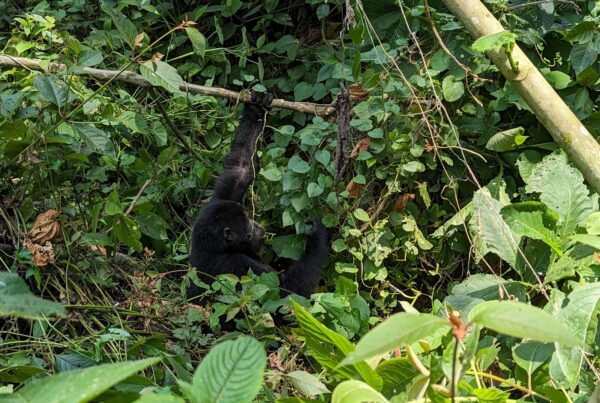
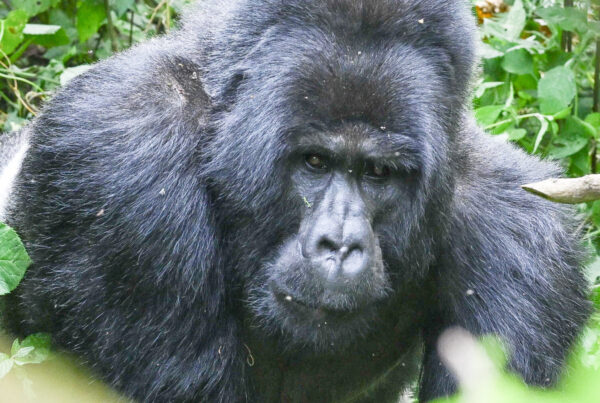
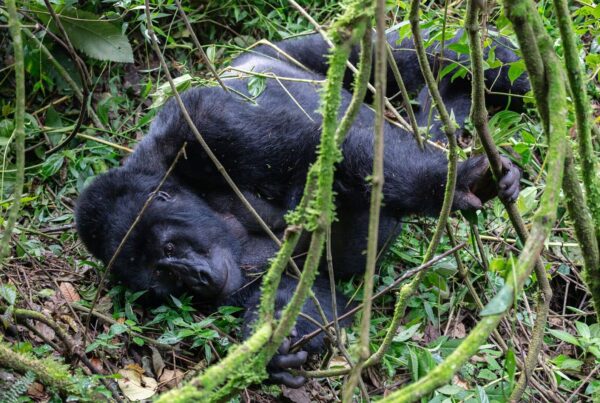
When the trackers locate the gorilla family, your guide will signal the group to slow down. You will approach quietly, crouching through the undergrowth until the gorillas come into view. The one-hour time limit begins when your group reaches viewing distance. During this hour, you will watch the gorillas feed, play, groom, rest, and interact with each other. The silverback may glance at you with calm authority. Juveniles may tumble past your feet. A mother may nurse her infant just metres away. It is an experience that words cannot adequately describe.
Photography is permitted without flash. A good zoom lens or a modern smartphone with optical zoom will capture stunning images. Keep your movements slow and deliberate. If a gorilla approaches you, stay still, lower your gaze, and do not retreat suddenly. Your guide will manage the situation calmly.
Return Trek and Afternoon
After the one-hour encounter, your guide will lead you back out of the forest. The return trek can take one to three hours depending on how far you trekked in. Most groups return to the trailhead between noon and two o’clock. You will receive a gorilla trekking certificate at park headquarters as a memento of your achievement. Back at the lodge, a late lunch will be waiting. The afternoon is free for rest, swimming if your lodge has a pool, or exploring the surrounding community on a village walk.
Day 4: Optional Activities and Transfer
Morning Options Near Bwindi
If your itinerary includes a fourth day, you have several excellent options near Bwindi. The Batwa Cultural Experience takes you into the forest with the indigenous Batwa pygmy people, who share their traditional hunting, gathering, and fire-making skills. This two-hour experience costs around eighty dollars per person and provides a moving insight into a culture that was displaced when Bwindi became a national park.
Alternatively, a guided nature walk through the forest offers exceptional birding opportunities. Bwindi is home to over three hundred and fifty bird species, including twenty-three Albertine Rift endemics. The African green broadbill, the handsome francolin, and Shelley’s crimsonwing are among the prizes for keen birders. Village walks around Buhoma or Nkuringo allow you to visit local schools, banana beer breweries, and traditional healers.
Transfer to Lake Bunyonyi or Onwards
Many itineraries include a stop at Lake Bunyonyi, one of the most beautiful lakes in Africa. The drive from Bwindi to Lake Bunyonyi takes around two to three hours. This terraced lake, surrounded by steep hills, offers canoeing, swimming, island visits, and some of the best sunsets in Uganda. It is an ideal place to decompress after the intensity of gorilla trekking. Accommodation ranges from budget hostels at around twenty dollars per night to luxury lodges at over three hundred dollars per night.
Day 5-7: Extended Itinerary Options
Adding Queen Elizabeth National Park
A popular extension is a two-day visit to Queen Elizabeth National Park, which sits about five to six hours north of Bwindi. Here you can enjoy game drives to see tree-climbing lions in the Ishasha sector, a boat cruise on the Kazinga Channel with hippos and elephants, and a chance to spot leopards, buffalo, and Uganda kob antelope. Queen Elizabeth is Uganda’s most visited national park and pairs perfectly with gorilla trekking for a well-rounded wildlife experience.
Adding Kibale Forest for Chimpanzees
For primate enthusiasts, Kibale Forest National Park offers chimpanzee trekking that rivals gorilla trekking in its intensity. The drive from Queen Elizabeth to Kibale takes about three hours. Chimpanzee permits cost two hundred dollars for foreign non-residents, and the trekking experience lasts two to three hours. Kibale is also home to twelve other primate species, making it one of the most primate-dense forests on Earth.
Return to Entebbe
The final day of most itineraries involves a transfer back to Entebbe for your departure flight. Depending on your location, this drive takes between five and ten hours. Alternatively, you can take a domestic charter flight from Kihihi airstrip near Bwindi to Entebbe in about ninety minutes, costing between two hundred and four hundred dollars one way. Your guide will ensure you arrive at Entebbe airport with plenty of time for check-in.
Quick Reference: 3-Day vs 5-Day vs 7-Day Schedules
3-Day Express Schedule
Day one: arrive Entebbe, fly to Kihihi or drive half-day to Bwindi area. Day two: gorilla trekking. Day three: transfer back to Entebbe for departure. This schedule works best if you take a domestic flight to save the long drive.
5-Day Classic Schedule
Day one: arrive Entebbe, overnight. Day two: drive to Bwindi. Day three: gorilla trekking. Day four: Batwa experience or Lake Bunyonyi. Day five: return to Entebbe. This is the most popular itinerary and offers a good balance between cost, comfort, and experience.
7-Day Ultimate Schedule
Day one: arrive Entebbe. Day two: drive to Bwindi. Day three: gorilla trekking. Day four: Batwa cultural experience and transfer to Lake Bunyonyi. Day five: drive to Queen Elizabeth National Park, afternoon boat cruise. Day six: morning game drive in Ishasha for tree-climbing lions, afternoon transfer to Kibale. Day seven: chimpanzee trekking, drive to Entebbe or fly out. This itinerary covers gorillas, chimps, big game, and cultural experiences in one trip.
Practical Tips for Your Schedule
- Always build in a buffer day before gorilla trekking in case of flight delays or road closures
- Carry snacks for long drives as roadside food options can be limited
- Download offline maps on your phone as mobile signal drops out in remote areas
- Tip your guide and porters at the end of the trip, not at the beginning
- Carry small US dollar bills for tips, park fees, and roadside purchases
- Drink plenty of water throughout the trip, especially before and after the gorilla trek
Final Thoughts
A gorilla trekking safari in Uganda is not a resort holiday where you can wing it. Every day has a purpose, a rhythm, and a set of logistics that work best when planned in advance. Understanding the day-by-day schedule helps you pack correctly, manage your energy, and arrive at each experience mentally prepared. Whether you choose a three-day sprint or a week-long immersion, the structure is designed to give you the best possible gorilla encounter while showcasing the extraordinary landscapes and cultures of southwestern Uganda.
Frequently Asked Questions
The gorilla trek day starts earlier than most visitors expect. Most Bwindi lodges serve breakfast from 5:45–6:00am for trekking guests. Transfer from lodge to sector briefing station takes 15–45 minutes depending on your lodge location. The briefing station morning briefing begins at 7:00–7:30am and lasts 30–45 minutes, covering safety rules, the specific gorilla family you will visit, what the trackers have reported about the family’s morning location, and trek estimated duration. The hike into the forest begins immediately after briefing, typically around 8:00am. This means your practical wake-up time is 5:15–5:30am on gorilla trek day. Set an alarm earlier than you think necessary — many visitors underestimate how long lodge breakfasts and gear preparation take at 5am when they are not yet fully awake. How long does the drive from Kampala or Entebbe to Bwindi take? The drive from Kampala or Entebbe to Bwindi Impenetrable National Park takes 8–10 hours under normal road conditions. The most common route passes through Mbarara (approximately 4 hours from Kampala), continues south through Ntungamo and Rukungiri, then southwest through Kihihi to the Buhoma sector entrance, or continues to Kabale and Kisoro for the southern sectors. The final section from Kabale or Kihihi to the park is on partially unpaved road, particularly in the last 20–30 kilometres. Road conditions vary significantly by season — the rainy seasons (March–May, October–November) can add 1–2 hours to the total journey. Many itineraries break the Kampala–Bwindi drive with a 2-night stop at either Kibale Forest (for chimpanzee trekking) or Queen Elizabeth National Park, which is the most efficient way to see multiple parks rather than making the full single-day drive. What happens in the evening after the gorilla trek? Trekkers return to their lodge between noon and 4pm depending on trek duration. After the physical demands of the forest, the afternoon is typically spent resting, showering, charging camera batteries, reviewing photographs, and processing the emotional weight of the encounter — most visitors describe the post-trek emotional state as a combination of exhilaration, gratitude, and fatigue. Lodge dinners near Bwindi typically start at 7pm and run to 9pm. Fellow guests’ dinner conversations on gorilla trek night are reliably among the most animated of the entire safari — everyone wants to describe their specific encounter, compare family groups, and share photographs. A useful afternoon activity if energy permits is the Buhoma Community Walk (2–3 hours, available same afternoon as the trek), which provides cultural context that complements the gorilla encounter effectively. Is it worth doing two gorilla treks on consecutive days? A second gorilla trek on consecutive days is worth doing if your budget and schedule allow. The two encounters are almost never identical — different family, different terrain, different weather, different gorilla behaviour, different light conditions — and the second trek often produces better photographs because the novelty of the experience has settled and your camera handling is more deliberate. Some visitors find the second trek produces a deeper, more observational quality of attention than the first, which tends to be dominated by the overwhelming immediacy of the encounter. The practical consideration is physical: two consecutive days of forest hiking at altitude can be demanding if the first day’s trek was long. If your first trek was 6+ hours and you felt the exertion, take an active rest day (community walk rather than second trek) before a second forest day. If your first trek was short and you feel physically capable, book the second day. What is the best 7-day Uganda gorilla safari route? The most consistently recommended 7-day Uganda gorilla safari route is: Day 1 arrive Entebbe; Day 2 drive to Kibale Forest (5–6 hours), afternoon rest; Day 3 chimpanzee trekking at Kibale; Day 4 drive to Queen Elizabeth NP (3 hours), afternoon Kazinga Channel boat safari; Day 5 Queen Elizabeth game drive, drive to Bwindi (2–3 hours); Day 6 gorilla trekking at Bwindi; Day 7 drive Bwindi to Entebbe for departure flight. This route covers three major habitats (forest primates at Kibale, savannah big game and hippos at Queen Elizabeth, mountain gorillas at Bwindi), uses road transfers without domestic flights for moderate budget, and gives each park enough time to produce the experience it’s known for. Visitors with one extra day should add a second gorilla trek or Buhoma community afternoon; visitors with a 10-day trip should add Murchison Falls at the beginning. Plan your Uganda safari schedule Gorilla Permit Guide — the permit date is the fixed point around which the schedule is built Uganda Gorilla Families — which family your scheduled trek will visit Bwindi Sector Guide — sector choice affects travel route and lodge options Full Safari Cost Guide — day-by-day cost breakdown for the schedule above Safari Itineraries — full 5, 7, 10, and 14-day Uganda circuit designs Further Reading What Bwindi Impenetrable Forest Looks Like From the Air: Drone Footage What Gorilla Trekking Looks Like in Every Month of the Year: Photo Guide Shoebill Stork Facts: The Bird That Looks Like It Survived the Dinosaurs Kampala to Bwindi by Private Car: What the Drive Really Looks Like 2027 Lake Bunyonyi vs Lake Kivu: The Ultimate African Summer Beach Escape Beach Holidays Uganda gorilla trekking from Nairobi: fly in and reach Bwindi in one day What Time Does Gorilla Trekking Start? Schedules Explained for Uganda Bus to Bwindi from Kampala: Schedules and Booking Guide Can You See Gorillas Every Day in Uganda? Understanding Trekking Schedules and Success Rates <
The drive from Kampala or Entebbe to Bwindi Impenetrable National Park takes 8–10 hours under normal road conditions. The most common route passes through Mbarara (approximately 4 hours from Kampala), continues south through Ntungamo and Rukungiri, then southwest through Kihihi to the Buhoma sector entrance, or continues to Kabale and Kisoro for the southern sectors. The final section from Kabale or Kihihi to the park is on partially unpaved road, particularly in the last 20–30 kilometres. Road conditions vary significantly by season — the rainy seasons (March–May, October–November) can add 1–2 hours to the total journey. Many itineraries break the Kampala–Bwindi drive with a 2-night stop at either Kibale Forest (for chimpanzee trekking) or Queen Elizabeth National Park, which is the most efficient way to see multiple parks rather than making the full single-day drive. What happens in the evening after the gorilla trek? Trekkers return to their lodge between noon and 4pm depending on trek duration. After the physical demands of the forest, the afternoon is typically spent resting, showering, charging camera batteries, reviewing photographs, and processing the emotional weight of the encounter — most visitors describe the post-trek emotional state as a combination of exhilaration, gratitude, and fatigue. Lodge dinners near Bwindi typically start at 7pm and run to 9pm. Fellow guests’ dinner conversations on gorilla trek night are reliably among the most animated of the entire safari — everyone wants to describe their specific encounter, compare family groups, and share photographs. A useful afternoon activity if energy permits is the Buhoma Community Walk (2–3 hours, available same afternoon as the trek), which provides cultural context that complements the gorilla encounter effectively. Is it worth doing two gorilla treks on consecutive days? A second gorilla trek on consecutive days is worth doing if your budget and schedule allow. The two encounters are almost never identical — different family, different terrain, different weather, different gorilla behaviour, different light conditions — and the second trek often produces better photographs because the novelty of the experience has settled and your camera handling is more deliberate. Some visitors find the second trek produces a deeper, more observational quality of attention than the first, which tends to be dominated by the overwhelming immediacy of the encounter. The practical consideration is physical: two consecutive days of forest hiking at altitude can be demanding if the first day’s trek was long. If your first trek was 6+ hours and you felt the exertion, take an active rest day (community walk rather than second trek) before a second forest day. If your first trek was short and you feel physically capable, book the second day. What is the best 7-day Uganda gorilla safari route? The most consistently recommended 7-day Uganda gorilla safari route is: Day 1 arrive Entebbe; Day 2 drive to Kibale Forest (5–6 hours), afternoon rest; Day 3 chimpanzee trekking at Kibale; Day 4 drive to Queen Elizabeth NP (3 hours), afternoon Kazinga Channel boat safari; Day 5 Queen Elizabeth game drive, drive to Bwindi (2–3 hours); Day 6 gorilla trekking at Bwindi; Day 7 drive Bwindi to Entebbe for departure flight. This route covers three major habitats (forest primates at Kibale, savannah big game and hippos at Queen Elizabeth, mountain gorillas at Bwindi), uses road transfers without domestic flights for moderate budget, and gives each park enough time to produce the experience it’s known for. Visitors with one extra day should add a second gorilla trek or Buhoma community afternoon; visitors with a 10-day trip should add Murchison Falls at the beginning. Plan your Uganda safari schedule Gorilla Permit Guide — the permit date is the fixed point around which the schedule is built Uganda Gorilla Families — which family your scheduled trek will visit Bwindi Sector Guide — sector choice affects travel route and lodge options Full Safari Cost Guide — day-by-day cost breakdown for the schedule above Safari Itineraries — full 5, 7, 10, and 14-day Uganda circuit designs Further Reading What Bwindi Impenetrable Forest Looks Like From the Air: Drone Footage What Gorilla Trekking Looks Like in Every Month of the Year: Photo Guide Shoebill Stork Facts: The Bird That Looks Like It Survived the Dinosaurs Kampala to Bwindi by Private Car: What the Drive Really Looks Like 2027 Lake Bunyonyi vs Lake Kivu: The Ultimate African Summer Beach Escape Beach Holidays Uganda gorilla trekking from Nairobi: fly in and reach Bwindi in one day What Time Does Gorilla Trekking Start? Schedules Explained for Uganda Bus to Bwindi from Kampala: Schedules and Booking Guide Can You See Gorillas Every Day in Uganda? Understanding Trekking Schedules and Success Rates <
Trekkers return to their lodge between noon and 4pm depending on trek duration. After the physical demands of the forest, the afternoon is typically spent resting, showering, charging camera batteries, reviewing photographs, and processing the emotional weight of the encounter — most visitors describe the post-trek emotional state as a combination of exhilaration, gratitude, and fatigue. Lodge dinners near Bwindi typically start at 7pm and run to 9pm. Fellow guests’ dinner conversations on gorilla trek night are reliably among the most animated of the entire safari — everyone wants to describe their specific encounter, compare family groups, and share photographs. A useful afternoon activity if energy permits is the Buhoma Community Walk (2–3 hours, available same afternoon as the trek), which provides cultural context that complements the gorilla encounter effectively. Is it worth doing two gorilla treks on consecutive days? A second gorilla trek on consecutive days is worth doing if your budget and schedule allow. The two encounters are almost never identical — different family, different terrain, different weather, different gorilla behaviour, different light conditions — and the second trek often produces better photographs because the novelty of the experience has settled and your camera handling is more deliberate. Some visitors find the second trek produces a deeper, more observational quality of attention than the first, which tends to be dominated by the overwhelming immediacy of the encounter. The practical consideration is physical: two consecutive days of forest hiking at altitude can be demanding if the first day’s trek was long. If your first trek was 6+ hours and you felt the exertion, take an active rest day (community walk rather than second trek) before a second forest day. If your first trek was short and you feel physically capable, book the second day. What is the best 7-day Uganda gorilla safari route? The most consistently recommended 7-day Uganda gorilla safari route is: Day 1 arrive Entebbe; Day 2 drive to Kibale Forest (5–6 hours), afternoon rest; Day 3 chimpanzee trekking at Kibale; Day 4 drive to Queen Elizabeth NP (3 hours), afternoon Kazinga Channel boat safari; Day 5 Queen Elizabeth game drive, drive to Bwindi (2–3 hours); Day 6 gorilla trekking at Bwindi; Day 7 drive Bwindi to Entebbe for departure flight. This route covers three major habitats (forest primates at Kibale, savannah big game and hippos at Queen Elizabeth, mountain gorillas at Bwindi), uses road transfers without domestic flights for moderate budget, and gives each park enough time to produce the experience it’s known for. Visitors with one extra day should add a second gorilla trek or Buhoma community afternoon; visitors with a 10-day trip should add Murchison Falls at the beginning. Plan your Uganda safari schedule Gorilla Permit Guide — the permit date is the fixed point around which the schedule is built Uganda Gorilla Families — which family your scheduled trek will visit Bwindi Sector Guide — sector choice affects travel route and lodge options Full Safari Cost Guide — day-by-day cost breakdown for the schedule above Safari Itineraries — full 5, 7, 10, and 14-day Uganda circuit designs Further Reading What Bwindi Impenetrable Forest Looks Like From the Air: Drone Footage What Gorilla Trekking Looks Like in Every Month of the Year: Photo Guide Shoebill Stork Facts: The Bird That Looks Like It Survived the Dinosaurs Kampala to Bwindi by Private Car: What the Drive Really Looks Like 2027 Lake Bunyonyi vs Lake Kivu: The Ultimate African Summer Beach Escape Beach Holidays Uganda gorilla trekking from Nairobi: fly in and reach Bwindi in one day What Time Does Gorilla Trekking Start? Schedules Explained for Uganda Bus to Bwindi from Kampala: Schedules and Booking Guide Can You See Gorillas Every Day in Uganda? Understanding Trekking Schedules and Success Rates <
A second gorilla trek on consecutive days is worth doing if your budget and schedule allow. The two encounters are almost never identical — different family, different terrain, different weather, different gorilla behaviour, different light conditions — and the second trek often produces better photographs because the novelty of the experience has settled and your camera handling is more deliberate. Some visitors find the second trek produces a deeper, more observational quality of attention than the first, which tends to be dominated by the overwhelming immediacy of the encounter. The practical consideration is physical: two consecutive days of forest hiking at altitude can be demanding if the first day’s trek was long. If your first trek was 6+ hours and you felt the exertion, take an active rest day (community walk rather than second trek) before a second forest day. If your first trek was short and you feel physically capable, book the second day. What is the best 7-day Uganda gorilla safari route? The most consistently recommended 7-day Uganda gorilla safari route is: Day 1 arrive Entebbe; Day 2 drive to Kibale Forest (5–6 hours), afternoon rest; Day 3 chimpanzee trekking at Kibale; Day 4 drive to Queen Elizabeth NP (3 hours), afternoon Kazinga Channel boat safari; Day 5 Queen Elizabeth game drive, drive to Bwindi (2–3 hours); Day 6 gorilla trekking at Bwindi; Day 7 drive Bwindi to Entebbe for departure flight. This route covers three major habitats (forest primates at Kibale, savannah big game and hippos at Queen Elizabeth, mountain gorillas at Bwindi), uses road transfers without domestic flights for moderate budget, and gives each park enough time to produce the experience it’s known for. Visitors with one extra day should add a second gorilla trek or Buhoma community afternoon; visitors with a 10-day trip should add Murchison Falls at the beginning. Plan your Uganda safari schedule Gorilla Permit Guide — the permit date is the fixed point around which the schedule is built Uganda Gorilla Families — which family your scheduled trek will visit Bwindi Sector Guide — sector choice affects travel route and lodge options Full Safari Cost Guide — day-by-day cost breakdown for the schedule above Safari Itineraries — full 5, 7, 10, and 14-day Uganda circuit designs Further Reading What Bwindi Impenetrable Forest Looks Like From the Air: Drone Footage What Gorilla Trekking Looks Like in Every Month of the Year: Photo Guide Shoebill Stork Facts: The Bird That Looks Like It Survived the Dinosaurs Kampala to Bwindi by Private Car: What the Drive Really Looks Like 2027 Lake Bunyonyi vs Lake Kivu: The Ultimate African Summer Beach Escape Beach Holidays Uganda gorilla trekking from Nairobi: fly in and reach Bwindi in one day What Time Does Gorilla Trekking Start? Schedules Explained for Uganda Bus to Bwindi from Kampala: Schedules and Booking Guide Can You See Gorillas Every Day in Uganda? Understanding Trekking Schedules and Success Rates <
The most consistently recommended 7-day Uganda gorilla safari route is: Day 1 arrive Entebbe; Day 2 drive to Kibale Forest (5–6 hours), afternoon rest; Day 3 chimpanzee trekking at Kibale; Day 4 drive to Queen Elizabeth NP (3 hours), afternoon Kazinga Channel boat safari; Day 5 Queen Elizabeth game drive, drive to Bwindi (2–3 hours); Day 6 gorilla trekking at Bwindi; Day 7 drive Bwindi to Entebbe for departure flight. This route covers three major habitats (forest primates at Kibale, savannah big game and hippos at Queen Elizabeth, mountain gorillas at Bwindi), uses road transfers without domestic flights for moderate budget, and gives each park enough time to produce the experience it’s known for. Visitors with one extra day should add a second gorilla trek or Buhoma community afternoon; visitors with a 10-day trip should add Murchison Falls at the beginning. Plan your Uganda safari schedule Gorilla Permit Guide — the permit date is the fixed point around which the schedule is built Uganda Gorilla Families — which family your scheduled trek will visit Bwindi Sector Guide — sector choice affects travel route and lodge options Full Safari Cost Guide — day-by-day cost breakdown for the schedule above Safari Itineraries — full 5, 7, 10, and 14-day Uganda circuit designs Further Reading What Bwindi Impenetrable Forest Looks Like From the Air: Drone Footage What Gorilla Trekking Looks Like in Every Month of the Year: Photo Guide Shoebill Stork Facts: The Bird That Looks Like It Survived the Dinosaurs Kampala to Bwindi by Private Car: What the Drive Really Looks Like 2027 Lake Bunyonyi vs Lake Kivu: The Ultimate African Summer Beach Escape Beach Holidays Uganda gorilla trekking from Nairobi: fly in and reach Bwindi in one day What Time Does Gorilla Trekking Start? Schedules Explained for Uganda Bus to Bwindi from Kampala: Schedules and Booking Guide Can You See Gorillas Every Day in Uganda? Understanding Trekking Schedules and Success Rates <