

Updated
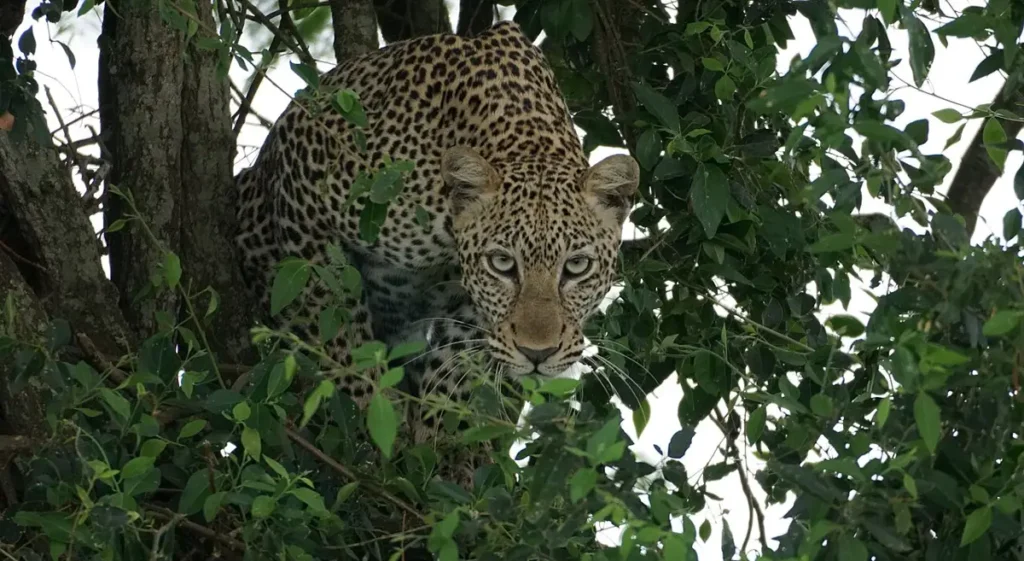
The leopard is Uganda’s most widespread big cat, living in savannah, forest and rocky hills, but it is shy, mostly nocturnal and hard to see. Its rosette-patterned coat gives it superb camouflage. The best chances in Uganda are in Lake Mburo, around Mweya and Kasenyi in Queen Elizabeth, on the northern bank of Murchison Falls and in Kidepo Valley, especially at dawn, dusk and on night drives.
Habits
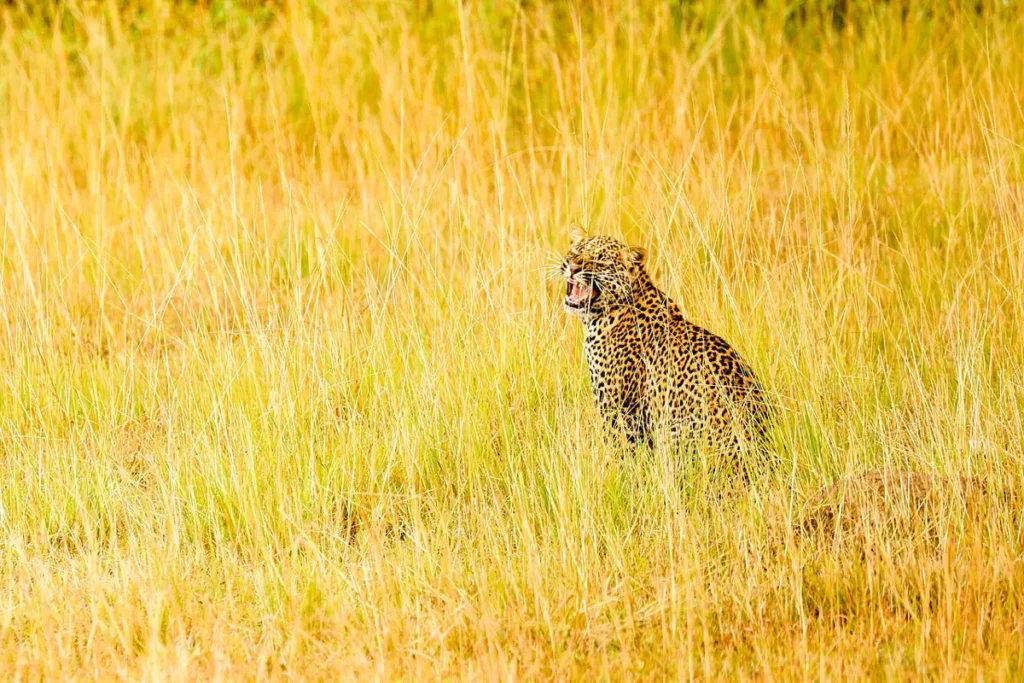
Leopards are solitary, and each holds a territory marked with scent, scratches and calls that sound like a rasping saw. They hunt mostly at night, stalking close before a short rush, and take a wide range of prey, from rodents and birds to kob, bushbuck and young buffaloes. They are very strong and often haul kills into trees, away from lions and hyenas.
Leopards in forests
Leopards also live in Bwindi and Kibale, where they hunt monkeys, duikers and pigs. They are almost never seen there, though rangers sometimes find tracks and camera traps record them. In savannah parks, sightings are more likely in rocky areas, along rivers and in trees near open plains.
Where to see it
Lake Mburo is often the best bet, especially on a night drive, followed by Queen Elizabeth around Mweya. The gorilla permit costs US$800, or US$600 in April, May and November. See our guides to Lake Mburo, Queen Elizabeth, night game drives and lions in Uganda.
Frequently asked questions
Lake Mburo, Queen Elizabeth around Mweya, Murchison and Kidepo.
They are shy, solitary, well camouflaged and mostly active at night.
Yes, but they are almost never seen.
To keep it away from lions and hyenas.










