

Updated
Chimpanzees are, with bonobos, our closest living relatives, sharing about 98 to 99 percent of our DNA. They live in large communities, make and use tools, hunt monkeys, and pass on learned habits that differ between groups, which researchers describe as culture. Uganda has roughly 5,000 eastern chimpanzees, and Kibale Forest has one of the highest densities in Africa and the most reliable chimp trekking.
Community life
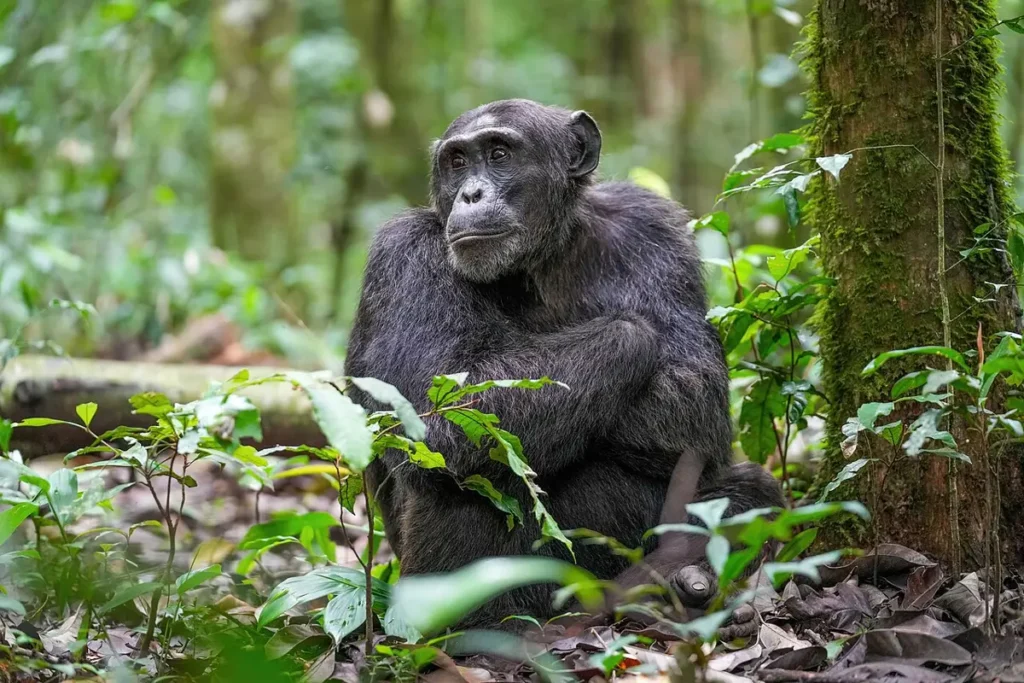
A chimp community can number from about 20 to over 150, but members split into smaller parties that change through the day, a system called fission-fusion. Males stay in the community they were born in and compete for rank, while females usually move to a new community as young adults. The Ngogo community in Kibale is one of the largest ever studied, with over 150 members.
Tools, hunting and culture
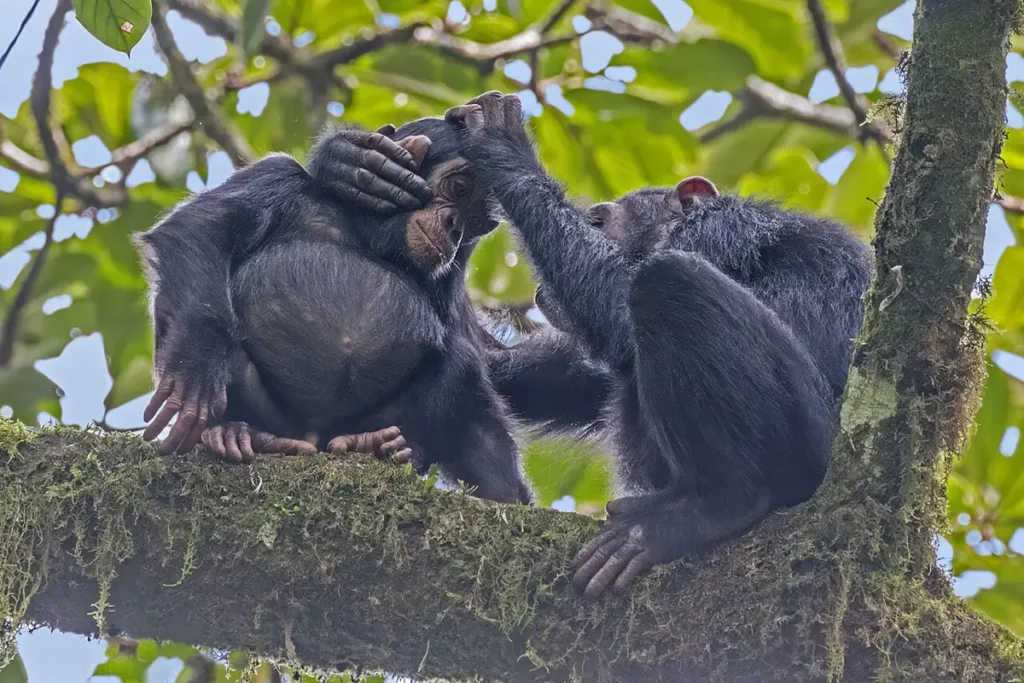
Chimps use sticks to fish for termites and ants, stones to crack nuts in some regions, and leaves as sponges. They hunt monkeys, especially red colobus in Kibale, often cooperatively, and share meat. Researchers have recorded dozens of behaviours that vary between communities and are learned rather than instinctive. Wild chimps can live 40 to 50 years. The species is listed as Endangered.
Seeing chimpanzees in Uganda
Kibale is the best place, and chimps can also be tracked in Budongo, Kalinzu and Kyambura Gorge. The Kibale chimp permit is US$250, rising to US$300 from 1 January 2027. The gorilla permit costs US$800, or US$600 in April, May and November. See our guides to Kibale Forest, chimp versus gorilla trekking, the red colobus and things to do near Kibale.
Frequently asked questions
About 98 to 99 percent.
Roughly 5,000.
Kibale Forest National Park.
Yes, they are listed as Endangered.










