

Updated
Nsenene, long-horned grasshoppers, are one of Uganda’s best-loved seasonal snacks. They swarm during the rainy seasons, mainly around November and to a lesser extent around April and May, when they are caught at night with bright lights and sold fried with onion and salt in markets, at roadsides and in bags in Kampala. Flying termites, called enswa, are another rainy-season delicacy, eaten fried or raw. Here is why they are prized and how to try them.
How nsenene are caught and cooked
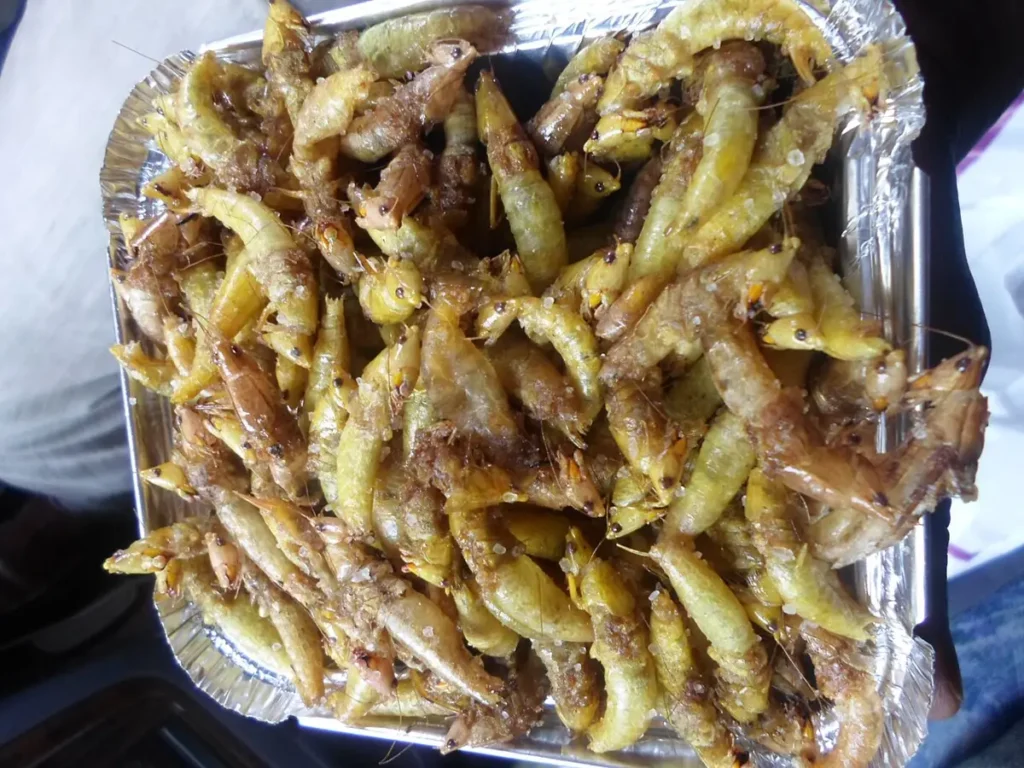
During the nsenene season, traders set up tall lights, metal sheets and drums in towns such as Masaka, Kampala and Mbarara; the grasshoppers fly to the light, slide down the sheets and are collected. Women and children also catch them by hand in the grass. The legs and wings are removed, and the grasshoppers are fried in their own fat with a little onion, salt and sometimes chilli until crisp. They taste nutty and savoury, rather like crispy bacon or prawn.
Culture and nutrition
In Buganda tradition, nsenene were once gathered by women and children and given to husbands and elders, and the season is still a time of excitement. Grasshoppers and termites are high in protein and fat, and research has promoted edible insects as a sustainable food. Prices rise and fall with the swarms, and catches have become less predictable as habitats and climate change. The light traps are also controversial because they draw huge numbers of other insects.
Flying termites
After heavy rain, winged termites emerge from mounds in large numbers. People catch them with lights or by covering mounds, and eat them fried, sun-dried, or raw, sometimes ground into a paste. They are especially popular in the north, east and in Buganda. See our guides to Kampala street food and Ugandan food markets.
Trying them
If you visit in nsenene season, buy a small bag of freshly fried grasshoppers from a busy stall. People with shellfish allergies should be cautious, as insects can trigger similar reactions. Outside the season, packaged dried nsenene are sometimes sold in supermarkets. Combine a taste with a market visit before or after your gorilla trek, where the permit costs US$800, or US$600 in April, May and November. See our November gorilla trekking guide and our matoke guide.
Frequently asked questions
Long-horned grasshoppers, fried and eaten as a seasonal snack in Uganda.
Mainly around November, with a smaller season around April and May.
Crisp, nutty and savoury.
Be cautious; insects can cause similar allergic reactions.










