

Updated
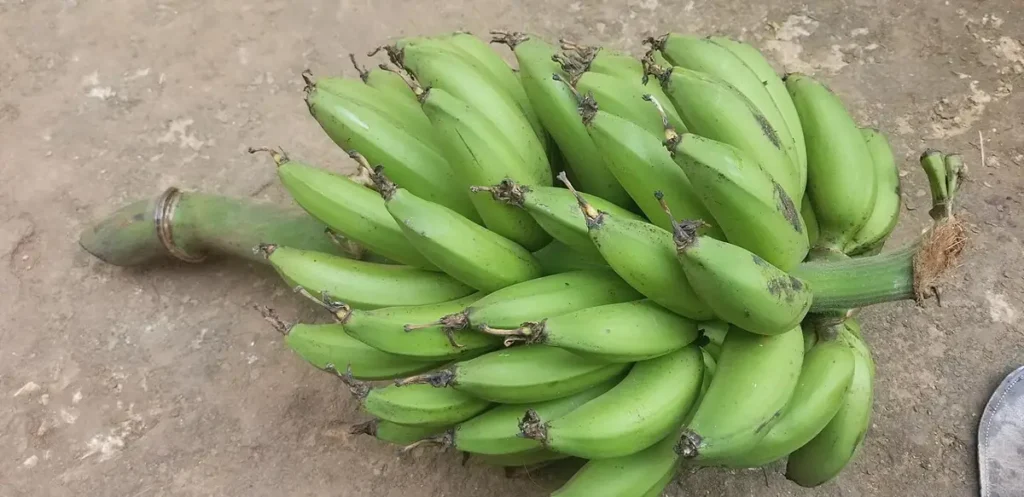
Matooke (often spelled matoke) is Uganda’s national dish: green East African highland cooking bananas, peeled, wrapped in banana leaves, steamed until soft and mashed into a smooth, pale yellow mound. It tastes mild and slightly sweet, more like potato than dessert banana, and is eaten with a sauce: groundnut (peanut) sauce, beans, or a beef, goat, chicken or fish stew. The same word also means the cooking bananas themselves, sold in huge green bunches at every market. You will meet it at lodges and roadside restaurants throughout a gorilla safari.
Why matooke matters
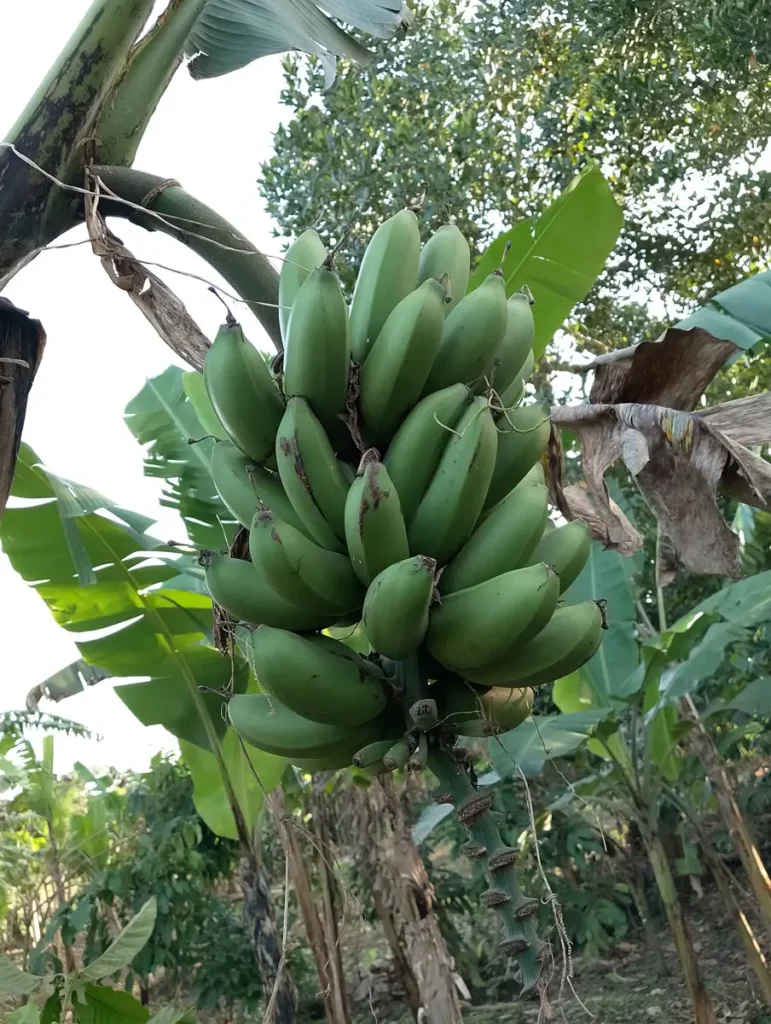
Uganda is one of the world’s largest producers and eaters of cooking bananas, and in central and western Uganda matooke has long been the main staple. The banana gardens around homesteads in Buganda are central to the culture, and in the south-west, the districts around Mbarara, Bushenyi and Isingiro form a major banana belt supplying the rest of the country. Lorries piled with green bunches heading to Kampala are a common sight on the road to Bwindi. For many families, a meal without matooke does not feel like a proper meal.
How it is cooked
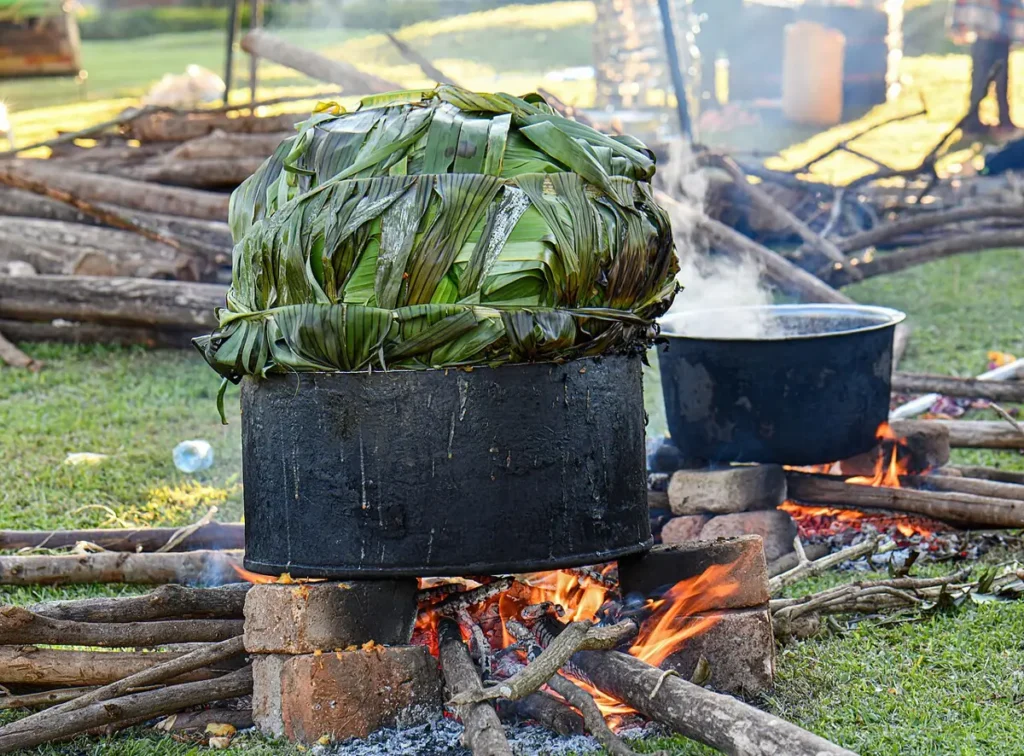
The traditional method starts with peeling the green bananas, a sticky job because the sap stains hands and clothes, so cooks often oil their hands or wear gloves. The peeled fingers are wrapped tightly in banana leaves and steamed over a pot of water for an hour or more until soft. Still inside the leaves, they are pressed and kneaded into a smooth mash, then kept warm in the leaves until serving. Steaming in leaves gives matooke its fragrance and colour; boiled matooke is quicker but less prized.
What it is served with
The classic pairing is groundnut sauce, sometimes cooked with smoked fish or mushrooms. Beans, meat stews and greens are just as common. In Ankole, near Mbarara, matooke is often served with eshabwe, a creamy sauce made from ghee. Katogo, a breakfast dish of matooke cooked together with beans, offal or meat in one pot, is popular across the country. Our guide to Ugandan food basics covers the other staples.
Trying matooke on safari
Many lodges serve matooke at dinner, often alongside international dishes; if it is not on the menu, ask, as kitchens are usually happy to make it. Roadside restaurants on the drive to Bwindi serve lunch buffets with matooke, rice, posho, stews and greens. Some lodges and community groups around Bwindi offer cooking demonstrations, where you can help peel and steam matooke and learn about the banana garden. See our guide to where to eat near Bwindi.
Making it at home
Outside Uganda, green cooking bananas are sold in African and Caribbean shops; green plantains are a reasonable substitute, though the texture differs. Peel them, wrap in banana leaves or foil, steam for about an hour until soft, then mash and serve with a simple groundnut sauce made by simmering peanut flour or smooth peanut butter with tomato, onion and water. Matooke is vegetarian and, with a groundnut or bean sauce, vegan; see our vegetarian food guide. For street food to try alongside it, read about the Ugandan rolex.
Frequently asked questions
Green cooking bananas, steamed in banana leaves and mashed. It is Uganda’s national dish.
Mild and slightly sweet, closer to potato than to a dessert banana.
Groundnut sauce, beans, meat or fish stews, or eshabwe in western Uganda.
No. They are related, but matooke comes from East African highland bananas with a different texture.










