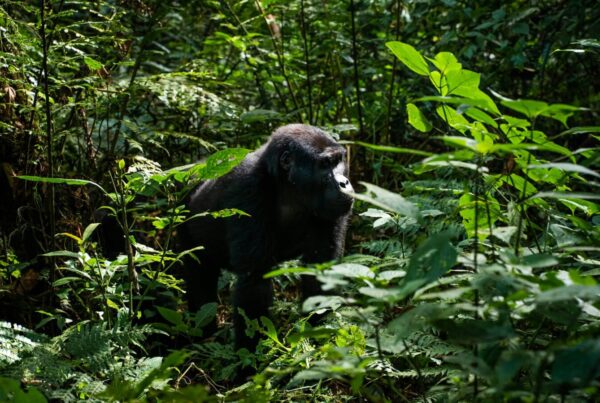
November is a wetter, quieter month for gorilla trekking in Uganda, during the short rains, and one of the three months when the gorilla permit costs US$600 instead of US$800. Expect showers on many days, often in the afternoon, and muddy trails, but also easy availability for permits and lodges, lower lodge rates and a very green forest. Rain usually eases towards the end of the month as the December dry season approaches, making late November a good-value time to go.
Weather in November
Temperatures at Bwindi stay mild, around 10–15°C at dawn and low 20s°C in the afternoon. The short rains bring frequent showers and some heavy storms, typically less prolonged than the long rains of April. Mornings are often clear, and rainfall tends to decrease late in the month. See our guide to weather at Bwindi.
Trekking in November
Trails can be slippery, so wear waterproof boots with good grip, use a walking stick and hire a porter for about US$15–20. Gorillas are tracked every morning and found as reliably as in the dry season. Treks may take longer on wet ground, but groups are often smaller and the forest quieter. Birders enjoy November, as migrant birds from Europe and Asia are present. See our guide to trekking in the rain.
Why November is good value
The US$600 permit saves US$200 per person, and many lodges offer green-season rates. Permits and lodges are easy to book, often just a few weeks ahead, and you can usually choose your sector. If you want to travel before the busy Christmas period, late November gives you low-season prices with improving weather. See our guide to finding genuine deals.
What to pack and plan
Pack a waterproof jacket and trousers, gaiters, gloves, warm layers, a camera rain cover and dry bag, and insect repellent. Allow extra time for road transfers after heavy rain, and leave buffer time around domestic flights, which low cloud can delay. See our packing list, compare October and December, or read our guide to the best time for gorilla trekking.
Frequently asked questions
Yes, for value and quiet trails. Expect rain, but permits are cheaper and easier to book.
US$600 for foreign non-residents.
Showers are common during the short rains, usually easing late in the month.
A few weeks is often enough, though earlier booking gives more choice.
November’s Low Season Character
November is the quietest month in Uganda’s gorilla trekking calendar, sitting in the heart of the short rainy season when visitor numbers are at their annual low point. For visitors willing to accept wet conditions, November offers the most uncrowded experience of any time of year: smaller groups at the morning briefing, a more relaxed pace to the sector gate, and an atmospheric forest environment where the rain and mist create conditions that genuinely feel like a wilderness encounter rather than a managed tourism experience.
November’s Practical Advantages
The operational advantages of a November gorilla trek extend beyond the philosophical appeal of the off-season. Permit availability is excellent, often including same-sector bookings with only 2 to 3 weeks’ lead time. Accommodation near Bwindi’s sectors offers genuine value, with many lodges at their lowest annual rates. Tour operator packages in November typically include more supplementary activities — forest walks, community visits, birding sessions — at the same price as a stripped-back peak season package. The additional activities fill the full itinerary without additional cost.
Managing November Rain
The preparation for a November trek is straightforward once the rain is accepted as part of the experience rather than something to be avoided. Gaiters, waterproof trousers, a real rain jacket rather than a splash-proof outer layer, and a dry bag inside the daypack for camera equipment are the functional additions to standard gorilla trekking kit. The morning briefing area at Bwindi’s sector gates has covered waiting areas that make the pre-trek period comfortable regardless of weather. The trail itself in November is the most demanding of the year, but for physically capable visitors, slippery trails add rather than subtract from the experience of immersion in a genuinely wild forest environment.
November’s low visitor numbers sometimes allow UWA to consolidate trekking groups, meaning that a November trek may proceed with fewer participants than the maximum 8 per family that applies during peak months. A smaller group in the forest is quieter, produces less disturbance during the gorilla encounter, and creates a more intimate atmosphere that several veteran gorilla trekkers have identified as their preferred experience — precisely because it replicates the conditions of the gorilla encounter’s earliest years, before the permit system expanded visitor access to its current scale.