

Updated
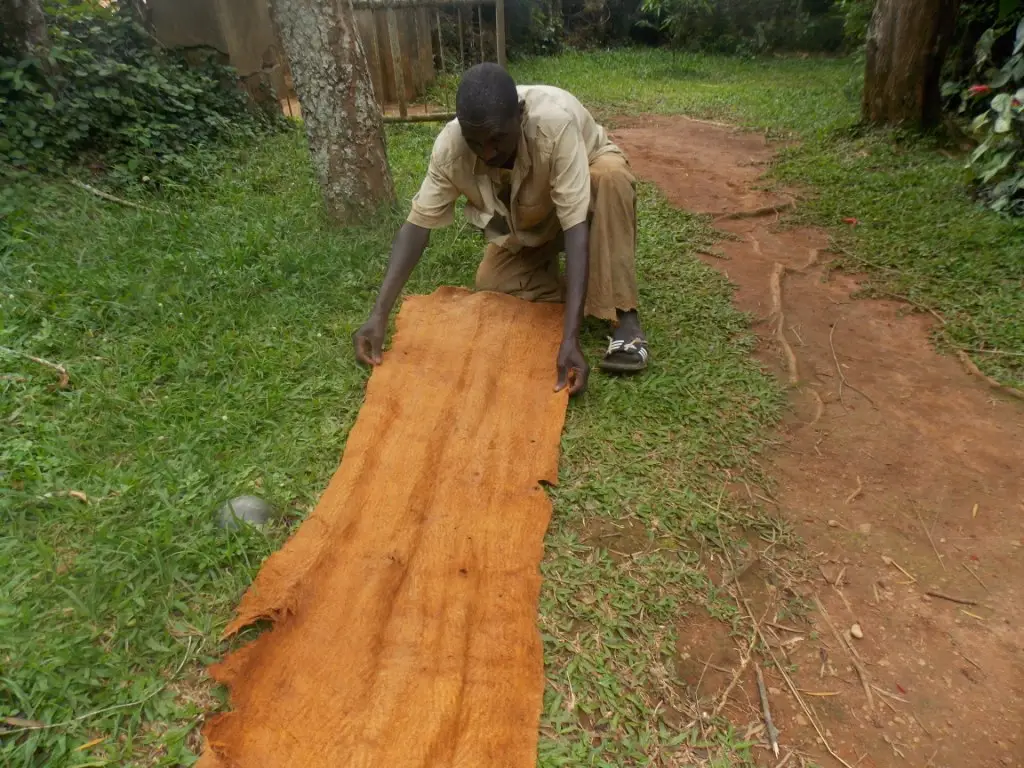
Bark cloth, or olubugo in Luganda, is a cloth made by beating the inner bark of the mutuba fig tree until it becomes a thin, soft sheet that dries to a rich terracotta colour. It is one of the oldest crafts in Africa, central to Buganda’s royal and ceremonial life, and was recognised by UNESCO in 2005 as a Masterpiece of the Oral and Intangible Heritage of Humanity. Today it is used in ceremonies, burial, fashion, art and home décor.
How bark cloth is made
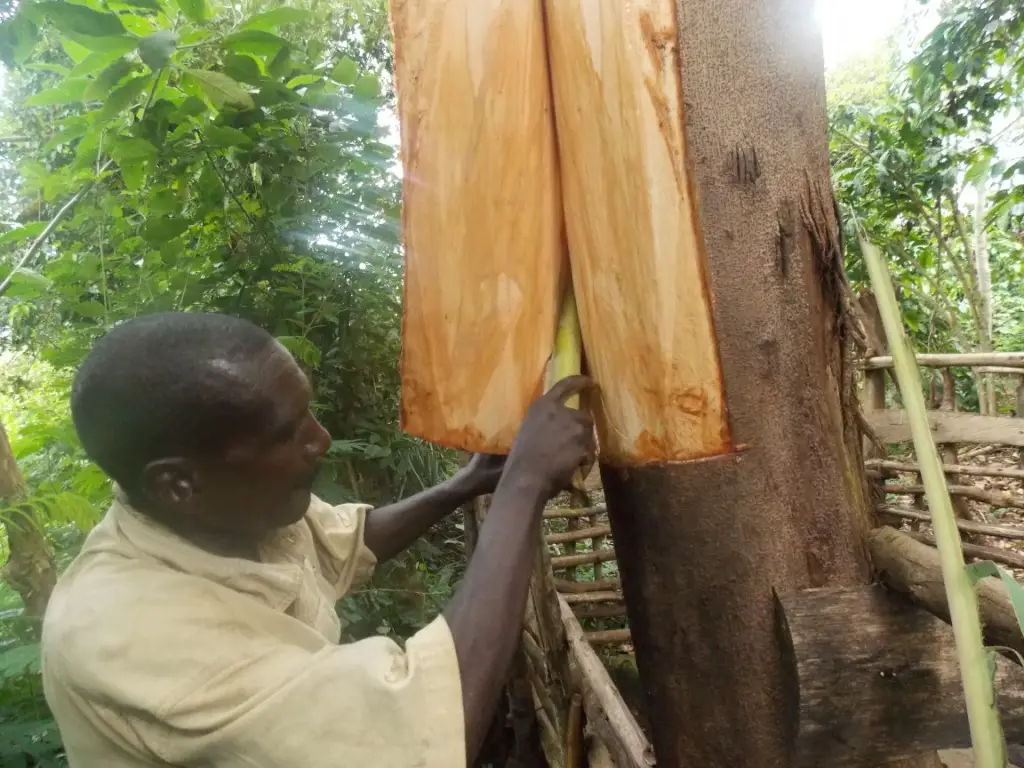
During the wet season, the craftsman cuts around the trunk of a mature mutuba tree and peels off the inner bark in one large piece. The bark is softened, often by steaming over a fire, then laid on a log and beaten with wooden mallets, starting with a coarse grooved one and finishing with finer ones, until it forms a broad, even sheet. Left in the sun, it turns from cream to reddish-brown. The tree, wrapped in banana leaves, regrows its bark and can be harvested again.
Its place in Buganda culture
Bark cloth was traditionally made by specialist craftsmen, and a particular clan has long held the role of making cloth for the Kabaka. It was worn as everyday clothing before woven cotton spread in the 19th and 20th centuries, and it remains important at coronations, weddings, cultural ceremonies and especially funerals, where the dead are wrapped in it. At the Kasubi Tombs, bark cloth lines the royal burial house. See our guides to the Kasubi Tombs and the Buganda kingdom.
Seeing and buying bark cloth
Workshops in Mpigi district, south-west of Kampala on the road towards Masaka, demonstrate the process, and the Uganda Museum and craft shops in Kampala display and sell it. Modern designers use bark cloth for bags, hats, wall hangings and even fashion collections. Buy from makers or shops that can tell you where it was made, and keep it dry, as it is sensitive to moisture. See our guide to ethical craft shopping.
A Mpigi stop fits easily into the drive west towards the gorillas, where the permit costs US$800, or US$600 in April, May and November. See our guide to cultural sites in Uganda.
Frequently asked questions
The inner bark of the mutuba fig tree, beaten into a thin sheet.
Yes, recognised by UNESCO in 2005.
No. The tree regrows its bark and can be harvested again.
At workshops in Mpigi district, south-west of Kampala.










