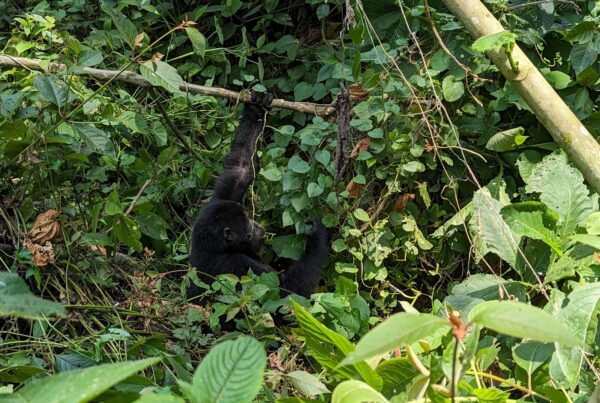
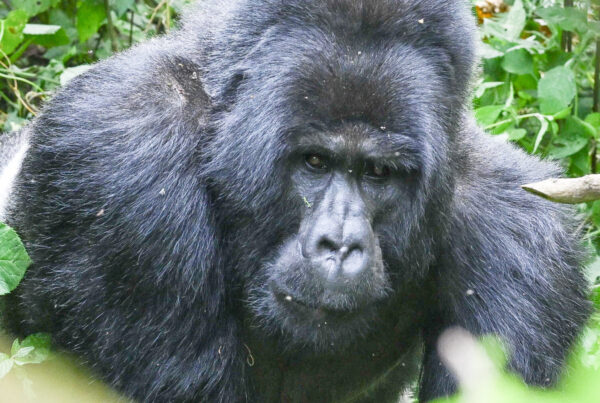
Uganda holds approximately 5,000 wild chimpanzees — the highest concentration of habituated, accessible chimpanzee communities in Africa — distributed across Kibale Forest National Park (the primary destination), Budongo Forest in Murchison Falls NP, Kyambura Gorge in Queen Elizabeth NP, and Bwindi Impenetrable NP, each offering distinct encounter conditions ranging from Kibale’s large, highly active communities of 80–150 individuals to Kyambura’s smaller gorge-dwelling group whose fragmented forest habitat gives the encounter a different ecological narrative alongside the wildlife spectacle. Combining chimpanzee trekking at Kibale with gorilla trekking at Bwindi is Uganda’s flagship double-primate itinerary — both the most frequently recommended Uganda experience and the most logistically efficient way to see two different great ape species in a single 7–10 day trip, with Queen Elizabeth National Park sitting between the two forest parks as the natural overnight stop that adds big game to the primate circuit. For Bwindi gorilla permit booking, see the permit guide; for the dual-park itinerary that integrates both primate treks, see the safari itineraries.
Uganda Chimpanzee Trekking: Key Facts
- Primary destination: Kibale Forest National Park — highest chimpanzee density in Africa (1,500 chimps in park)
- Encounter duration: 60 minutes with habituated community (same format as gorilla trekking)
- Success rate: 90%+ — lower than gorilla trekking’s 98–99% because chimps range more widely than gorillas
- Other sites: Budongo (Murchison), Kyambura Gorge (Queen Elizabeth), Ngamba Island Chimpanzee Sanctuary
- Permit cost: significantly lower than gorilla permits — confirm current Kibale chimpanzee permit price with operator
- Best combined with: gorilla trekking at Bwindi on same drive route via Fort Portal → Queen Elizabeth → Bwindi
Uganda is world-renowned for mountain gorilla trekking, but the country offers another equally thrilling primate encounter — chimpanzee trekking. With an estimated 5,000 chimpanzees living across Uganda’s forests and national parks, Uganda ranks among Africa’s best destinations for observing our closest living relatives in the wild. Kibale Forest National Park stands at the center of Uganda’s chimpanzee trekking circuit, but chimpanzees can also be tracked in Budongo Forest, Kyambura Gorge, and Bwindi Impenetrable National Park itself.
Why Uganda is Africa’s Premier Chimpanzee Destination
Uganda holds approximately 15 percent of the world’s total wild chimpanzee population. The combination of protected forest habitat, well-organized trekking programs, and habituated chimpanzee communities makes Uganda the easiest place on the continent to reliably encounter wild chimpanzees. Unlike gorilla trekking, where you visit a single family group, chimpanzees live in large communities that can number 80 to 150 individuals, making encounters dynamic and unpredictable in the best possible way.
Chimpanzees vs Mountain Gorillas
While gorillas share roughly 98.3 percent of their DNA with humans, chimpanzees are even closer at 98.7 percent. Chimpanzees are more energetic, vocal, and behaviourally complex than gorillas. They use tools, wage warfare, hunt other primates, and display sophisticated social hierarchies. Watching a chimpanzee community interact — grooming, playing, feeding, and calling — is an experience that feels profoundly intimate. Many visitors who combine gorilla and chimpanzee trekking say the two experiences complement each other beautifully.
Kibale Forest National Park
Kibale Forest National Park is the definitive chimpanzee trekking destination in Uganda. Located in western Uganda near Fort Portal, Kibale protects 795 square kilometres of tropical rainforest and harbours the highest density of primates anywhere in Africa. The park is home to 13 primate species, including chimpanzees, red colobus monkeys, L’Hoest’s monkeys, olive baboons, and black-and-white colobus monkeys. An estimated 1,500 chimpanzees live within Kibale, with several communities habituated for tourism.
Kanyanchu Visitor Centre
All chimpanzee trekking in Kibale departs from Kanyanchu Visitor Centre, located 35 kilometres south of Fort Portal. Kanyanchu is the hub of the park’s tourism operations and the starting point for morning and afternoon trekking sessions. The visitor centre has toilets, a small information display, and a picnic area. Rangers brief trekkers on chimpanzee behaviour, trekking rules, and what to expect before heading into the forest. Unlike gorilla trekking, where groups hike to a specific family, chimpanzee trekkers follow rangers who track the community using calls, fresh feeding signs, and knowledge of movement patterns.
Chimpanzee Trekking Sessions
Kibale offers two daily trekking sessions. Morning treks depart at 8:00 AM and last three to five hours depending on where the chimpanzees are located. Afternoon treks depart at 2:00 PM and typically run two to four hours. Morning sessions are generally preferred because chimpanzee activity is highest in the early hours — they descend from sleeping nests, begin feeding, and engage in social interactions. Afternoon sessions can be equally rewarding during fruit seasons when chimpanzees spend extended time in fruiting trees.
What to Expect on a Chimpanzee Trek
Chimpanzee trekking in Kibale is more physically demanding than it might sound. The forest floor is uneven, roots and fallen logs create obstacles, and chimpanzees move through the canopy and undergrowth at speed. Trekkers must be prepared to walk quickly, crouch under branches, and keep up with the rangers. Once the chimpanzees are located, you spend one hour with them — the same rule as gorilla trekking. During that hour you might witness feeding, grooming, play, territorial calling, or the spectacular sight of a male display, when dominant males charge through the forest dragging branches and screaming to assert status.
Chimpanzee Habituation Experience
Kibale also offers the Chimpanzee Habituation Experience (CHEX), which allows visitors to spend a full day with a chimpanzee community that is still being habituated to human presence. This program departs at 6:00 AM and continues until 7:00 PM. Participants follow researchers and rangers as they document chimpanzee behaviour throughout the day. The habituation experience is the most immersive chimpanzee encounter available in Uganda and costs more than standard trekking permits, but provides extraordinary insight into chimpanzee social life, communication, and ecology.
Budongo Forest and Kaniyo Pabidi
Budongo Forest in northwestern Uganda, near Murchison Falls National Park, is the second major chimpanzee trekking destination. The forest covers approximately 793 square kilometres and supports a chimpanzee population of around 600 individuals. Two sites in Budongo offer trekking: Kaniyo Pabidi near the park headquarters and Busingiro to the south. Budongo chimpanzees are known to be highly vocal and are frequently encountered in large groups. Combining Murchison Falls with Budongo creates a northern Uganda circuit that adds a different ecosystem and set of experiences to a gorilla trekking itinerary.
Kyambura Gorge: The Valley of Apes
Kyambura Gorge in Queen Elizabeth National Park offers a completely different chimpanzee experience. Often called the Valley of Apes, Kyambura is a dramatic river gorge cut into the flat savanna floor of Queen Elizabeth, where a narrow strip of riverine forest shelters a small chimpanzee community of approximately 16 individuals. The contrast between the open savanna above and the dense forest below is visually striking, and descending into the gorge feels like entering a hidden world. Because the community is small, sightings are less guaranteed than in Kibale, but the setting is unique. Combining Kyambura with savanna game drives in Queen Elizabeth creates an extraordinary wildlife day.
Bwindi Chimpanzees
While Bwindi Impenetrable National Park is primarily known for mountain gorillas, chimpanzees also inhabit the forest. Bwindi’s chimpanzees are not habituated for tourism — they remain wild and deep within the forest. Hikers who spend time in Bwindi sometimes hear or briefly glimpse chimpanzees, but this is incidental rather than the focus of any organised trek. For visitors combining gorilla trekking with chimpanzee encounters, Kibale remains the definitive add-on destination.
Chimpanzee Trekking Permits and Costs
Uganda Wildlife Authority permits for chimpanzee trekking at Kibale cost USD 200 per person for foreign non-residents and USD 300 for foreign residents. The Chimpanzee Habituation Experience costs USD 250 per person. Budongo Forest permits are typically less expensive at around USD 80 to 100 per person, depending on the season and booking channel. Permits should be booked through Uganda Wildlife Authority or through licensed tour operators. Kibale permits sell out during peak season (June to September and December to February), so advance booking of several months is recommended.
Best Time for Chimpanzee Trekking in Uganda
Chimpanzees can be tracked year-round in Uganda, but conditions vary significantly by season. The dry seasons — June through September and December through February — offer the best forest conditions. Trails are drier, the forest floor is less muddy, and chimpanzees often concentrate around fruiting trees, making them easier to locate. During the wet seasons (March through May and October through November) the forest is lush and beautiful, but trails become slippery and muddy. Permit prices do not change with the season, and wildlife activity is often equally interesting in the wet months when chimpanzees feed on seasonal fruits.
What to Pack for Chimpanzee Trekking
Packing for chimpanzee trekking follows similar principles to gorilla trekking but with some differences. Long sleeves and long trousers protect against scratches, biting insects, and the stinging plants that grow in the forest understorey. Waterproof hiking boots with ankle support are essential on uneven forest floors. A rain jacket handles sudden tropical downpours. Unlike gorilla trekking, where you walk slowly to a sedentary family, chimpanzee trekking can involve running or moving quickly to keep pace with the community. Comfortable, flexible clothing allows greater mobility. Bring two to three litres of water, high-energy snacks, and a small daypack. Camera equipment should include a lens with good low-light capability since forest canopy reduces available light significantly.
Combining Gorilla Trekking with Chimpanzee Trekking
Most visitors to Uganda combine gorilla trekking in Bwindi or Mgahinga with chimpanzee trekking in Kibale. The standard route travels through Fort Portal — the gateway to Kibale — before continuing south to Bwindi. A 10-day itinerary might include two nights near Kibale for chimpanzee trekking, a game drive in Queen Elizabeth National Park for savanna wildlife, and then three to four nights in Bwindi for gorilla trekking. This creates a comprehensive Uganda primate and wildlife experience that showcases the country’s extraordinary biodiversity. For travellers with more time, adding Murchison Falls in the north and Budongo Forest creates the most complete primate circuit in Africa.
Health and Safety for Chimpanzee Trekking
The same disease transmission rules that apply to gorilla trekking apply to chimpanzees. Maintain a minimum distance of eight metres from chimpanzees at all times. Do not visit if you have a respiratory illness, cold, or flu. Chimpanzees are susceptible to human respiratory viruses and conservation organisations work hard to prevent disease transmission. Wash hands before entering the forest. Do not eat or drink near chimpanzees. Flash photography is not permitted as it distresses the animals. Rangers carry first aid kits and are trained in emergency procedures. The forest environment carries standard tropical health risks — malaria prevention, yellow fever vaccination, and hydration are all important.
Planning Your Chimpanzee Trekking Visit
Kibale Forest is approximately four to five hours by road from Kampala and can be reached by private vehicle or scheduled bus to Fort Portal with a short transfer to Kanyanchu. Most visitors stay in lodges near the park entrance, ranging from budget options to luxury forest lodges. Book permits well in advance for peak season visits, and confirm your booking with Uganda Wildlife Authority. If combining with gorilla trekking, plan a logical routing through western Uganda to minimise unnecessary backtracking. A good licensed tour operator can design an itinerary that maximises wildlife encounters while managing transfers and accommodation logistics efficiently.
Frequently asked questions about chimpanzee trekking in Uganda
How does chimpanzee trekking compare to gorilla trekking in Uganda?
Chimpanzee and gorilla trekking are complementary rather than competitive experiences, and the differences between them are as interesting as the similarities. Chimpanzees are louder, faster, more energetically unpredictable, and more arboreal than gorillas — encounters involve more movement, more vocalisation, and more dynamic behaviour, including tool use, social conflict, hunting, and territorial display. Gorilla encounters are typically slower, quieter, and more emotionally intimate — the stillness of a feeding or resting gorilla family and the direct eye contact from a silverback produces a different category of emotional response. Chimpanzees’ higher activity level makes photography simultaneously more exciting and more technically challenging — tracking fast-moving canopy-dwelling primates in forest light requires faster shutter speeds and better autofocus tracking than gorilla photography. Most visitors who complete both treks describe them as complementary experiences that together provide a far more complete picture of great ape diversity than either alone.
What is the best place for chimpanzee trekking in Uganda?
Kibale Forest National Park near Fort Portal is the definitive chimpanzee trekking destination in Uganda and one of the best in Africa. Kibale protects 795 square kilometres of tropical rainforest with the highest primate density anywhere in Africa — 13 primate species including approximately 1,500 chimpanzees. The Kanyanchu sector’s habituated communities have been receiving daily visitor contact for decades, producing reliable, high-quality encounters. Budongo Forest within Murchison Falls National Park offers an alternative northern circuit option — slightly less reliable encounter rates than Kibale but combinable with Murchison’s Nile and savannah game drives on the same trip. Kyambura Gorge in Queen Elizabeth National Park has a small chimpanzee community in a dramatically scenic gorge habitat — encounter rates are lower and community sizes smaller, but the setting within Queen Elizabeth’s broader wildlife circuit gives the Kyambura visit a different landscape context. For dedicated chimpanzee trekking as a primary activity, Kibale is unambiguously the best choice.
Can you combine gorilla trekking and chimpanzee trekking on one Uganda trip?
Yes — combining Kibale chimpanzee trekking with Bwindi gorilla trekking is the most popular Uganda itinerary structure and the two parks are logistically linked by a drive route that passes through Fort Portal and Queen Elizabeth National Park. The standard 7-day circuit is: Days 1–2 Kibale (chimp trekking + forest walks); Day 3 drive to Queen Elizabeth, afternoon Kazinga Channel boat safari; Day 4 Queen Elizabeth game drive; Days 5–6 drive to Bwindi, gorilla trekking; Day 7 return to Entebbe. This route covers three distinct ecosystems (rainforest primates at Kibale, savannah big game at Queen Elizabeth, mountain gorillas at Bwindi) using road transfers through western Uganda’s most scenic highlands. A 10-day version adds a second gorilla trek or a Batwa cultural experience at Bwindi. A 5-day compressed version is possible but tight — gorillas only without the chimp addition is the more realistic 5-day focus.
What is the Chimpanzee Habituation Experience at Kibale?
Kibale Forest offers a Chimpanzee Habituation Experience (CHEX) equivalent to the Gorilla Habituation Experience at Bwindi — a full-day experience (6–8 hours) accompanying a chimpanzee community still in the multi-year habituation process, managed by Kibale’s research team rather than standard ranger guides. The CHEX permits up to 4 visitors and runs from 6:00am through early afternoon. The extended time produces a much richer observation of chimpanzee daily behaviour than the standard 60-minute trek — feeding patterns, inter-community relations, territorial vocalisation, and tool use sequences that are not visible in a single hour. It is physically more demanding (full day on forest terrain) and more expensive than the standard chimpanzee trekking permit. For photographers and natural history-focused travellers, the CHEX is one of the most rewarding wildlife experiences in East Africa. Book the CHEX through a licensed Uganda operator well in advance — availability is more limited than standard chimp permits.
How successful is chimpanzee trekking at Kibale — will you always find them?
Chimpanzee encounter success rates at Kibale’s Kanyanchu sector are typically 90% or higher, but are not as consistently high as gorilla encounter rates (98–99%) because chimpanzees range more extensively than gorillas, move faster, and spend more time in the forest canopy where tracking from the ground is more difficult. The tracker team at Kanyanchu follows habituated communities daily and locates them from overnight sleeping tree positions in the same general structure as gorilla tracking, but chimpanzees’ larger daily ranging distances and faster movement pace means the tracker’s morning position becomes outdated more quickly. Encounters are essentially guaranteed on most days — the 10% failure rate represents unusual ranging events, not a typical outcome. Unlike gorilla trekking, where UWA has a formal rescheduling policy for failed treks, the approach to unsuccessful chimpanzee treks varies by operator and Kibale’s specific management — confirm the policy at booking.
Add chimpanzee trekking to your Uganda safari
- Uganda Gorilla Families — complete the double-primate itinerary with Bwindi gorilla trekking
- Gorilla Permit Guide — book the Bwindi gorilla permit around which the combined itinerary is built
- Bwindi Sector Guide — Bwindi end of the western Uganda primate circuit
- Full Safari Cost Guide — combined Kibale + Bwindi trip cost breakdown
- Safari Itineraries — 7 and 10-day western Uganda primate and big game itineraries
- Kibale Forest National Park: Uganda’s Chimpanzee Trekking Capital
- Kibale Forest Animals: Beyond Chimps the Full Species Guide
- Chimpanzee tracking in Kibale Forest: what to expect on a Uganda safari
- Chimpanzee trekking in Kibale Forest: Uganda’s other great ape experience
- Chimpanzee Habituation Experience at Kibale Forest: Complete Visitor Guide
- Chimpanzees Confirmed in Bwindi Forest
- Are There Other Animals on the Gorilla Trek in Bwindi? Forest Wildlife Beyond the Gorillas
- Chimps Are Swinging Through Kibale — And the Forest Has Never Been Emptier
- Grey-Cheeked Mangabey Uganda: Kibale Forest Facts
- Red Colobus Monkey Uganda: Endangered Kibale Forest Species