When Families Dream of Gorillas
The image of a child encountering a mountain gorilla carries extraordinary emotional weight. A child’s unfiltered wonder, their capacity for immediate emotional connection, and their lack of the cynical filters that adults develop, all suggest that gorilla trekking could be a transformative experience for young people. Parents who have themselves been moved by the encounter naturally want to share it with their children, creating a family memory that spans generations.
However, gorilla trekking with children requires careful consideration of age restrictions, physical demands, safety protocols, and the practical realities of managing young people in a challenging wilderness environment. UWA’s minimum age for gorilla trekking is fifteen years, a regulation that exists for valid reasons related to both child safety and gorilla welfare. For families with younger children, alternative experiences can still create meaningful connections with Uganda’s wildlife and conservation story.
UWA Age Restrictions and Why They Exist
The Uganda Wildlife Authority strictly enforces a minimum age of fifteen years for standard gorilla trekking permits. This restriction is non-negotiable and applies regardless of a child’s physical capability, emotional maturity, or parental willingness to assume risk. Rangers check passports at the briefing, and children who do not meet the age requirement will be denied participation without refund.
The restriction exists for multiple reasons. Young children may carry infectious diseases that could transmit to gorillas, whose immune systems have no defence against human childhood illnesses. Children are also less predictable in their behaviour, more likely to make sudden movements or noises that could disturb gorillas. The physical demands of trekking can be excessive for younger bodies, and children may not have the stamina or emotional resilience to handle hours of challenging hiking without complaint.
Options for Families With Younger Children
Families with children under fifteen need not abandon their gorilla trekking dreams entirely. One option is for parents to trek on alternate days, with one parent remaining at the lodge with the children while the other hikes, then swapping the following day. This arrangement requires two permits and two trekking days but allows both parents to experience the gorillas without leaving children in unfamiliar care.
Some lodges offer childcare services or can arrange trusted local caregivers for the trekking day. Older teenagers between twelve and fifteen may be able to participate in non-trekking activities such as nature walks, community visits, or birdwatching excursions that provide wildlife engagement without the gorilla encounter itself.
Preparing Teenagers for Their First Trek
For families with children aged fifteen or older who meet the minimum age requirement, preparation is key to ensuring the experience is positive rather than overwhelming. Teenagers should understand the physical demands honestly and participate in fitness preparation in the weeks before the trip. Hiking practice, stair climbing, and general cardiovascular conditioning make the actual trek significantly more enjoyable.
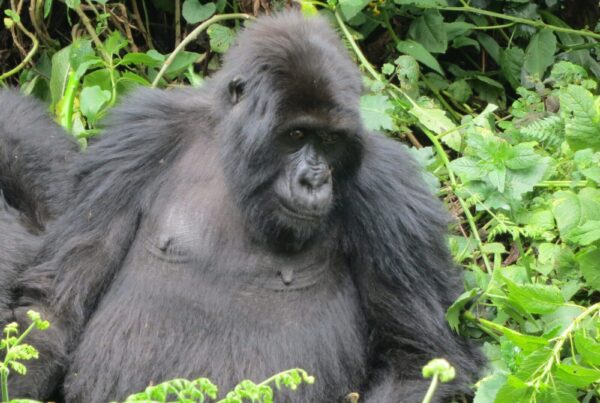
Parents should also prepare teenagers for the emotional intensity of the encounter. The first sight of a silverback from close range can be startling even for adults. Teenagers who have only seen gorillas in documentaries may be unprepared for the physical reality of a two-hundred-kilogram wild animal making eye contact with them. Discussing what to expect, how to behave, and why the safety rules exist helps teenagers process the experience constructively.
Practical Tips for Family Gorilla Safaris
Choose lodges that genuinely welcome families rather than merely tolerating them. Family-friendly lodges provide appropriate meal options, flexible scheduling, and staff who understand how to engage younger guests. Some lodges offer family rooms or adjoining rooms that allow parents to monitor teenagers while providing the independence older children crave.
Pack strategically for children’s needs: familiar snacks, entertainment for long drives, appropriate clothing for variable weather, and any medications they require. The drive from Kampala to Bwindi takes eight to ten hours, a significant duration for young people unaccustomed to African road travel. Break the journey with stops at interesting locations such as the Equator crossing or Lake Mburo National Park.
Final Thoughts
Gorilla trekking as a family creates bonds through shared challenge and shared wonder that few other experiences can match. Watching your child’s face during that first encounter with a mountain gorilla, seeing their understanding expand as they grasp the conservation story, and sharing the physical accomplishment of completing the trek together, these are moments that become foundational family memories.
Uganda is genuinely welcoming to families, and the communities around Bwindi are particularly child-friendly. Children who visit Uganda often describe it as their favourite travel destination, not because of luxury or entertainment but because of the warmth of the people and the immediacy of the natural world. When you bring your family to meet the gorillas, you are not just booking a wildlife tour. You are offering your children an education in what matters, delivered in a classroom that has no walls.
- Bwindi Gorilla Trekking with Children: Family Safari Guide
- What a 3-Day Uganda Wildlife and Cycling Safari Did to My Family Was Beyond Anything We Expected
- Gorilla Trekking With Kids: Family Safari Tips for Uganda
- Teaching children about gorillas before your Uganda family trek
- Preparing children for their first safari: age-appropriate lessons before Uganda
- Wildlife journals for children: how to keep field notes on a Uganda safari
- Planning a multi-generational Uganda safari: what works for grandparents and grandchildren
- Gorilla conservation games and activities for children on a Uganda safari
- Gorilla Trekking Cost in Uganda – 2025 Permit, Safari & Budget Breakdown
- Gorilla Trekking with Kids: Tips for Family-Friendly Adventures in Uganda