Updated
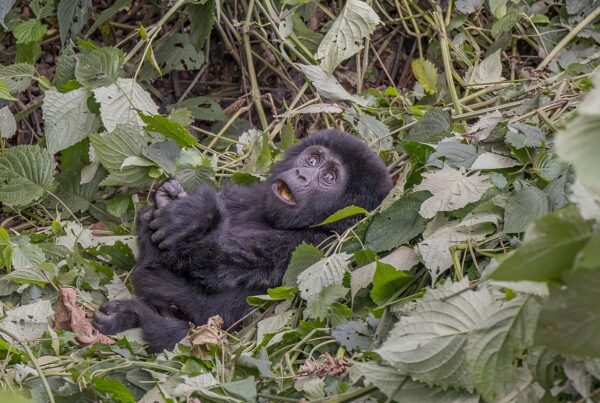
children gorilla trekking Uganda family is one of Africa’s most extraordinary wildlife experiences, connecting travellers with mountain gorillas in their natural forest habitat. Children who arrive at Bwindi knowing that the silverback’s silver back is a sign of full maturity rather than old age, that gorillas build a new sleeping nest every single night, that the mountain gorilla population was only 254 individuals in 1981 and is now over 1,000 — children who carry this context with them into the forest — have a fundamentally different gorilla encounter than children arriving with no preparation, because when the silverback turns toward the group and they recognise his posture as curious rather than aggressive, when they spot a gorilla building a nest in real time, when their guide mentions the specific family’s history and they connect it to something they already know, the encounter becomes active comprehension rather than passive spectacle. This guide covers the preparation resources, conversation frameworks, and age-appropriate explanations that make the gorilla trek a genuinely educational experience for children 8–17, as well as the logistics every parent needs to know: the minimum age for standard gorilla trekking (15 years), the golden monkey and chimpanzee alternatives for younger family members, and how to book family permits so the trek day works practically. For the permitting side, see the gorilla permit guide; for the specific families your child will visit, see Uganda’s gorilla families.
Family Gorilla Trekking Essentials
- Minimum age: 15 years for gorilla trekking — no exceptions regardless of physical capability
- Under-15 alternatives: golden monkey trekking (Mgahinga, no fixed minimum), chimp trekking (Kibale, age 12+)
- Best preparation materials: BBC Life on Earth gorilla episode, Gorillas in the Mist (film, for older teens), Dian Fossey children’s books
- Key facts to teach: family structure, silverback meaning, nest-building, conservation story, what the permit pays for
- Trek behaviour: no sudden movements, no direct eye contact with silverback, quiet voices — children must understand before the forest
- Group maximum 8 visitors including children — family permits book the full group in a single booking
A gorilla trek with children is one of the most powerful wildlife experiences a family can share, but its full impact depends heavily on preparation. Children who arrive at Bwindi Impenetrable National Park with some understanding of mountain gorillas, their behaviour, and their conservation story will engage with the experience at a depth that transforms it from a wildlife sighting into a formative memory. The preparation process is itself an educational journey, and parents who invest time in it will find that their children’s questions, observations, and emotional responses during the trek reflect the groundwork laid at home in the weeks before departure.
Teaching children about gorillas before your Uganda family trek
Understanding the animal: basic gorilla biology for children
Start with the fundamentals of what mountain gorillas are and how they live. Children absorb this material best when it connects to things they already know. Gorillas, like humans, are great apes, which means they share a large proportion of their genetic material with us. This is not a trivial point for children: it explains why gorilla faces look so expressive, why gorilla babies behave in ways that resemble human children, and why watching a gorilla family can feel surprisingly familiar even though it is unmistakably wild.
Mountain gorillas live in family groups led by a dominant male called a silverback, named for the distinctive silver saddle of hair that develops on a mature male’s back. Groups typically include several adult females, their infants and juveniles, and sometimes younger adult males called blackbacks. The family structure is tight-knit and long-lasting: gorilla mothers nurse their infants for up to three years and maintain strong bonds with offspring throughout their lives.
Gorillas are herbivores, spending most of their day eating vegetation including leaves, stems, bark, fruit, and occasionally insects. They build fresh sleeping nests each night from bent vegetation, either on the ground or in low trees. Adults can weigh between 150 and 200 kilograms, making them the largest living primates. These physical and behavioural facts give children a framework for understanding what they will observe and help them recognise specific behaviours during the trek itself.
The conservation story: explaining extinction risk to children
Children handle the reality of endangered species differently depending on their age and temperament. Some find the concept distressing; others find it galvanising. The key is to present the conservation story honestly but with emphasis on the positive trajectory. Mountain gorillas were once approaching extinction, with populations as low as 620 individuals around 2010. Thanks to intensive conservation work, the population has grown to over 1,000 today — one of the very few large mammal species whose numbers have increased in recent decades.
For younger children, the simpler version works well: gorillas are rare and special, many people work very hard to protect them, and the family you will visit has been gently helped to become comfortable with careful human visitors so that the people who protect them can raise money to keep them safe. For older children and teenagers, the full complexity of the conservation story — habitat loss, poaching history, community revenue sharing, the role of tourism — provides genuine intellectual engagement and can spark lasting interest in wildlife conservation as a field.
Dian Fossey’s story is compelling for children who are ready for it. The American primatologist who spent eighteen years studying gorillas in the Virungas, wrote the landmark book Gorillas in the Mist, and was murdered in mysterious circumstances in 1985 is a figure of genuine fascination: brave, eccentric, dedicated to the point of sacrifice, and instrumental in saving the species. Older children often respond to her story with the kind of moral seriousness that marks a shift from childhood to adolescence.
Watching the right documentaries together
Documentary films are an excellent preparation tool for children of all ages. Sir David Attenborough’s gorilla sequences in Life on Earth, Planet Earth, and A Life on Our Planet show mountain gorilla behaviour with intimacy and clarity that text descriptions cannot match. Watching gorillas eat, play, groom, and interact as a family group gives children a visual vocabulary for what they will encounter and helps them understand that gorillas are not dangerous animals but are instead quietly going about their lives in the forest.
For families with younger children, shorter clips available on YouTube from BBC Earth and similar channels provide accessible introductions without the attention demands of a full documentary. The famous footage of Attenborough lying in the vegetation while gorillas climb on him is particularly effective at demonstrating how unthreatening and curious gorillas are when encountered respectfully in the right setting.
Gorillas in the Mist, the 1988 feature film based on Fossey’s life and starring Sigourney Weaver, contains some of the most emotionally powerful gorilla footage ever captured. It is appropriate for older children and teenagers and provides a deeper narrative context for the Virunga gorilla population than any documentary has matched. Some parents find it a valuable shared viewing experience that generates significant conversation about conservation, sacrifice, and the relationship between humans and wildlife.
Books and reading for different ages
Children’s literature about gorillas ranges from simple picture books for toddlers to substantial non-fiction for young adults. For young children, books that focus on gorilla family life and baby gorilla behaviour work well as pre-trip reading, combining accessible text with high-quality photographs that help small children build realistic expectations of what they will see. Many natural history publishers produce gorilla-focused titles in their wildlife series that are pitched at primary school reading levels.
For older children who read confidently, Dian Fossey’s Gorillas in the Mist remains the foundational text, though some parents prefer to read it themselves first and selectively share relevant sections rather than handing it to a child in its entirety. The book contains passages describing poaching and gorilla deaths that some younger readers find upsetting. George Schaller’s earlier study The Mountain Gorilla, published in 1963, is more academic but provides excellent ecological context for older teenagers with a scientific interest.
Children interested in conservation careers benefit from books and articles about the people who currently work with mountain gorillas: veterinarians from Gorilla Doctors, researchers from the Dian Fossey Gorilla Fund, rangers from Uganda Wildlife Authority, and community conservation workers who connect park management with village life. These human stories make conservation feel like a real career path rather than an abstract good cause.
Preparing children for the trek logistics
Beyond the intellectual preparation, children need practical preparation for the physical and sensory realities of a gorilla trek. The hike through Bwindi’s forest can take anywhere from one to four hours each way depending on where the gorilla group has moved overnight. The terrain is steep, muddy, and crossed by roots and undergrowth. Altitude ranges from 1,400 to 2,600 metres, meaning the air is cooler and thinner than most children are accustomed to. Explaining all of this in advance prevents the kind of demoralisation that can set in when a child finds the physical challenge harder than expected.
Children respond well to concrete preparation tasks: breaking in hiking boots before departure, practising uphill walking on local trails, understanding what porters do and why hiring one is recommended, learning to drink water regularly even when they do not feel thirsty. These practical conversations ground the experience in reality and give children a sense of agency in preparing for something genuinely demanding.
Behavioural rules are also worth practising at home. The rules for gorilla encounters — maintaining minimum distances, moving quietly, not eating or drinking in the gorillas’ presence, following guide instructions immediately — are the same rules that apply to respectful behaviour in many contexts, but applying them in the presence of an animal as emotionally compelling as a gorilla requires practice. Role-playing the encounter at home, with a parent acting as guide and children practising quiet observation, sounds playful but genuinely helps children manage their excitement when the moment arrives.
What children typically notice and remember
Parents who have taken children on gorilla treks consistently report that the aspects of the experience children remember most vividly are often not the ones adults expect. Children notice gorilla babies with particular intensity, responding to infant gorillas playing, nursing, or riding on their mothers’ backs with visible emotion. They notice gorilla eyes: the depth, the expressiveness, the sense of recognition. They notice sounds — the silverback’s occasional chest-beating display, the low vocalisations that pass between group members, the crunch of vegetation as gorillas feed.
Children also remember the human elements: their guide’s knowledge and calm, the porter who helped them up a difficult slope, the moment of anxiety before the gorillas appeared through the vegetation and the relief when they turned out to be peaceful. These human dimensions of the experience anchor the wildlife encounter in a social and emotional context that makes it memorable in ways that purely visual experiences are not.
The hour with gorillas often ends with children wanting to stay longer, asking questions that cannot be answered in the field, and beginning to understand viscerally what they understood only abstractly from books and documentaries. That moment — when preparation meets reality and generates genuine curiosity rather than mere satisfaction — is what gorilla trekking with children at its best produces, and it is worth every hour of preparation that makes it possible.
Frequently asked questions about gorilla trekking with children
What is the minimum age for gorilla trekking in Uganda?
Uganda Wildlife Authority’s minimum age for gorilla trekking is 15 years. This applies to all habituated gorilla groups at all sectors of Bwindi Impenetrable National Park and Mgahinga Gorilla National Park. There are no exceptions based on physical size, maturity, or parental consent — the 15-year minimum is a firm UWA policy. Families travelling with children aged 12–14 who want a primate encounter should consider: chimpanzee trekking at Kibale Forest (minimum age approximately 12, varying slightly by operator), golden monkey trekking at Mgahinga (no published minimum, suitable for children who can manage a 1–2 hour hike), and baboon and colobus monkey encounters at several Uganda parks (no age restrictions). Families with children under 15 should plan the itinerary around these alternatives while adults and 15+ children do the gorilla trek, with the younger children enjoying a different activity on the same day.
What are the best resources to prepare children for gorilla trekking?
For children aged 8–12: illustrated books on great apes that cover gorilla family structure, diet, and conservation story; BBC Natural World gorilla episodes available on streaming platforms; the Uganda Wildlife Authority educational materials available on their website; and a simple household activity of looking at photographs of specific named gorilla families your child will visit on trek day. For children aged 12–17: the 1988 film Gorillas in the Mist (the Dian Fossey biography, suitable for teens with parental guidance) provides historical conservation context; Fossey’s book or a simplified version; current population data from the Mountain Gorilla population census; and a conversation about how the permit system works and what the USD $800 permit price funds. The single most effective preparation activity across all ages is watching the David Attenborough gorilla sequence from Life on Earth (1979) together — the footage of a young gorilla interacting with Attenborough sets a direct visual expectation for the kind of encounter your child may experience.
How do I explain the gorilla conservation story to children?
The conservation story is most powerful for children when it is framed as a problem that humans caused, that humans are fixing, and that their family’s visit is actively part of. The explanation might go like this: mountain gorillas almost disappeared — in 1981 there were only 254 left in the entire world because people were cutting down their forest and hunting them. Then scientists, rangers, and local communities decided to protect them, and now there are over 1,000. The money that families like yours pay to visit helps pay for the rangers who protect the gorillas every day. Because of everyone’s effort, the mountain gorilla is the only great ape that is increasing in number rather than still declining. This framing gives children a sense of participation in a positive outcome rather than passive witnessing of an ongoing crisis — and it makes the permit fee feel meaningful rather than arbitrary.
What behaviour rules should I teach my child before the gorilla trek?
Children need to understand and commit to four specific behaviours before entering the forest: no sudden movements or running (the gorillas may interpret this as a threat signal); no direct eye contact with the silverback when he faces them (teach children to look at the silverback’s body or hands, not his eyes, if he looks directly at them); quiet voices throughout (no shouting, no calling out, even in excitement); and following the ranger guide’s instructions instantly without questioning. This last point is the most important for children who may be distracted or excited — pre-trek briefing should emphasise that the ranger’s voice is an authority they respond to immediately. Practice these rules before the trek day by role-playing the scenario at home. Children who understand why these rules exist — not as arbitrary adult restrictions but as the specific behaviours that keep the gorillas calm — are much more likely to follow them under the excitement of the actual encounter.
How physically demanding is gorilla trekking for a teenager?
For a reasonably fit 15–17-year-old, gorilla trekking is physically manageable but genuinely demanding — it is not a nature walk. Trek duration varies from 2 to 8 hours depending on where the gorilla family is located on the specific day, the terrain is steep and often muddy, and the altitude at Bwindi (1,400–2,300m depending on sector) means reduced oxygen compared to sea level. Teenagers who hike regularly or play sports will handle the physical demands well. Sedentary teenagers or those with respiratory conditions should choose the least-demanding sector (Buhoma) and hire a community porter — the porter carries the day pack and provides a steadying hand on steep descents, significantly reducing the physical burden. The critical message is: the physical challenge is part of the experience, and teenagers who have been briefed about the terrain and prepared physically (walking uphill regularly in the weeks before the trip) will have a better day than those who arrive without preparation.
Plan your family gorilla safari
- Uganda Gorilla Families — introduce your children to the specific family before the trek
- Gorilla Permit Guide — family permit booking and the 15-year minimum age rule
- Bwindi Sector Guide — Buhoma is the best family sector for least-demanding terrain
- Full Safari Cost Guide — family permit costs and porter hire for the children
- Safari Itineraries — family-designed itineraries with alternative activities for under-15s
- Travelling to Uganda With Children: Family Gorilla Safari Tips
- Bwindi Gorilla Trekking with Children: Family Safari Guide
- Teaching children about conservation through gorilla trekking stories
- Teaching children about conservation through gorilla trekking stories
- Teaching children about gorilla conservation: how young visitors understand the forest
- Teaching children about mountain gorilla DNA and what makes us 98 percent the same
- Gorilla Trekking with Kids: Tips for Family-Friendly Adventures in Uganda
- What a 3-Day Uganda Wildlife and Cycling Safari Did to My Family Was Beyond Anything We Expected
- Uganda Gorilla Trekking Rushaga Sector: The Largest Family Zone
- How Many People Are Allowed Per Gorilla Family Per Day: Uganda’s Strict Limit Explained