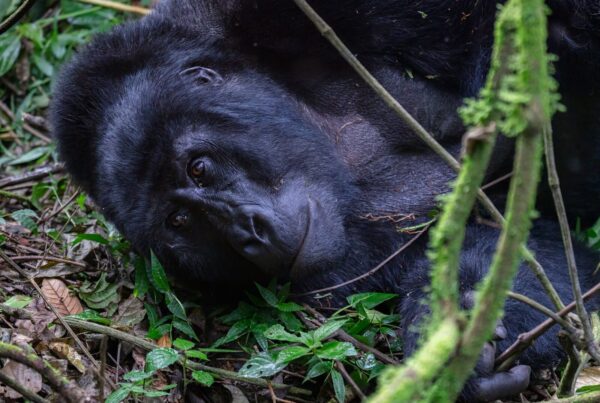
The Gorilla Tourism Rivalry Between Two East African Neighbours
Uganda and Rwanda share the same mountain gorilla population, divided between Bwindi Impenetrable Forest and the Virunga Volcanoes that straddle the two countries’ border. Despite sharing the same endangered species, the two nations have adopted dramatically different gorilla tourism strategies. Rwanda has positioned itself as a luxury, high-price destination. Uganda has pursued accessibility and value. Both are succeeding in different ways, and the competition between them is reshaping gorilla tourism in East Africa.
The Permit Price Gap: The Core Difference
Uganda: $700
Uganda’s gorilla trekking permit for foreign non-residents costs seven hundred US dollars. This price has been stable since 2020 and is the most affordable of the three gorilla-trekking countries, with the Democratic Republic of Congo also offering permits but under less stable conditions. Uganda’s pricing strategy is deliberate: attract a broad range of travellers from budget backpackers to luxury tourists by keeping the core experience affordable.
Rwanda: $1,500
Rwanda doubled its gorilla permit price from seven hundred and fifty dollars to one thousand five hundred dollars in 2017, instantly making it the most expensive gorilla destination in the world. This was a calculated move by the Rwanda Development Board to position the country as a premium destination comparable to Botswana or Seychelles, where high prices are part of the brand identity.
What the Price Difference Means for Travellers
The eight-hundred-dollar difference between Uganda and Rwanda permits is more than a number. It fundamentally changes the type of traveller each country attracts:
- Uganda attracts a broader demographic: backpackers, families, honeymooners on mid-range budgets, solo travellers, and repeat visitors
- Rwanda attracts high-net-worth individuals, luxury travellers, and bucket-list tourists willing to pay for exclusivity
- Uganda receives more tourists overall but earns less revenue per tourist
- Rwanda receives fewer tourists but earns significantly more revenue per visitor
Location and Accessibility
Rwanda: Volcanoes National Park
Rwanda’s gorillas live in Volcanoes National Park, approximately two and a half hours from Kigali International Airport on paved roads. The drive is scenic and comfortable, passing through the terraced hills of northern Rwanda. Several high-end lodges sit within thirty minutes of the park headquarters, including Bisate Lodge, Singita Kwitonda, and One&Only Gorilla’s Nest, each charging over one thousand dollars per person per night.
Uganda: Bwindi Impenetrable Forest
Uganda’s gorillas live in Bwindi, approximately eight to ten hours from Entebbe by road or ninety minutes by domestic charter flight. Bwindi is significantly larger than Volcanoes National Park, covering three hundred and thirty-one square kilometres compared to Volcanoes’ one hundred and sixty square kilometres. Bwindi has four trekking sectors (Buhoma, Ruhija, Rushaga, and Nkuringo) offering more variety and more gorilla families than Rwanda’s twelve habituated groups.
The Trekking Experience
Rwanda: Gentler Terrain, Shorter Treks
The terrain in Volcanoes National Park is generally gentler than Bwindi’s. Treks typically last two to four hours, with less dense vegetation and more defined trails. The Virunga volcanoes are spectacular backdrops, and the bamboo forest sections are photogenic and relatively easy to navigate. Rwanda’s treks are considered more accessible for older travellers or those with moderate fitness levels.
Uganda: More Challenging, More Rewarding
Bwindi is called “impenetrable” for a reason. The forest is dense, steep, muddy, and challenging. Treks can last thirty minutes to eight hours, with the average being three to four hours. The vegetation is thicker, the trails are steeper, and the physical effort is greater. Many trekkers consider Bwindi’s challenge part of the reward, making the gorilla encounter feel more earned. The forest itself is older and more biodiverse than Volcanoes National Park.
Accommodation
Rwanda: Ultra-Luxury Dominates
Rwanda has leaned heavily into luxury accommodation. The One&Only Gorilla’s Nest, Singita Kwitonda, Bisate Lodge, and Sabyinyo Silverback Lodge represent some of the finest safari lodges in Africa, with prices to match. Budget and mid-range options near Volcanoes are limited, with most lodges charging three hundred dollars per night or more.
Uganda: Options at Every Level
Uganda’s accommodation spectrum is far wider. Budget lodges and community camps near Bwindi charge thirty to seventy dollars per night. Mid-range lodges like Buhoma Haven, Rushaga Gorilla Camp, and Ichumbi Gorilla Lodge offer excellent comfort for eighty to two hundred dollars per night. Luxury options like Bwindi Lodge, Sanctuary Gorilla Forest Camp, and Clouds Mountain Gorilla Lodge rival Rwanda’s best at slightly lower prices. Uganda genuinely accommodates every budget.
Tourism Numbers
Uganda receives more gorilla tourists than Rwanda, with approximately twenty to twenty-five thousand gorilla permits sold per year compared to Rwanda’s fifteen to eighteen thousand. However, Rwanda earns more total revenue due to its higher permit price and luxury accommodation spend. Both countries report growing demand, and the combined gorilla tourism market has expanded rather than contracting under Rwanda’s premium pricing strategy.
Conservation Impact
Both countries report conservation success. The mountain gorilla population has grown from fewer than seven hundred in 2008 to over one thousand one hundred in recent censuses. Uganda credits its lower permit price with allowing more tourists to contribute to conservation funding. Rwanda argues that fewer tourists at higher prices reduces the environmental footprint of tourism while generating comparable or greater conservation revenue. Both approaches appear to be working.
Who Wins?
The honest answer is that there is no winner, and no loser. Uganda and Rwanda have created a complementary market:
- Rwanda offers the easier, shorter, more luxurious experience for those who can afford it
- Uganda offers the more adventurous, affordable, and varied experience for a broader audience
- Both countries are growing their gorilla tourism markets simultaneously
- The combined conservation success benefits the entire mountain gorilla population
Final Thoughts
Uganda and Rwanda are not in a zero-sum competition. They are building two distinct gorilla tourism brands that appeal to different travellers. The traveller who chooses Rwanda for luxury and convenience is not the same traveller who chooses Uganda for value and adventure. Both countries benefit from the other’s marketing, as global awareness of gorilla trekking grows. The real winner is the mountain gorilla, whose population continues to increase thanks to tourism revenue from both sides of the border.
Frequently Asked Questions
Uganda is significantly cheaper. Uganda’s standard permit costs $800; Rwanda’s costs $1,500. For 4-hour gorilla habituation, Uganda charges $1,800 — Rwanda has no equivalent experience. The $700 saving on a standard permit is the primary reason most budget-conscious travellers choose Uganda.
Uganda. Bwindi and Mgahinga together have 20+ habituated gorilla families and issue more daily permits than Rwanda’s Volcanoes National Park. Uganda also offers the Gorilla Habituation Experience, which Rwanda does not. Rwanda’s advantage is accessibility — Volcanoes NP is 2 hours from Kigali airport.
Yes — this is a popular combination. The Kigali to Bwindi road journey takes approximately 4 hours via Kabale. Some visitors trek in Mgahinga (Uganda) one day and cross into Rwanda for Volcanoes the next. Note that your Uganda permit cannot be used in Rwanda and vice versa — separate permits are required.
Rwanda’s Volcanoes National Park offers easier access (2 hours from Kigali airport), high-end lodge infrastructure, and the Dian Fossey research legacy. Rwanda also offers golden monkey trekking in the same park. However, at $1,500 per permit, it costs nearly double Uganda’s $800 rate for the same 1-hour trek.
Uganda is home to the mountain gorilla (Gorilla beringei beringei), one of two subspecies of eastern gorilla. They live exclusively in the Virunga volcanic highlands (Uganda/Rwanda/DRC) and Bwindi Impenetrable Forest (Uganda only). Mountain gorillas are the only gorilla subspecies that cannot survive in captivity — every individual you can trek is a wild animal.