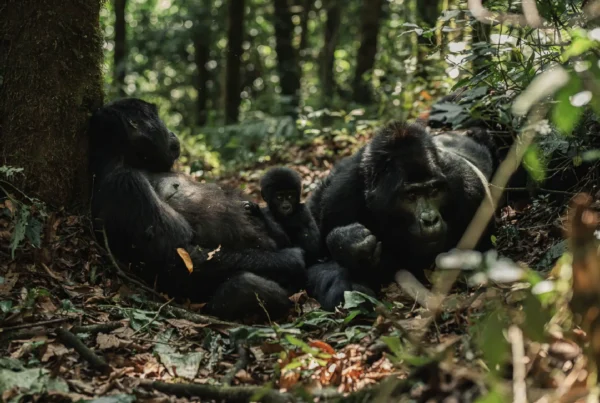
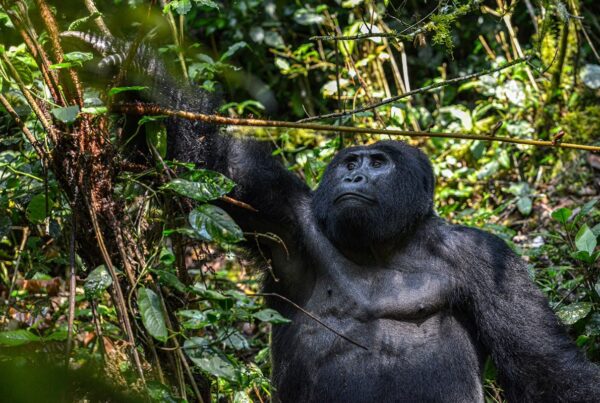
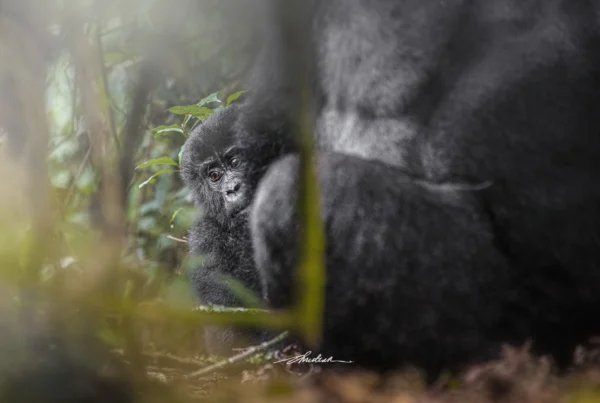
A mountain gorilla mock charge — the silverback running directly toward the visitor group, stopping short, and retreating — is a communication event, not an attack, and the difference between the two is the most important thing to understand before you enter Bwindi’s forest, because the wrong response (running) is precisely what transforms a bluff display into a dangerous pursuit, while the correct response (crouching, averting gaze, staying completely still) signals to the silverback that you are a non-threatening presence that does not require further display — the same submissive communication that lower-status members of his own family use when the silverback asserts dominance. This guide covers what actually happens when a gorilla charges, why silverbacks charge in the first place, the specific behaviours that visitors mistakenly perform that increase the probability of a charge occurring, the precise ranger instructions you will receive and why each element of those instructions is biologically correct, and what actually happens in the extremely rare cases where physical contact occurs. Understanding the mechanics of gorilla charge response in advance means that if the moment arrives, you are executing a known protocol rather than reacting from instinct — and the instinctive response (flee) is exactly what the protocol is designed to override. For the rangers who will manage the encounter, see the sector guide.
If a Gorilla Charges: The Protocol
- Step 1: Do NOT run — running triggers pursuit response; running is the worst possible reaction
- Step 2: Crouch low, make yourself small — reduces perceived size and threat profile
- Step 3: Avert eyes — avoid direct eye contact with the silverback; look at the ground
- Step 4: Stay completely still and silent — sudden movements or vocalisations escalate
- Step 5: Follow the ranger’s verbal instructions — they manage the situation; trust their read
- Mock charges stop short of contact in virtually all habituated group encounters — remain calm
Understanding the Heart-Pounding Moment in Gorilla Territory
It’s the stuff of wildlife documentaries — a sudden rustle in the thick foliage, the deep chest-beating of a silverback, and then… a charge. For many travelers trekking deep into the misty forests of Uganda, Rwanda, or the DRC, encountering a mountain gorilla is the highlight of their African adventure. But what happens when that rare and beautiful moment turns intense? What if a mountain gorilla charges toward you? Should you run? Scream? Freeze? Or bow down?
What To Do When a Mountain Gorilla Charges Toward You — The truth is, gorilla charges are part of their natural behavior, especially among dominant silverbacks protecting their families. Though these charges may seem terrifying, they are almost always bluff displays rather than real threats. Still, knowing exactly what to do can be the difference between a safe encounter and a dangerous misunderstanding — not just for your safety, but for the gorillas’ well-being too.
Let’s take a deep dive into what really happens during a gorilla charge, why they do it, and how to react in the calmest, safest, and most respectful way possible.
Why Do Mountain Gorillas Charge? It’s Not About Violence — It’s About Authority
Mountain gorillas are incredibly intelligent, social animals with a strong sense of hierarchy and territoriality. Silverbacks — the dominant males in the group — are especially protective of their troop, which can include several females and their young. When humans approach too closely, move too quickly, make loud noises, or behave unpredictably, the silverback may perceive a threat. And like any protective leader, he may respond — not out of aggression, but out of instinct and responsibility.
Charges can be real or bluff. A bluff charge is meant to intimidate, assert dominance, and warn — not attack. In most gorilla trekking experiences, if a silverback charges, it will stop short of making physical contact. The sound and sight are overwhelming — thudding feet, deep grunts, and powerful chest beats — but it’s his way of saying, “This is my family. Respect our space.”
What Exactly Happens During a Gorilla Charge?
A gorilla charge often begins with vocalizations — loud grunts or growls that rise in intensity. Then, the silverback may beat his chest with cupped hands, stand tall, and begin moving rapidly toward you. The charge might be direct or may come from the side — crashing through vegetation with incredible speed. Sometimes, the silverback stops just feet away, snarling or huffing, then retreats. Other times, he might circle or stand his ground, watching your reaction.
This experience is deeply primal. You feel the forest tighten, the air shift. But what’s most important is not to panic — because your response sets the tone for the outcome.
What You Should Do When a Mountain Gorilla Charges
If you ever find yourself face to face with a charging mountain gorilla, follow these critically important steps. They’ve been developed over decades by researchers, trackers, and park rangers who understand gorilla behavior deeply:
1. Stay Calm and Do Not Run
No matter how instinctively your body wants to flee, running is the worst possible reaction. It triggers the gorilla’s chase instinct and escalates the perceived threat. Mountain gorillas are incredibly fast — much faster than humans — and fleeing may cause a bluff charge to turn more serious. Ground yourself mentally and stay rooted.
2. Lower Yourself Slowly
As soon as you sense a charge or if the gorilla starts displaying aggressively, begin to lower your body into a submissive crouch or kneeling position. Avoid sudden movements. The goal is to appear non-threatening and submissive. By lowering your height, you’re showing the silverback that you are not challenging his dominance or posing any danger.
3. Avoid Eye Contact
In gorilla social behavior, a direct stare can be perceived as a challenge or threat. During a charge, avert your eyes slightly and keep your head down without turning your back. Staring directly at the gorilla may escalate the encounter. Look to the side and remain still.
4. Remain Silent
Avoid talking, yelling, or even gasping loudly. Loud noises can intensify the gorilla’s stress. Stay as silent as possible. Even the clicking of cameras or accidental laughter can provoke a silverback when he’s in protective mode.
5. Follow the Ranger’s Lead
Every trek into gorilla territory is accompanied by experienced UWA (Uganda Wildlife Authority), RDB (Rwanda Development Board), or Virunga NP guides. These rangers are trained in gorilla behavior and act as mediators between humans and the troop. If a charge occurs, they may make deep grunting sounds — mimicking submissive vocalizations — to calm the gorilla. Always follow their instructions. If they signal you to freeze, crouch, or move slowly away, do exactly as they say.
How Common Are Gorilla Charges, Really?
While it’s possible, especially when visiting families with dominant or newly appointed silverbacks, charges are not a daily event. Most treks are peaceful, emotionally stirring encounters where gorillas continue their daily lives mere meters from guests. But because these are wild animals — with emotions, instincts, and social bonds — they can react if they sense a boundary has been crossed. Experienced guides often read signs early and will adjust your distance if the troop seems agitated.
Charges are more common when visitors make sudden movements, come too close, or ignore the 7-meter rule. In some cases, a silverback may charge just to reassert control after a conflict within the troop — not because of you at all. Understanding the context is key, and staying composed is everything.
What NOT To Do During a Charge — Mistakes That Could Escalate the Situation
Never scream, raise your arms, or make abrupt gestures. Never run. Never stand tall or try to “hold your ground” in defiance — this is not a confrontation you’ll win, nor is it one you should provoke. And never try to touch a gorilla, even if they come close after the charge. Respect their space completely.
Also avoid using flash photography or excessive camera clicking. While gorillas have grown habituated to human presence, they still react strongly to certain unfamiliar behaviors or equipment.
Post-Charge Behavior: What Happens Next?
Most of the time, a bluff charge ends with the silverback turning his back on you, sitting down, or returning to his troop. That’s your cue to stay still, breathe, and wait for the guide’s instructions. Often, the family will resume their foraging or resting activities. It may take a few minutes for the tension to settle, but things usually return to normal quickly.
In fact, many trekkers who experience a charge say that the emotional depth of that moment — feeling the force and authority of the forest’s ruler — becomes the highlight of their journey. It’s not about fear. It’s about respect, humility, and awe.
Frequently asked questions about gorilla charges and safety
What should you do if a mountain gorilla charges at you?
The correct response to a gorilla charge is the complete opposite of instinct: do not run, do not scream, do not make sudden movements. The specific protocol, which your ranger will brief you on at the morning briefing station and which applies universally across all Bwindi and Mgahinga habituated group encounters, is: immediately crouch low to reduce your height and apparent size; avert your gaze from the silverback — look at the ground in front of you rather than at the charging animal; remain completely still; and stay silent. The ranger will manage the situation vocally — their calm verbal direction is your signal that the encounter is being managed competently, and following their instructions precisely is the correct response. Do not attempt to move away from the charge direction as this can read as flight and trigger pursuit. Do not attempt to “face down” the charge with direct eye contact as this reads as a dominance challenge. Crouch, avert, still, silent, follow ranger — that is the complete protocol.
How common are gorilla charges during trekking visits?
Silverback displays including mock charges during habituated gorilla trekking encounters are uncommon but not extremely rare — experienced rangers at Bwindi’s busier sectors may witness a mock charge incident several times per season across their groups. The probability for any individual visitor of experiencing a mock charge during their specific 60-minute encounter is low — perhaps 2–5% of encounters involve a significant silverback display including a charge direction rather than a static dominance posture. The factors that increase encounter charge probability include: a visitor moving closer than 7 metres (the most common trigger), a visitor making sudden movements or sounds, unexpected sounds from outside the group (another group nearby, noise from porters), or inter-group encounter dynamics where two gorilla families are in proximity and the silverback is in a heightened territorial state. The factors that reduce charge probability include: following all ranger instructions precisely, maintaining the 7-metre distance, moving slowly and quietly, and avoiding direct silverback eye contact throughout the encounter.
Has anyone ever been seriously injured by a gorilla during trekking?
Serious injuries from habituated gorilla groups during managed trekking visits are extremely rare in the history of the Uganda and Rwanda gorilla trekking programmes — the habituated status of the groups and the ranger-managed visit protocols produce a safety record that compares favourably with other adventure wildlife activities. Incidents that have been documented involve violations of the 7-metre rule (visitor too close triggers physical contact), sudden movements or sounds that produce an escalated display, or instances where a group member panicked and ran during a mock charge display (triggering brief pursuit). None of these incidents has produced life-threatening injuries in documented managed trekking contexts. The safety record reflects both the genuine effectiveness of the habituation programme and the competence of the ranger guidance system — rangers who have worked with specific gorilla families for years have detailed knowledge of those families’ individual trigger behaviours and can anticipate and manage encounter situations before they escalate.
Why do silverback gorillas charge — what triggers the behaviour?
Silverback charges are dominance and protective communications, not predatory attacks. The specific triggers are: perceived encroachment on personal or family space (a visitor moving closer than the silverback’s comfort threshold, which varies by individual animal and by how settled the family is that morning); sudden movements or sounds that register as potential threat signals in the gorilla’s alarm response system; direct eye contact sustained long enough to be read as a dominance challenge rather than incidental gaze; the presence of another gorilla group in auditory or visual range (inter-group competition increases silverback alert state across all of his behaviours); and occasionally a spontaneous energetic display with no specific external trigger — silverbacks sometimes chest-beat and run-charge as a general dominance assertion rather than a response to a specific stimulus. Habituated silverbacks have generally lower response thresholds than unhabituated animals, meaning the triggers are real but the response is calibrated down from what a fully wild silverback would produce in the same situation.
What does the ranger actually do when a gorilla charges?
When a silverback charges or displays aggressively, the lead ranger’s primary responses are: verbal commands to the visitor group to crouch and freeze; their own physical positioning between the silverback and the visitor group in some situations; and calm, familiar vocalisations directed at the silverback — rangers who have worked with specific families for years use learned communication sounds that specific silverbacks recognise and that signal to the gorilla that the situation is not a genuine threat. The ranger’s calm during what visitors perceive as a terrifying moment is not performance — it is the product of having managed the same type of situation dozens of times with the specific animal and knowing from experience that the charge will stop before contact if the visitor group follows the protocol. The rangers’ presence and management is the most important safety factor in any charge encounter, which is why following ranger instructions precisely and immediately — rather than reacting independently — is the behavioural imperative that the morning briefing is designed to establish.
Prepare for the encounter and trust the ranger
- Uganda Gorilla Families — the specific silverback personalities and temperaments by family
- Gorilla Permit Guide — book your encounter with the team who has managed hundreds of these moments
- Bwindi Sector Guide — ranger expertise by sector
- Full Safari Cost Guide — the overall trip context for the encounter
- Safari Itineraries — the itinerary that puts you in the forest with experienced ranger guidance
- Meet the conservationist protecting mountain gorillas in the heart of the impenetrable forest.
- Why Adult Male Mountain Gorillas Stay Etched in Your Mind After Gorilla Habituation
- Why You Should Do a Golden Monkey Trek Before Your Mountain Gorilla Trek
- Can I Touch a Mountain Gorilla
- Real Difference Between Mountain Gorillas in the Forest and Gorillas in Zoos
- Carl Akeley and the Mountain Gorillas of 1926
- Uganda Mountain Gorilla Tours: A Complete Guide
- The Fastest Way is 1-Day Gorilla Trekking in Uganda to See Mountain Gorillas
- 20 Fun Facts About Mountains (So Fascinating)
- Mountain Gorilla Diet: What Do Gorillas Eat in the Wild